Winterhouse
Winterhouse
A modern alternative to SparkNotes and CliffsNotes, SuperSummary offers high-quality Study Guides with detailed chapter summaries and analysis of major themes, characters, and more.
Summaries & Analyses
Quizzes
NEWReading Tools
Symbols & Motifs
Puzzles and Wordplay
The recurring motif of puzzles and wordplay underpins the intellectual and magical framework of Winterhouse, driving the major character development and mystery plot advancement. From anagrams and word ladders to ciphers and jigsaw puzzles, these challenges represent a world where hidden truths can be uncovered through logic and intellectual curiosity, central to the theme of Puzzle-Solving as Empowerment. For Elizabeth, skills with problem-solving are a core aspect of her identity and a major source of her increasing agency through the novel. It is how she forges a friendship with Freddy, impresses the adults at the hotel, and ultimately deciphers the Vigenère cipher that unlocks the central mystery. Her innate talent for seeing patterns connects to her magical powers, as she feels that when she works on a puzzle, “the words seemed somehow to arrange themselves for her in her mind […] and an answer would steadily emerge” (14). This intuition ties puzzling into a broader method of perception, allowing her to solve the deeper mystery of Winterhouse. The motif supports the novel’s contention that childhood games and intuition, when paired with curiosity and perseverance, are a powerful tool for navigating a complex and often deceptive adult world.
The Book (A Guide for Children)
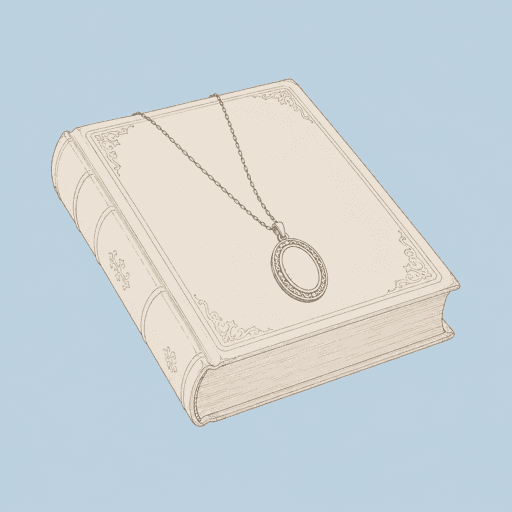
The Book, also A Guide for Children, is the novel’s central symbol, representing the power of knowledge and the application of skills and focus to gain this. For Elizabeth, it is initially a tool for Puzzle-Solving as Empowerment, providing her with the Vigenère Cipher needed to decode Nestor’s message. However, its true nature is revealed as it magically displays silver letters that only Elizabeth can see, marking it as having great significance to the mystery, and also indicating Elizabeth’s predestined right and ability to access its occult information. As the legendary “Book” sought by both Norbridge and Gracella, it embodies the dual potential of the Falls family magic and becomes the focal point for the theme of Magical Power as an Expression of Moral Character; mirroring the role of magic in the novel, its moral power is neutral, a latent force waiting to be activated by its wielder’s intent. Gracella, consumed by hatred, seeks to use it for destruction, confirming its identity when she declares, “You were the last of the line—the last one with the power to find The Book. And now it’s mine” (337). In contrast, Elizabeth’s decision to use it to protect Norbridge and Winterhouse confirms that its meaning is determined by the moral character of the person who holds it.
Elizabeth’s Necklace
Elizabeth’s necklace is a symbol of identity, heritage, and the journey toward Finding Belonging After Loss, changing through the novel to reflect Elizabeth’s personal transition. Initially, the indigo pendant is the only known connection to the mother she cannot remember, a form of private memorial. While navigating the lonely and hostile world of her normal life, Elizabeth interprets the word “Faith” etched on it as a reminder of the trust she must place in herself and her coping mechanisms. This meaning augments dramatically at the mystery’s denouement, when it is revealed to be the keyword to Nestor Falls’s secret code, linking her personal history to the magical legacy of Winterhouse. Simultaneously, this understanding unlocks her true identity when Elizabeth sees a portrait of her mother, Winifred, wearing the same pendant. At that moment, she realizes her lineage and her rightful place in the Falls family, telling Norbridge, “I think Winnie was my mother” (344). The necklace becomes the proof of her belonging, bridging the gap between her orphan past and her future as the granddaughter of Norbridge, forever tying her to the magic and sanctuary of Winterhouse.
The Crimson Light
The crimson light is a visual symbol of Gracella Winters’s disembodied, malevolent spirit. As the tangible form of Gracella’s antagonistic force before she appears as a present character in the novel, the crimson light creates the novel’s sense of threat and danger, representing the dark, corruptive side of the Falls family magic. The light is the physical manifestation of Gracella’s spirit before it reunites with her physical body, a parasitic “evil” that seeks to breach the sanctuary of Winterhouse. The light first appears in the library after Elizabeth invokes Gracella’s name, where “[a] faint throb of crimson light radiated from what seemed to be the Reference Room high above” (226). This event directly connects the verbal summoning of a dark power with its physical manifestation. Later, it pursues Elizabeth and Freddy from Gracella’s cabin to threaten Winterhouse from across the protected bridge. Once Gracella’s body and spirit are reunited, the light appears around her body and manifests her unchecked, volatile emotions, as in Chapter 35, when “her eyes flashed wide and evil as the crimson glow around her flared” (329). When Elizabeth vanquishes Gracella by her moral choice, the “crimson light blink[s] out” before the antagonist dies (342), demonstrating that Elizabeth has neutralized the threat to Winterhouse.

Unlock the meaning behind every key symbol & motif
See how recurring imagery, objects, and ideas shape the narrative.
- Explore how the author builds meaning through symbolism
- Understand what symbols & motifs represent in the text
- Connect recurring ideas to themes, characters, and events