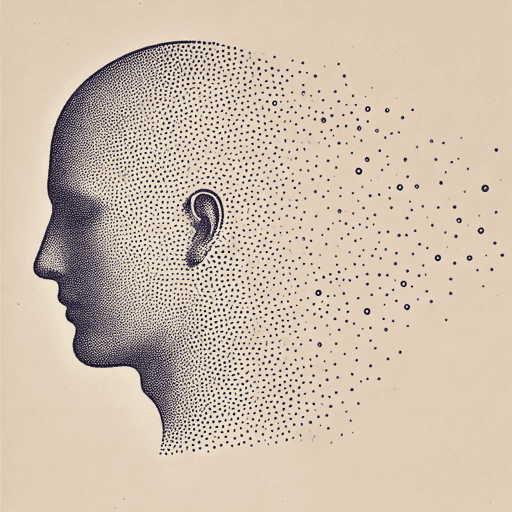
A World Appears: A Journey into Consciousness
A World Appears: A Journey into Consciousness
A modern alternative to SparkNotes and CliffsNotes, SuperSummary offers high-quality Study Guides with detailed chapter summaries and analysis of major themes, characters, and more.
Summaries & Analyses
Author Insights
Quizzes
NEWReading Tools
Chapter 4Chapter Summaries & Analyses
Content Warning: This section of the guide includes discussion of drug use.
Chapter 4 Summary: “Self”
Circling the Self
The first section, “Circling the Self,” addresses the topic of self. People believe that there must be something specific and essential that comprises the “I” but cannot necessarily define it. The attempt to define that “I” brings study closer to the central question of consciousness. Pollan states: “in the self, we confront a mental phenomenon beyond sentience, feeling, or thought; the self is in some ways the crown of consciousness and in other ways its curse” (176).
According to Descartes, the subjective self is the only thing an individual can know for certain. However, 18c. Scottish philosopher David Hume called into the question the existence of a self. Through phenomenological inquiry and careful introspection of his own mind, Hume finds that he cannot observe himself, only his perceptions. He thus concludes that there may, in fact, be “no one home” (178) in the mind. Pollan notes that this is similar to a central tenet of Buddhism, which likewise posits that there is no inherent individual self. In fact, according to some research, a self may not be required for consciousness at all.
A Self Arises
The section “A Self Arises” begins with the example of babies, who appear to be conscious without possessing an individual sense of self. Initially, an infant does not distinguish between itself and its mother, nor does it have any sense of physical identity. Instead, babies first begin to recognize themselves at around 18 months old, as demonstrated by psychologist Alison Gopnik, who specializes in child development and philosophy of mind.
Moreover, children do not create a continuity of self until around four or five years old, when they develop episodic memory: “memories of things that have happened to you that can be stitched together to create a sense of continuity” (182-3). This idea of a past, present, and future is necessary for the development of a coherent, singular self. It is only after the development of episodic memory that executive function emerges, and with a degree of self-control and free will. Gopnik argues that this is dependent on one’s sense of continuity in time, which allows an individual to imagine the consequences of actions into the future.
Gopnik explains that young children experience “lantern consciousness,” rather than the “spotlight consciousness” of adults. Spotlight consciousness focuses the light of attention on specific objects or tasks, while lantern consciousness casts a wider glow that gives existence a “freshness and significance” that few adults experience. This numinous (awe-inspiring or spiritual) experience is ordinary for children and difficult for adults to access. She adds that novel experiences (like art and travel) or psychedelics can help adults access the numinous.
Predicting the Self
In “Predicting the Self,” Pollan speaks with neuroscientist Anil Seth, who has a “deeply counterintuitive theory of the self” (188). Seth first came to public attention due to a 2017 TED Talk, in which he explained the brain’s role as a prediction machine, based on the predictive processing theory of perception called the Bayesian brain (as discussed in Chapter 1). Seth expands this theory in his most well-known analogy that compares “our everyday perception of the world to a ‘controlled hallucination’” (189). In other words, our minds use a combination of past experiences, biases, and the laws of probability to create an image of the world that our senses then test against, allowing us to revise that picture of reality as needed. Seth argues that this is necessary because direct reality offers more information than the brain could process. In this model, most experience is predictable and therefore processed unconsciously, only requiring conscious input from the brain when reality deviates too far from expectation.
For Seth, this controlled hallucination also includes the sense of self, which he claims is also “a kind of perception” (190) constructed by the internal signals the body sends to the brain. The brain makes best guesses about the causes of these signals, creating a prediction that becomes the perception of self. An emotion is merely an interpretation of a change within the body.
Furthermore, like Damasio and Solms, Seth believes feelings are grounded in homeostasis. The body sends signals about changes to the brain, for instance low blood sugar, and the brain predicts that eating food will return the body to safe parameters, generating the feeling of hunger. He argues that a real subjective self is unnecessary for this process to occur, claiming that “the experience of being me is just the phenomenological flip side of a certain set of inferences the brain is making” (193). However, Pollan questions this conclusion. He suggests that this “phenomenological flip side” is yet another vague explanation that does not actually answer the hard problem and asks how it is possible to have a hallucination with a hallucinator to experience it.
Memory and Metamorphosis
“Memory and Metamorphosis” turns to the concept of memory, which creates the sense (or illusion) of continuity over time, as discussed by Gopnik. According to neurologist Oliver Sacks, memory is what generates the coherence of who we are as individuals. However, memories do not accurately capture the past, only subjective reconstructions of it. This false sense of continuity or sameness is required for a sense of self, yet at the same time reality (including ourselves) is constantly changing. The question then becomes how one incorporates change without losing self. Michael Levin, first introduced in Chapter 1, is currently addressing this question. He argues that memory is necessary to both stabilize self and help it to change.
Levin uses the example of a caterpillar, which experiences “one of the most radical transformations in nature” (196). In becoming a butterfly, the caterpillar destroys or transforms nearly every cell. Yet research shows that a caterpillar conditioned to respond to a specific color will continue to respond to that color after its transformation, indicating that some kind of memory survives the change. At the same time, the specific meaning of that color (nutritious leaves for the caterpillar but nectar from the butterfly) also indicates that the memory is revised in what Levin calls “mnemonic improvisation” (197): i.e., memories help maintain a self, but that self is constantly “hacking their memories in order to better adapt to changing conditions” (197).
He believes this process of revision may be a crucial element of consciousness and suggests that consciousness may be the feeling of constant reconstruction that allows an individual to create a coherent sense of self. He also believes this ability to improvise and change may separate living beings from machines, which need to be faithful to the accuracy of information in order to function properly.
Losing Ourselves
This section explores what happens to consciousness when one removes the self from the equation. Two methods for doing so are psychedelics and meditation. People in the midst of psychedelic experiences routinely report feeling a sense of timelessness and boundlessness, during which they merge with a universal consciousness. In other words, the sense of individual self disappears. Though this might sound frightening, most people describe such moments as blissful or transcendent.
Similarly, Buddhists use meditation to quiet the sense of self. Buddhism argues that the sense of individual self is the source of all suffering and advocates for fostering a sense of no-self. French scientist-turned-Buddhist-monk, Matthieu Ricard, explains that the sense of self or ego creates the need to defend, the desire for praise, and the goalposts of pleasure and pain. Conversely, loss of self leads to openness and balance. He advises Pollan to try an exercise: to visualize his mind “as a house in which a thief might be hiding” (207). Finding the “thief” will give Pollan a sense of relief, which he should contemplate as “absence” (207).
When Pollan attempts this exercise, instead of finding his mental house empty, he finds a different version of himself at different ages in every room. He is unsure whether this experience supports or undermines the Buddhist concept of no-self.
German philosopher Thomas Metzinger calls this level of shared consciousness or no-self “minimal phenomenal experience (MPE)” (211), or pure awareness. He argues that the usual sense of self is an internal model that allows our minds to control our bodies and organize our experiences forming what we know as consciousness, but that MPE is a more foundational form that precedes it. Additionally, Metzinger argues that consciousness research is hindered by its inability to precisely define what it is studying to begin with. For instance, during a conversation in the 1990s, Francis Crick told Metzinger that consciousness would not be explained by philosophy but neuroscience; however, when Metzinger asked Crick to define precisely what it was he planned to explain, Crick could not answer.
Metzinger hypothesizes that the neural correlate to this state of pure awareness will be found in the upper brainstem, the same location that Damasio and Solms claim to be the location of consciousness. Though Metzinger sees value in this pure awareness, he also believes that the human sense of self is crucial to survival, constructed in our minds for a reason, and methods to escape it may prove risky.
Mind Beyond Brain?
In the final section, Pollan recalls this warning of risk from his last meeting with Christoff Koch. Since Pollan’s initial conversations with him three years prior, Koch had participated in an ayahuasca ceremony (an indigenous psychedelic experience), during which he felt he “accessed [the] universal mind” (218). For years, he was a staunch materialist who firmly believed that the origins of consciousness would eventually be identified in the physical matter of the brain. Following his psychedelic experience, he is less certain. This doubt is coupled with the continued failure of scientific research to make progress on the hard problem of consciousness, and recent ideas emerging from quantum theory which have called longstanding assumptions about physical reality into question. He admits that his psychedelic experience left him shaken and made him question everything he believed.
While some scientists still believe materialism will solve the hard problem, others now doubt it as Koch does. Koch, for instance, has shifted his work to explore the philosophy of idealism, which “holds that the universe itself is made of mind” (222). He has turned to the work of philosopher Bernardo Kastrup, who suggests that it is illogical to assume that experience can be reduced to mere matter when matter itself can only be accessed through experience (as discussed in phenomenology).
Chalmers recently summarized the argument by suggesting that idealism may not be plausible, but based on current research and knowledge, it is no more implausible than any other current theory of consciousness and therefore has some probability of being true. As Pollan reaches the end of his search for an explanation of consciousness, he feels he now knows less than he did when he started.
Chapter 4 Analysis
Pollan’s exploration of the mysteries of consciousness moves to the self in Chapter 4. The self, Pollan argues, is the most difficult aspect of consciousness to define, describe, or identify. It is, in some ways, the epitome of the hard problem and the most obvious boundary of Western rationality’s ability to explain. To address the question of self, Pollan uses an interdisciplinary approach of combining phenomenology, biology, neuroscience, and even Buddhist perspectives. Yet, while some of these methods can examine pieces of the self, such as memory, none is capable of adequately explaining what the self is or where it comes from.
This chapter is the most significant support of the theme of The Limits of Western Rationality. Neither science nor Western philosophy can accurately identify or even locate the self. Additionally, the conflict in science between biology and information processing as the origins of consciousness proves useless in addressing the question of the self. For example, Michael Levin attempts to ground the concept of self in the biological process of memory, which maintains a sense of continuity and identity throughout life’s changes. Anil Seth locates the self within information processing and predictive modeling. Yet neither can actually explain what the self is or why humans experience the sensation of self, and Pollan argues that their attempts are (as are other consciousness theories) vague and inadequate. This inadequacy is emphasized by Christof Koch’s conversion from physicalist views of consciousness to supporting the concept of idealism. Once again, his scientific theories came up against the hard problem of consciousness, which Pollan uses in his critiques.
Ironically, the most useful conclusions that both scientists and philosophers have suggested is that the self does not exist at all. This is Seth’s conclusion when he claims that the self is, like every other perception, a “controlled hallucination” (189). The physicist turned Buddhist monk, Matthieu Ricard, echoes this idea through his exercise of looking for the self in the rooms of one’s mental house. These conclusions demonstrate the limits of Western rationality to locate the self and subsequently lead Pollan to consider non-Western, non-scientific ideas such as Buddhism. He and Ricard note that science has long ignored other modes of thinking such as spiritualism and religion due to the deeply Western bias toward rationality and physical matter, despite the fact that even early concepts, like Hume’s, bear a striking resemblance to Buddhist thought. This demonstrates the overlap between the themes of Impact of Bias on Science and the Limits of Western Rationality, as science ignores the limitations of rationality due to its biases against non-Western ideas.
Additionally, the Buddhist concept of no-self or the idealist concept of shared or universal consciousness, both contribute to the Sentience as a Challenge to Human Uniqueness. In both of these theories, consciousness becomes not a unique phenomenon of the human experience that makes humans superior to other forms, but rather a shared state of all existence. The lines, already blurred between human and animal, between animal and plant, disappear entirely in these two theories which suggest that consciousness is the common denominator for every atom and cell in the universe.
However, while Pollan finds these ideas intriguing and perhaps even comforting, he remains skeptical, finding the Buddhist concept of no-self no more satisfying an answer than any other theory. Like Chalmers, Pollan concludes that none of the theories he has explored throughout the book have brought him closer to understanding consciousness. While most of the book has demonstrated the limitations of Western modes of thought, Pollan’s conclusion extends to all human efforts, suggesting that (contrary to Gilbert’s warning against magic), consciousness may be a metaphysical trait beyond the capacities of human understanding but accessible through psychedelic experience.

Get in-depth, chapter-by-chapter summaries and analysis from our literary experts.
- Grasp challenging concepts with clear, comprehensive explanations
- Revisit key plot points and ideas without rereading the book
- Share impressive insights in classes and book clubs