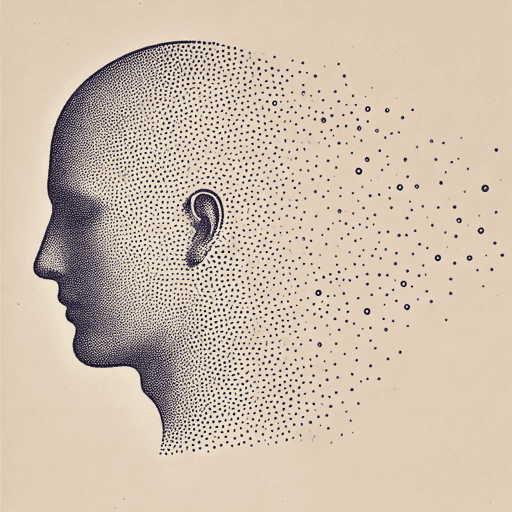
A World Appears: A Journey into Consciousness
A World Appears: A Journey into Consciousness
A modern alternative to SparkNotes and CliffsNotes, SuperSummary offers high-quality Study Guides with detailed chapter summaries and analysis of major themes, characters, and more.
Summaries & Analyses
Author Insights
Quizzes
NEWReading Tools
Themes
Content Warning: This section of the guide includes discussion of drug use.
The Limits of Western Rationality
A World Appears argues that the scientific and philosophical modes of Western society have proven incapable of describing, explaining, or in some cases even identifying all the complex mysteries of existence. This includes the origins of life, the complex nature of cosmology, and the nature and origins of consciousness. Despite Pollan’s initial assumption that science can and has solved the mysteries of consciousness and he simply needs to do the research to understand it, he continually discovers throughout the book many examples of the limitations of Western modes of rational thought, including science and philosophy. He thus opens the book believing in the supremacy of Western rationality to explain the nature of the mind and closes the book with the conclusion that consciousness may be beyond all human understanding.
The core of this theme is in the “hard problem” of consciousness, “the puzzle of why any of these mental operations […] are accompanied by any conscious experience” (xv). Pollan uses the hard problem as a guide throughout the book to critique and question each consciousness theory he examines. Crucially, both Pollan and Chalmers find each theory inadequate to the task of solving the hard problem, leading each to conclude that Western modes that rely on rationality and objectivity may never answer the question of why mental processing does not “go on ‘in the dark,’ free of any inner feeling” (xv).
However, many scientists maintain that rational research and scientific inquiry will, eventually, unlock the mysteries of consciousness. Pollan speaks with many consciousness researchers who have not given up that task, including Antonio Damasio, Michael Levin, Karl Friston, and others. Psychologist Daniel Gilbert, for instance, acknowledges the current difficulty of solving the hard problem of consciousness but warns Pollan against “the desire for magic” (65), by which he suggests that consciousness will one day be accessible to rational thought because “everything in our world can ultimately be explained by the established laws of nature” (65) without the need to resort to magical thinking and mysticism.
Pollan takes this warning to heart and pushes back against his own impulses toward a desire for mystery and a bias built on a background in the humanities that respects “human consciousness as something exceptional that is worth defending” (100). However, by the end of Chapter 2, Pollan has already begun to question Gilbert’s insistence. When Kingson Man describes a psychedelic experience and his conclusion that there is “a spark of the divine in us” (118), Pollan wonders if this is an example of the magical thinking Gilbert warns against, or rather an acknowledgement of the truth that rational thought cannot access and explain everything.
As Pollan continues, he uncovers more examples that demonstrate the truth of this supposition. The most significant example is that of Christof Koch, the staunch materialist neuroscientist who made the bet with David Chalmers in 1994, and admits defeat in 2023. By the end of the book, he has concluded that physical science fails in the task and has begun to explore the more metaphysically-incline theory of idealism instead. By the Coda, Pollan argues that even Buddhism may not adequately solve the hard problem, suggesting that this is not merely a limitation of Western rationality but of all human effort. His conclusion is that consciousness cannot yet be explained, but it can be appreciated and lived by everyone, no matter what school of thought they support.
The Impact of Biases on Science
While Western rationality is limited in its scope for many reasons, Pollan highlights one in particular: its biases. In this theme, Pollan examines the impact that various assumptions have had on science, demonstrating the way they limit science’s capabilities. Some are small personal biases and others are far-reaching, unquestioned beliefs embedded within Western society. Both lead to arbitrary judgments and methods that arise from flawed reasoning.
Some of the biases that Pollan notes include science’s early bias toward sensory perception in consciousness research. Vision and hearing were the most easily accessible to physical scientists and, therefore, the most logical place to begin their studies. However, as Damasio and others argue, this focus expanded to the entirety of consciousness research, creating a bias against other areas of inquiry, such as feelings (Damasio’s domain) or spontaneous thought (Hadjiilieva’s domain). The belief that thoughts can (and should) be isolated from their contexts has led scientists to dismiss the importance of subjective experiences. Pollan experiences this when he participates in Russell Hurlburt’s experiment of recording his thoughts.
The prevalence of bias is a problem because science intends to be neutral and objective. In fact, science’s need to be objective (to have a third-person, outside, “view from nowhere” (9) as Pollan describes it), is one of the reasons it often rejects subjective experience as a starting point for inquiry. Ironically, the various biases that impact scientific research demonstrate the many ways science fails to be objective from the outset. Moreover, its rejection of subjective experience is, in itself, another bias that potentially limits its capabilities.
This rejection largely stems from two major societal biases that have influenced science. The first is the mind/body split, first posed by classical thinkers Galileo and Descartes. This false distinction gives more scientific weight and value to the study of physical matter while ignoring mental processes and subjective experience. Throughout the book, Pollan and the researchers he interviews highlight this bias as the primary limitation in Western rational thought. It has deeply impacted the methods and direction of consciousness research and created a bias against other potential avenues of exploration such as indigenous modes of thought and Eastern religions like Buddhism.
The second major bias, as suggested by Hadjiilieva, is Western capitalist society’s privileging of productivity and work. This, she argues, has led to propaganda within scientific communities that favor active, “productive” thought over mental wandering and interior experience. Science has devalued research in spontaneous thought because it does not benefit the capitalist system, thus dismissing a potentially valuable area of consciousness research.
Sentience as a Challenge to Human Uniqueness
A World Appears provides many examples that demonstrate the shared nature of consciousness, or at least sentience, among all animals, and potentially all living beings. This shifts humanity’s status as a unique and supreme species to one of many sentient animals. Pollan uses the example of Martin Amis’s novel, The Information, as a point of reference for framing this theme. In The Information, a character is researching and writing a thesis on the topic of “The History of Increasing Humiliation” (19), in which he argues that all of human history is a gradual decline from humanity’s “position at the center of the universe” (19). The character highlights such moments as Copernicus’s discovery that the Earth orbits the sun and is therefore not the center of the universe and Darwin’s discovery that humans are just like every other animal in the grand scheme of evolution. Pollan argues that consciousness research, which first extended basic sentience to other animals and then to plants, is yet another step in this gradual decline.
However, Pollan argues, the decline of human uniqueness does not end there. Throughout the book, he discusses other examples that challenge humanity’s unique claims to consciousness in nature. For instance, Friston’s claims that any self-organizing system could potentially develop homeostasis and therefore consciousness blurs the line between living and nonliving systems and arguably places machines like thermostats at the bottom of the same spectrum as animals and humans. Moreover, attempts to create a conscious and feeling AI system likewise challenges human supremacy. Pollan suggests that if scientists successfully create such an AI, it will cross a threshold that impacts “our very identity as a species” (98). Though Pollan ultimately concludes that this endeavor is far from success, the concept still unsettles him because of the deeply-held humanist belief that human consciousness is something special.
Though scientific research seems to provide the primary challenges to the humans’ sole claim to consciousness, Pollan discovers that even non-Western modes of thought, such as Buddhism, challenge this status. The Buddhist concept of no-self, borrowed by philosophers (and psychedelics researchers) as shared or universal consciousness, further blurs the lines that separate humans from the rest of the universe. Indeed, Buddhism, as well as theories like idealism, suggest that consciousness is an inherent quality of existence on the same level as gravity or time, contained in every particle of matter. This concept removes the boundaries entirely, placing all things, living or not, on the same basic level. Pollan concludes his research with the idea that this shared consciousness may, in fact, be a good thing, allowing for a greater understanding of humanity and its place in the universe.

Unlock every key theme and why it matters
Get in-depth breakdowns of the book’s main ideas and how they connect and evolve.
- Explore how themes develop throughout the text
- Connect themes to characters, events, and symbols
- Support essays and discussions with thematic evidence