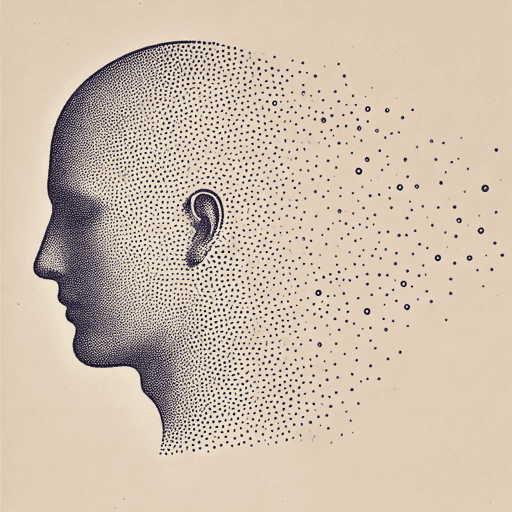
A World Appears: A Journey into Consciousness
A World Appears: A Journey into Consciousness
A modern alternative to SparkNotes and CliffsNotes, SuperSummary offers high-quality Study Guides with detailed chapter summaries and analysis of major themes, characters, and more.
Summaries & Analyses
Author Insights
Quizzes
NEWReading Tools
CodaChapter Summaries & Analyses
Coda Summary: “The Cave”
As Pollan reaches the end of five years of research without firm answers, he speculates that he might be using the wrong approach. He decides to approach the question of consciousness from the perspective of Buddhism and meditation. To do so, he meets with Joan Halifax, the Buddhist abbot of the Upaya Zen Center in Santa Fe.
Pollan plans to spend time at Upaya to interview Halifax, learn more about Buddhist thought on the self, and practice meditation. Instead, Halifax takes him to the cave, a retreat in the Sangre de Cristo Mountains. It is a literal cave in the mountains sealed with a glass sliding door, containing a single small bed and a woodstove, no running water and no electricity. He suspects that Halifax takes him here to avoid his questions but eventually realizes that she wishes for him to experience the meditative isolation that Zen Buddhists use to escape the self/ego.
Halifax explains that meditation “breaks down the ego” (233) primarily through repetition, boredom, and exhaustion. At some point, the meditator finds their own sense of self so uncomfortable that they “drop in” to a state of “being completely present in time and space” (233). At this point, the meditator temporarily loses their sense of a separate self and enters that state of no-self or pure awareness.
Pollan spends several silent, isolated days in the cave, using simple routines that become ritual-like and meditative. During this time, he again attempts Ricard’s exercise to search for the self in a series of rooms. This time, he does not find himself but images, sensations, and thoughts that appear unbidden. He can quickly chase these thoughts away to clear the mind. This, to him, suggests that there is still “something […] imbued with a point of view and agency” there to do the chasing (237). He concludes that the self may be both illusory and real at the same time.
One night, he looks up at the night sky and for the first time feels stripped of the subjective self. His “brain’s usual priors, predictions, and inferences about the night sky had broken down” (237), allowing him to see it more clearly than before. He believes that previous experiences of the night sky had been filtered or impacted by preconceived notions of what the sky is or should be. Now he is “fully, freshly present to the universe” (238) and sees it as it truly is.
He concludes that his efforts to solve the mystery of consciousness have prevented him from fully experiencing his own consciousness. He now decides that consciousness need not be a puzzle to be solved but a practice to engage with, which allows the individual to be present to life.
Coda Analysis
The Coda, though brief, is an important element of Pollan’s research and experience in writing the book. The ideas and personal biases he examines in the Coda extend directly from his final conclusions at the end of Chapter 4. Having determined that no theory proposed by science or philosophy can explain the complex mysteries of consciousness, he now decides to take the spiritual approach. Rather than research Buddhist theories from the outside, however, he fittingly adopts the phenomenological method of examining the experience from the inside. This leads him to his time in ‘the cave.’
Crucially, the cave is both a literal location run by the Upaya Zen Center, and a clear reference to Plato’s Allegory of the Cave, which has lingered in the background of every concept Pollan studies. Pollan explicitly references Plato’s Cave twice in the book, first in Chapter 1 when comparing Friston’s concept of homeostasis to the version of reality viewed in the cave, and second in Chapter 2, when comparing an AI’s environment on the internet to the shadows on the cave walls. Though Pollan does not explicitly refer to the Allegory of the Cave in the Coda, the comparison is both obvious and apt. Pollan’s experience living in the cave, ironically, aids him to see beyond his own biases and assumptions (which function like the shadows on the wall) to access the reality of the world more directly.
The best example of this comes in his descriptions of the night sky. He metaphorically exits the cave of his own mind or self, which is associated with the Buddhist concept of no-self, and becomes “fully, freshly present to the universe” (238) like the prisoner of Plato’s cave who sees the sun for the first time. This experience thus helps Pollan reconcile his lack of concrete answers, which he had hoped to find in his research, with an acceptance that not all things can, or need to be, solved.

Get in-depth, chapter-by-chapter summaries and analysis from our literary experts.
- Grasp challenging concepts with clear, comprehensive explanations
- Revisit key plot points and ideas without rereading the book
- Share impressive insights in classes and book clubs