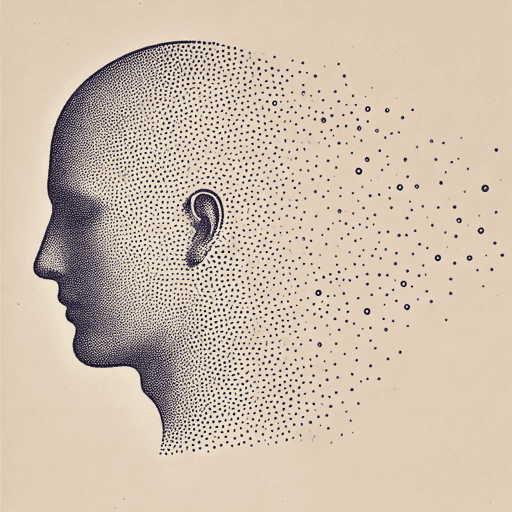
A World Appears: A Journey into Consciousness
A World Appears: A Journey into Consciousness
A modern alternative to SparkNotes and CliffsNotes, SuperSummary offers high-quality Study Guides with detailed chapter summaries and analysis of major themes, characters, and more.
Summaries & Analyses
Author Insights
Quizzes
NEWReading Tools
Background
Philosophical Context: The Allegory of the Cave
The “Allegory of the Cave” is an anecdote in Greek philosopher Plato’s The Republic (Book VII), written in approximately 375 B.C. In the “Allegory of the Cave,” Socrates (as described by Plato) describes the scenario of a group of people who have lived their entire lives trapped in a cave. They are chained to the inner wall of the cave so that they cannot see each other, only the wall in front of them.
A fire burns behind the prisoners, casting a light on the wall in front of them. Between the prisoners and the fire stands a low barrier, behind which people can walk carrying objects or puppets. The barrier obscures the people, while the fire casts shadows of the objects on the wall the prisoners can see. The prisoners have no knowledge of what is happening behind them, making the shadows the only reality the prisoners know. They do not know that they are merely shadows of real objects that come from outside the cave.
Next, Socrates describes what might happen when the prisoners are released from their chains. They look around and see the fire. If someone told them that this is real, they likely would not believe it. They might even run back to the comfort of the shadows. Then, Socrates suggests that someone drags one freed prisoner out of the cave and into the sunlight. The prisoner would blinded by the sun. But eventually, the freed person’s eyes would adjust so they could see real people, objects, and sky.
Finally, the freed person returns to share their experiences with those still hiding in the cave. Upon returning, the freed person is again blinded, no longer used to the darkness. Due to this blindness, the prisoners would assume that the journey was damaging and dangerous. Moreover, they would not believe the freed prisoner’s claims. Socrates finally suggests that the other prisoners would likely kill anyone who tried to drag them out of the cave as well.
This allegory conveys the theory of Forms, in which Plato argues that the material world humans perceive through sensation is not the true or highest form of reality but merely a “shadow” of the realm of Forms. These Forms are abstract, timeless, and unchanging, but cannot be accessed with normal human senses. The “Allegory of the Cave” aligns with Pollan’s overarching exploration of the limits of science and rational thought to accurately describe or understand existence. Pollan’s explanation of consciousness as both the object of study and the tool by which the study is conducted is like the limited perception of the humans in the cave. Pollan explicitly references Plato’s allegory in Chapter 1 when discussing sentience. Additionally, his experiences in a Buddhist meditation cave in the Coda may be an oblique reference to the allegory as well.

Get in-depth, chapter-by-chapter summaries and analysis from our literary experts.
- Grasp challenging concepts with clear, comprehensive explanations
- Revisit key plot points and ideas without rereading the book
- Share impressive insights in classes and book clubs