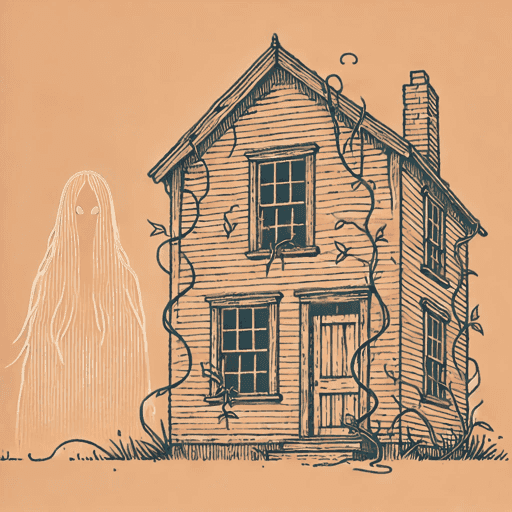
Blood in the Water
A modern alternative to SparkNotes and CliffsNotes, SuperSummary offers high-quality Study Guides with detailed chapter summaries and analysis of major themes, characters, and more.
Summaries & Analyses
Quizzes
NEWReading Tools
Chapters 13-17Chapter Summaries & Analyses
Content Warning: This section of the guide includes discussion of bullying, emotional abuse, and child death.
Chapter 13 Summary
Kaylani and London find Miles, who reveals he has also been investigating his brother’s death. The three go to an ice cream shop called Mad Martha’s, a place Miles and Chadwick used to visit. Miles asks the girls for their help in finding Chadwick’s killer. Recalling that investigators had asked her dad to hand over his phone and computer, Kaylani suggests they look for Chadwick’s phone near the bridge since its last ping placed Chad there but it was never recovered. Later, Cassie is released from her punishment and takes London and Kaylani on a shopping trip, buying Kaylani an expensive new outfit.
Cassie then takes them to the bridge where Chadwick died and tries to force Kaylani, who cannot swim well, to jump into the water with her and London. As Cassie grips Kaylani’s wrist and pulls her toward the railing, Miles arrives and intervenes. Afterward, Miles tells Kaylani that he heard Chadwick got into a fight with Jaden over Cassie the night he died.
That evening, Mr. and Mrs. Watson confront the girls, revealing that over a thousand dollars is missing from the charity event’s cashbox. London immediately accuses Kaylani, yelling, “Your dad stole money, and you’re just like him!” (180). London then admits she gave Kaylani a fake phone number to prevent her incarcerated father from calling. Devastated, Kaylani defends herself by pointing out that security cameras at the art gallery could prove her innocence. Only after Kaylani mentions the cameras does Cassie defend Kaylani. Cassie claims that anyone could have taken the money from the unattended cashbox after the event. Overwhelmed by the betrayal and false accusation, Kaylani flees the house on a bike.
Chapter 14 Summary
Chapter 14 opens with a flashback: Kaylani’s father took a plea deal after being accused of stealing from his company because he knew that his family’s finances would be devasted if his case went to trial and he lost. The narrative then returns to Kaylani sitting on a bench on Circuit Avenue, where Miles finds her. He explains that the Watsons told everyone that Chadwick broke up with Cassie because of another girl, but he actually broke up with her because the Watsons were spreading rumors that he was a bad influence. To cheer her up, Miles takes Kaylani to ride the historic Flying Horses carousel and then to get late-night donuts from Back Door Donuts. While there, Kaylani sees Cassie in a heated argument with Jaden in a nearby alley. Before they part, Miles gives Kaylani his phone number so her father has a reliable way to call her.
When Kaylani returns to the Watsons’ house, Mrs. Watson is waiting for her on the porch. She apologizes to Kaylani for accusing her of theft. However, she then undermines the apology by stating her firm belief in Kaylani’s father’s guilt, telling Kaylani there was “a lot of evidence” (193). Hurt and angered by the comment, Kaylani goes to her room without saying another word.
Chapter 15 Summary
The next morning, Kaylani packs her bags and tells the Watsons she wants to go home, but they insist she stay for the weekend. Shortly after, Miles and Deion invite Kaylani to be the final member of their team for a town-wide scavenger hunt. When Mrs. Watson asks if London can join too, the boys claim the team is full.
During the scavenger hunt, a clue leads the team to the local library. While Miles and Deion search for the next clue, Kaylani asks the librarian for information about Alice McBride, the original owner of the Watson house. The librarian reports that it is nearly impossible to find information about Alice online, as if someone intentionally “erased all traces of her” (201). She confirms McBride was a prominent member of the island’s elite African American organizations and offers to search the newspaper archives at another library branch, though this could take several weeks.
Chapter 16 Summary
After their team wins the scavenger hunt, Miles, Deion, and Kaylani go to Miles’s house to celebrate. Miles shows Kaylani his brother’s room. Chadwick’s desk is covered in papers, ledgers, and old photos related to his research on Alice McBride and the Watson house. Miles explains that Chadwick was helping research the Watson house specifically for potential inclusion on the heritage tour, but that Mrs. Watson was resistant, claiming she “didn’t want strangers around” (206). Among the photos, Kaylani finds one of Alice McBride in the Watson kitchen, standing next to someone she recognizes, though she is interrupted before she can process it fully.
Their conversation is interrupted by Miles’s grieving mother, Mrs. Cooper, who finds them in the room. She angrily confronts Kaylani, identifying her as the girl who allegedly stole money from the charity event. Mrs. Cooper tells Kaylani that “the apple don’t fall far from the tree” (208), and she orders her to leave the house immediately. Humiliated and in tears, Kaylani runs out.
Chapter 17 Summary
Miles and Deion reassure Kaylani that they know she didn’t steal the money. Miles adds that Chadwick had told him the Watsons owe money to everyone who works for them. Miles helps Kaylani speak to her father on his cell phone. During their conversation, Kaylani tells her father about being falsely accused of theft and how unhappy she is. He promises to arrange for her to come home.
That evening, Kaylani attends a barbecue at Deion’s house and enjoys a rare, normal night with her friends. When she returns to the Watsons’ house, she goes through her notes and finds a past-due invoice in Mr. Watson’s name printed on the back of the scrap paper bearing London’s fake number. She decides there’s only one person in the house who can answer her questions.
Chapters 13-17 Analysis
In the novel’s third section, Jackson uses Cassie’s manipulative behavior to expose The Illusion of Social Respectability. When the teenager takes Kaylani shopping and buys her an expensive outfit, the gesture initially appears to be an act of reconciliation, but it quickly reveals itself as a tool of psychological manipulation. By dressing Kaylani in clothes that mirror her own and London’s, Cassie attempts to remake Kaylani in their image, creating a transactional debt that she immediately tries to cash in at the Jaws Bridge. Her attempt to force Kaylani, who isn’t a strong swimmer, reinforces the bridge’s symbolic transforms the bridge from a place of innocence to a site of corruption. The expensive outfit becomes a costume for a role Kaylani refuses to play and a prelude to a violent initiation she must escape. Kaylani’s internal reflection that Cassie is like “a shark creeping in the water” solidifies this shift (173), connecting Cassie’s social predation to the novel’s central sharks motif. This sequence demonstrates how acts of supposed generosity can be used to assert power and control, turning gifts into obligations and social inclusion into a dangerous trap. The moment marks Kaylani’s full understanding of the menace lurking beneath the Watson sisters’ polished exteriors.
London’s vicious outburst during the confrontation over the missing money lays bare the painful reality of The Stigma of Parental Incarceration. She accuses Kaylani of theft, declaring, “Your dad stole money, and you’re just like him!” (180). This attack on the protagonist’s family and character is immediately followed by London’s confession that she provided a fake phone number to block Kaylani’s father. The cruelty of this double betrayal isolates Kaylani and actively sabotages her most important relationship, weaponizing her father’s legal status against her. The later scene in which Miles and Deion facilitate a call between Kaylani and her father offers a corrective, allowing Kaylani’s father to reassert his identity as a loving parent and offer guidance rooted in integrity. The stigma is further reinforced by Mrs. Cooper, who, in her grief, parrots the rumor and dismisses Kaylani by claiming the “apple don’t fall far from the tree” (208). These moments show how this social stain precedes Kaylani and defines her in the eyes of many, regardless of her own character or actions.
The confrontation over the missing charity funds shatters the Watsons’ carefully constructed facade, revealing the hypocrisy behind The Illusion of Social Respectability. The family’s immediate suspicion falls on Kaylani, the outsider from a lower socioeconomic background, revealing their deep-seated class bias. Their collective silence as London attacks Kaylani shows their willingness to sacrifice her to protect their reputation. Mrs. Watson’s subsequent apology is rendered meaningless when she continues to assert her belief in Kaylani’s father’s guilt, telling her, “[S]ometimes, we have to see through love for the truth” (194). This statement is deeply ironic because, as it’s later revealed, Mrs. Watson herself is deceiving her own family about how she acquired their opulent home. The discovery of a past-due invoice in Mr. Watson’s name, combined with Miles’s revelation that the Watsons owe money to their workers, suggests this obsession with respectability masks significant financial instability. The family’s “niceness” is a calculated performance to maintain status, and their willingness to scapegoat Kaylani demonstrates the moral bankruptcy that their social standing conceals.
As Kaylani begins to investigate with Miles, the mystery of Chadwick’s death intertwines with a much older one, centering on the motif of the Watson House (McBride Manor). The librarian’s revelation that information on the home’s original owner, Alice McBride, has been systematically erased online positions the investigation as an act of historical recovery. This pursuit advances The Reclamation of Black History, a central mission of the real-world African American Heritage Trail that Chadwick was working with. Chadwick’s research on McBride and the Watson house confirms he was on this same path, attempting to have the property added to the heritage trail against Mrs. Watson’s wishes. The discovery of the photograph showing Alice with a recognizable but yet unidentified person suggests the Watsons’ connection to this suppressed history is deeply personal, transforming their house from a status symbol into a site of buried secrets and potential crime.
In contrast to the transactional and hostile environment of the Watson household, these chapters establish the authentic community Kaylani finds with Miles and Deion. This friendship provides an important emotional refuge and offers a model of acceptance that counters the Watsons’ conditional hospitality. Their support is immediate and unconditional: Miles intervenes when Cassie tries to force Kaylani to jump off the bridge, they both affirm their belief in her innocence after Mrs. Cooper’s accusation, and Deion’s family welcomes her for a barbecue. Their scavenger hunt victory and simple pleasures like riding the Flying Horses carousel represent a childhood innocence that Kaylani has been denied, both by her father’s incarceration and the Watsons’ toxic social maneuvering. This friendship offers a glimpse of the true community spirit of Oak Bluffs, a place of historical refuge for Black families, which stands in opposition to the Watsons’ elitist and exclusionary world. Their genuine support provides the emotional anchor Kaylani needs to withstand the Watsons’ attacks and empowers her to continue seeking the truth.

Get in-depth, chapter-by-chapter summaries and analysis from our literary experts.
- Grasp challenging concepts with clear, comprehensive explanations
- Revisit key plot points and ideas without rereading the book
- Share impressive insights in classes and book clubs
Related Titles
By Tiffany D. Jackson