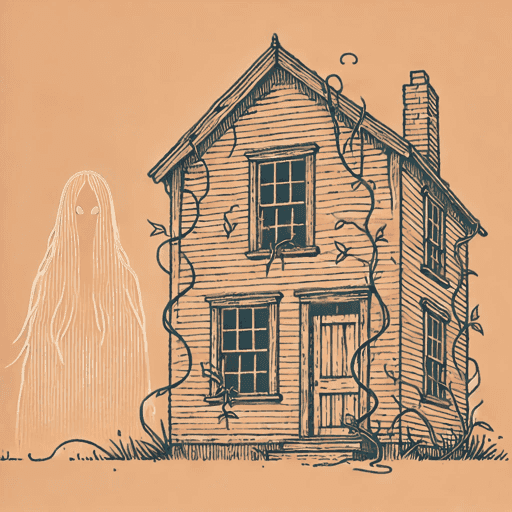
Blood in the Water
A modern alternative to SparkNotes and CliffsNotes, SuperSummary offers high-quality Study Guides with detailed chapter summaries and analysis of major themes, characters, and more.
Summaries & Analyses
Quizzes
NEWReading Tools
Chapters 7-12Chapter Summaries & Analyses
Content Warning: This section of the guide includes discussion of bullying, graphic violence, and child death.
Chapter 7 Summary
At breakfast, Kaylani and London learn from Mrs. Watson that Chadwick is missing. London lies to her grandfather, denying she and Kaylani saw Chadwick the night before. Cassie mentions there was a party by the bridge, which prompts Mrs. Watson to order Cassie to supervise the girls at the beach for safety.
At the beach, Kaylani insists they should tell the truth about seeing Chadwick the night before his disappearance, but London and Cassie refuse. Kaylani confronts Cassie, pointing out that Cassie was the last person seen with him. Cassie dismisses her concerns. Suddenly, news spreads via phone notifications that Chadwick’s body has been found at the bridge. Cassie wordlessly gathers her belongings and leaves. London and Kaylani bike to the scene, where they see police collecting evidence, measuring, and taking photos. Kaylani notices black tire tracks that weren’t there the previous day. A bystander speculates that Chadwick was killed in a shark attack, causing London to vomit.
Chapter 8 Summary
The next evening, the community holds a memorial for Chadwick at an open-air church called the Tabernacle. Kaylani notices that both Cassie and London seem disengaged, playing on their phones. Kaylani overhears guests questioning the shark attack theory, as sharks are rare in that part of the bay. London introduces Kaylani to her friend, Deion, and they are soon joined by Chadwick’s grieving brother.
Miles and Deion tell Kaylani that Cassie and Chadwick dated the previous summer, but her grandparents disapproved because they disliked that “he hung around the house so much” (102). Miles invites Kaylani to join him on the African American Heritage Trail tour using tickets Chadwick had bought for him. Kaylani deduces aloud that someone must have been with Chadwick at the bridge and watched him die, which the boys had not considered, reinforcing her suspicion. Later, Kaylani gets London’s phone number so her father can reach her when she’s away from the Watsons’ home, but London upsets her by saying she doesn’t want “criminals” calling her phone.
Chapter 9 Summary
Kaylani, London, and Miles take the African American Heritage Trail tour. The guide points out the Watsons’ house, identifying it as the historic “McBride Manor.” It was once owned by Alice McBride, whose father was one of the first Black preachers on Martha’s Vineyard. Alice raised money to help African Americans during the civil rights movement visit the island and died in a drowning accident. The guide mentions the house was bequeathed to the Watsons, which confuses London, who had always believed her grandparents purchased it.
After the tour, Deion tells the girls of a shark sighting at South Beach. Kaylani voices skepticism about the attack on Chadwick, speculating that a shark would have consumed the entire body, which angers London. Miles and Kaylani go to the library, where he researches sharks. Kaylani searches for information on Alice McBride but finds nothing online. Back at the house, Mrs. Watson claims she never met Alice McBride and that they moved in “different circles.” Kaylani then sees Jaden gardening with Mrs. Watson and notices him staring intently at Cassie, who is by the pool.
Chapter 10 Summary
During the Watsons’ charity fundraiser at an art gallery, Kaylani anxiously waits for a call from her father on London’s phone, but it never comes. During the party, she observes Cassie and Jaden in a tense interaction in a corner. Cassie seems angry and slaps Jaden’s hand away. The following evening, two detectives arrive at the house to question the girls. Cassie admits she was at the party and in Chadwick’s truck, but claims she left him in the Nomans restaurant parking lot and that Jaden gave her a ride home.
After the initial questioning, the girls eavesdrop from a window and overhear the detectives informing the Watsons that Chadwick’s death was a homicide. He suffered blunt force trauma to the back of the head and had no water in his lungs, meaning he was dead before entering the water. The detectives note it was not a shark attack, though someone tried to make it appear that way. They reveal that Cassie is a person of interest because she was the last one seen with him and had a very public, messy breakup with him the previous summer. After the police leave, the girls are grounded. London confirms the story of the breakup but insists Cassie is innocent and asks Kaylani to help prove it.
Chapter 11 Summary
Determined to help London, Kaylani sneaks into Cassie’s room to look for clues. She finds a set of car keys for a truck like Chadwick’s and a pair of sandals from the night of the party, now caked with blood and seashells. Cassie discovers Kaylani in her room and furiously threatens her to stay away.
Later, Kaylani and London bike to the Nomans parking lot, the location where Chadwick’s truck was found. Near the restaurant, Kaylani spots a mailbox decorated with birds and deduces the homeowner has a birdwatching camera. They knock on his door, and he finds footage that shows Cassie exiting Chadwick’s truck and walking away, but there is no sign of Chadwick in the footage, leaving open whether he was still in the car. The camera also captured a second, unidentified car pulling into the lot just out of frame. At the end of their visit, Kaylani notices a retired police certificate on the man’s mantle. Kaylani concludes their next step is to find and question Jaden.
Chapter 12 Summary
Kaylani and London attend a library presentation by a shark biologist, Dr. Daniel Brooks, hoping to learn more about the attack. Miles is also in attendance for the same reason. Dr. Brooks explains that a true shark bite leaves a distinct pattern of triangle-shaped marks. He then reveals that he was consulted by police on Chadwick’s case and, in his official opinion, the wound was not a real bite but was faked using some sort of sharp tool. Upon hearing this, a distraught Miles runs out of the room. Afterward, London expresses doubt that Cassie would be capable of staging such a wound. As they are eating lobster rolls, London spots Miles standing nearby. He says, “I think someone killed my brother” (160).
Chapters 7-12 Analysis
The immediate aftermath of Chadwick’s disappearance advances the novel’s examination of The Illusion of Social Respectability by revealing how the Watson family prioritizes reputation over truth. During the memorial at the Tabernacle, Kaylani observes that both London and Cassie are disengaged and absorbed in their phones while the community grieves. This private apathy contrasts sharply with the family’s public role as island royalty, making their rounds and “offering words of encouragement and comfort” (94). The charity soiree further exemplifies this disconnect; just weeks after a teenager’s murder, the island’s elite are “laughing, drinking wine, and dancing to music” (122), demonstrating a swift return to normalcy that preserves social decorum. When detectives question the girls, Mr. Watson is more concerned about his granddaughters’ public comportment than the investigation but for, warning Cassie to “mind [her] manners” (131). His defensiveness when the detectives mention Cassie’s messy breakup with Chad and his claim, “Folks find any excuse to talk about us” (138), shows that the family’s primary defense mechanism is to manage public perception. This constant effort to control the narrative illustrates the theme of The Illusion of Social Respectability. Within the exclusive, historically significant Black community of Oak Bluffs, the Watsons’ status is their most valuable asset, and they treat any threat to it as an existential crisis, even when it obstructs a murder investigation.
Kaylani’s status as an outsider is sharply defined by London’s reaction to her father’s incarceration. When Kaylani requests London’s phone number for her father to call from prison, London’s anxiety is immediate and cutting: “I just don’t want a bunch of…criminals calling my phone, that’s all” (105). Her comment reveals a deep-seated prejudice that reduces Kaylani’s father to a dangerous stereotype and, by extension, taints Kaylani herself. This moment crystallizes the theme of The Stigma of Parental Incarceration, demonstrating how the social consequences of the justice system extend to children, branding them with unearned shame. For London, who has been insulated by wealth and status, a person in prison is an abstraction to be feared. For Kaylani, it is a painful reality that isolates her from her peers and fuels her determination to fight for her father. In addition, Jackson uses Kaylani’s anxiety while waiting for the call that never comes to emphasize her powerlessness and dependence on the Watsons’ privileged world.
The African American Heritage Trail tour shifts the novel’s focus from a contemporary crime to a mystery rooted in buried history. The tour guide’s revelation that the Watsons’ home is the historic “McBride Manor” and was “bequeathed” to the family directly contradicts London’s understanding of her family’s origin story. This discrepancy reinforces the Watson House (McBride Manor) as a motif of The Reclamation of Black History; the house is an artifact of a past that has been deliberately obscured. This is reinforced when Kaylani’s attempt to research Alice McBride online yields no results, suggesting a modern, active erasure of the historical record. Mrs. Watson’s evasive response that she and Alice were in “different circles” is a coded dismissal rooted in social class that rings hollow and deepens the suspicion. This development frames Chadwick’s murder as a direct consequence of his historical investigation. By incorporating the real-world Heritage Trail, the narrative suggests that the act of unearthing and honoring marginalized histories is a dangerous but necessary pursuit of justice.
Fueled by her father’s wrongful conviction, Kaylani transitions from a passive observer to a determined investigator. Her legal training, though nascent, informs her every move, starting at the Jaws Bridge where she notices details the police seemingly overlook, like the fresh tire tracks. At the beach, she instinctively draws upon her legal knowledge and cross-examines Cassie: “You drove away from the party with Chadwick. So, really, you’re the last person that saw him, aren’t you?” (88). Her analytical skills are again on display when she deduces that a bird-watcher must live in the house with the decorative mailbox, leading her to important video evidence. Unlike London, who is motivated by loyalty to her sister, Kaylani is driven by a commitment to objective truth, a principle shaped by the injustice her family has suffered. This burgeoning detective work is a practical application of the knowledge she is gathering for “#operationFREEDAD,” demonstrating her growing agency and her belief that justice requires active, evidence-based pursuit rather than reliance on flawed official narratives and institutions.
The initial theory of a shark attack is a convenient, sensationalized narrative that obscures the calculated nature of Chadwick’s murder. The rumor, which spreads rapidly at the Jaws Bridge, provides a non-human culprit for a human crime, allowing the community a sense of tragic randomness rather than confronting the possibility of a killer in their midst. The motif of sharks thus highlights The Illusion of Social Respectability because it’s a facade designed to conceal the true threat. However, this narrative quickly unravels through observation and expertise. Kaylani questions it based on simple logic, locals at the memorial express skepticism based on their knowledge of the bay, and the shark biologist Dr. Brooks definitively debunks it, explaining that the wound was faked to resemble a bite. Dr. Brooks’s professional assessment transforms the investigation, confirming that Chadwick’s death was an elaborately covered-up homicide. This revelation strips away the facade of a freak accident, forcing the characters to face the terrifying reality of human malice.

Get in-depth, chapter-by-chapter summaries and analysis from our literary experts.
- Grasp challenging concepts with clear, comprehensive explanations
- Revisit key plot points and ideas without rereading the book
- Share impressive insights in classes and book clubs
Related Titles
By Tiffany D. Jackson