Dolly All the Time
A modern alternative to SparkNotes and CliffsNotes, SuperSummary offers high-quality Study Guides with detailed chapter summaries and analysis of major themes, characters, and more.
Summaries & Analyses
Quizzes
NEWReading Tools
Chapters 1-8Chapter Summaries & Analyses
Content Warning: This section of the guide includes discussion of illness and mental illness.
Chapter 1 Summary
During the school year, 39-year-old Dolly lives in Boston, where she is a kindergarten teacher, a part-time Uber driver, and a call-center employee. This summer, she and her 13-year-old son, Gus, have returned to her Rhode Island hometown of Whitfield from Boston for the season after a fire at the home of her father, Freddie, and her brother, Christopher. She and Gus usually spend about one weekend per month in Whitfield, during which she does laundry and small repairs on the family home. The Brick Fish House has been in her family for four generations, but her father is still in debt from a failed expansion attempt years ago. During a shift at the fish market, she takes a call for her side job with Good Sports, a sporting goods company. Later, Freddie asks Dolly to deliver shrimp to the wealthy Whitfield family at their estate, Eight Oaks.
The opulence of the estate reminds Dolly of her estranged mother, who was dissatisfied with the Bricks’ working-class life and obsessed with wealth, particularly that of the Whitfields. While biking back from Eight Oaks, Dolly finds Stewart Whitfield on the side of the road with a flat tire. Stewart, the heir to the Whitfield fortune, doesn’t know how to change a tire, so Dolly does it for him. During the repair, a passing driver snaps a photo of them. Stewart reveals his fiancée, Audrey Mills, was just pictured in the New York Post cheating on him with a baseball player. Dolly bikes away with Stewart’s handkerchief, given to her to wipe her hands, in her pocket.
Chapter 2 Summary
Dolly arrives at the family home on Goose Lane, where she finds Christopher, who has been diagnosed with “schizophrenia secondary to a brain injury” (137), the result of a car accident when he was a child. He is speaking of a trip to Las Vegas that never happened, and Dolly decides she needs to call his doctor. After assessing the fire damage on the sleeping porch and deeming it repairable, Dolly’s best friend, Naomi, arrives for dinner. Dolly tells her about the encounter with Stewart.
Their evening is interrupted by the fire chief, Gavin McCumber, who reports that the home’s roof has severe rot and mold. He estimates it will cost $50,000 to replace and warns that if it isn’t fixed, the house could be condemned. Later, Dolly and her father hold a “ringmaster meeting,” a family tradition for solving problems. Freddie insists he cannot afford the repair and refuses to go into more debt.
Chapter 3 Summary
After a shift at the fish house the next day, Dolly is stopped on the street by Stewart. He shows her a photo of them in the New York Post’s Page Six column with a headline claiming he was teaching his “Gal Pal” to change a tire. He explains that his sister Busy suggested he use the photo to “make it look like [he] had a girlfriend” (41), helping his public image following his public breakup.
Stewart asks Dolly to pretend to be his girlfriend for a couple of months to help him appear stable and in control. Dolly initially refuses, telling him she is too busy with her multiple jobs and a new family crisis. Seeing her hesitation, Stewart offers to pay her. Unsure what to do, Dolly heads to Naomi’s gift shop, Whitfield Tees, to discuss Stewart’s proposition.
Chapter 4 Summary
At Naomi’s store, Dolly reveals Stewart’s offer and explains that she asked for $60,000, the estimated roof cost plus $10,000 extra as a buffer. While they are talking, Stewart texts Dolly to confirm he is serious and wants to meet to negotiate her terms. Naomi takes Dolly’s phone and, texting on her behalf, arranges a dinner meeting for that night at Bistro Belle Vie, a restaurant in the nearby town of Harvey. Dolly agrees to go, and she and Naomi fantasize about the perks of the potential arrangement.
Chapter 5 Summary
Dolly meets Stewart at the restaurant to finalize their deal. He explains his true motive: He is competing with his cousin, Grant, to become the next CEO of his family’s company. His parents, who are on the company board, worry that he is a workaholic, and his public dumping by Audrey makes him look unstable. By appearing to be in a new, healthy relationship, he hopes to win their support.
They agree the fake relationship will last through the Starlight Gala, an event the Whitfields will host in August, and invent a backstory for how they met. They also agree to limited physical contact. At the end of the dinner, Stewart gives Dolly a check for $30,000, the first half of her $60,000 fee. As she leaves, Dolly jokingly asks if she has to give him a bath, and he confirms there is “nothing like that” involved (45).
Chapter 6 Summary
When Dolly gets home, she finds Gus watching television. He mentions not seeing any kids his age around town and expresses hope that lifeguard camp will help. Dolly privately reflects that his Boston friends have “moved on to girls and beer” (69), leaving him on the outside. She comforts him before heading to the sleeping porch, where she practices on the old Singer sewing machine. Then she gets up and begins sanding the fire-damaged wood. Later, Stewart texts to arrange a shopping trip for Dolly with his sister to buy her a new wardrobe for their public appearances. Dolly agrees and asks Naomi to come with her.
Chapter 7 Summary
The next morning, Dolly shows her father the $30,000 check and explains her arrangement to be Stewart’s fake girlfriend. Freddie says he hates “every single thing” about it (74), wishing she were using the money for herself rather than the family, and worrying he has already taken enough from her. Dolly reassures him that the deal is purely business and is the perfect solution to their problem with the roof. They agree to tell Gus the truth about the arrangement but decide to keep it from Christopher, knowing he cannot keep a secret.
Chapter 8 Summary
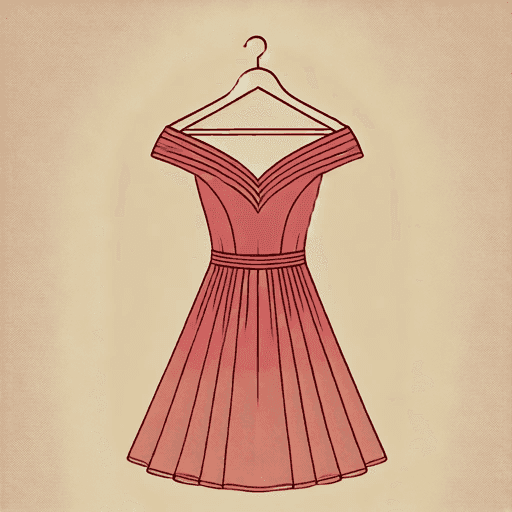
Stewart drops Busy off outside Wendell’s boutique before driving away, leaving Dolly to meet her alone. Busy is friendly and enthusiastic, and they head inside. A stylist named Octavia assists them as Busy helps Dolly select an entire new wardrobe of dresses, outfits, and accessories appropriate for the Whitfield social scene. Stewart’s assistant, Damion, has sent over three jewelry options from Kingsmouth, and Dolly chooses a gold necklace with a dahlia pendant from among them.
Naomi arrives toward the end of the boutique visit. The three then go to a salon, where Busy and Naomi convince Dolly to cut her long hair into a stylish bob. During the makeover, Busy admits she feels lost and lacks career direction. On the drive home, Stewart texts Dolly to ask if the shopping trip went well.
Chapters 1-8 Analysis
These opening chapters immediately introduce The Burden of Caretaking as a major influence on Dolly’s characterization. Her first action upon returning to her family home is to grab a broom and sweep the porch, a small but telling gesture that establishes her role as the family’s primary caretaker. This identity is reinforced by her internal to-do lists, her concern over her brother’s well-being, and her father’s relief at her arrival. When Freddie tells her, “This place is a circus” (31), and Dolly recalls their tradition of being the “ringmasters,” the narrative solidifies her position as the one who imposes order on chaos. Her acceptance of this role is both a source of strength and a significant obstacle to her personal fulfillment. The theme of The Burden of Caretaking is central to her character; she is a kindergarten teacher, a part-time Uber driver, a call-center employee, and now, the person responsible for managing a family crisis. This constant labor, both emotional and practical, has shaped her into a fiercely self-sufficient woman who sees problems as tasks to be completed. Her father’s regret that he has “taken enough” from her emphasizes the personal cost of this role, suggesting that Dolly’s sense of duty has long required her to sideline her own needs.
The initial encounter between Dolly and Stewart, in which she changes his flat tire, sets up the novel’s exploration of The Harmful Consequences of Class Division. When Dolly offers to help, Stewart’s incredulous response, “From you?” (13), reveals a worldview where practical labor is outsourced. This moment contrasts Dolly’s working-class competence with Stewart’s inherited learned helplessness. The town of Whitfield itself, modeled on the Gilded Age enclave of Newport, Rhode Island, is a backdrop for this disparity. The Whitfields reside at Eight Oaks, a sprawling estate with stables and a private chapel, while Dolly’s family lives in a modest house on Goose Lane, which is now facing condemnation due to a roof repair they cannot afford. Stewart’s ability to casually offer Dolly $60,000 to solve an image problem throws their financial realities into stark relief. His wealth insulates him from the basic struggles that define Dolly’s life, creating a chasm between them that their manufactured relationship is designed to unnaturally bridge.
Annabel Monaghan delves further into this critique of social dynamics through her use of the popular fake dating trope. Dolly and Stewart’s dinner at Bistro Belle Vie formalizes their arrangement, framing their relationship as a business transaction governed by a contract. By negotiating terms such as duration, frequency of outings, and physical contact or lack thereof, they strip the romance-genre premise of its romanticism. The deal is motivated by mutual, pragmatic need: Stewart requires a stable-looking partner to secure his promotion to CEO, and Dolly needs the money to save her family’s home from being condemned. This setup employs the fake dating trope to explore the transactional nature of relationships within their respective social strata. For Stewart, even his real engagement to Audrey appears to have been a strategic alliance, while for Dolly, her low expectations for romance are rooted in a practical desire to avoid emotional and logistical complications. Their agreement, with its explicit financial terms and non-disclosure agreement, highlights how both characters use relationships as a means to an end, albeit for vastly different reasons and with vastly different stakes.
The shopping trip with Busy marks Dolly’s physical transformation into the role of Stewart’s girlfriend, a process that highlights her deep-seated practicality and discomfort with the performative nature of wealth. As she tries on canary yellow pants and a celery-green satin gown, she feels like she is in a costume. Her remark, “I don’t feel like myself” (83), underscores that this makeover is about conforming to the aesthetic standards of a world she does not belong to. Busy’s encouraging words that Dolly is still herself, just “sprinkled in pixie dust” (83), use fairytale imagery to further emphasize the artifice of the identity she is adopting. The most significant change is her new bob haircut, which exposes her face and neck, stripping away the long hair she could hide behind. This external change forces a shift in her posture and self-perception, preparing her for the public scrutiny that will accompany her new role. Her choice of the subtle gold dahlia necklace over more ostentatious jewelry shows a small act of preserving her identity amidst the overwhelming performance, a quiet anchor to her true self.
The looming threat of the family home being condemned grounds the novel’s central conflict in a tangible, material crisis. The house on Goose Lane with its fire-damaged sleeping porch reflects the Brick family’s precarious situation. The fire itself reveals the deeper, hidden decay of the rotted roof, which, like the family’s long-standing financial and emotional struggles, has gone unaddressed for too long. For Dolly, the house is the repository of her family’s history and the place where she has “tended to [her] people” (32). Her immediate impulse to begin repairs herself reinforces her identity as a fixer. The sleeping porch, a space of both trauma and potential renewal, becomes the focal point of her efforts to restore order and security. This stands in contrast to the Brick Fish House, a business with a proud legacy now shadowed by debt, and Eight Oaks, which represents the effortless security of inherited wealth, a form of stability that Dolly can only access through a transactional arrangement. These financial and psychological tensions place pressure on Dolly and Stewart’s relationship as the novel continues.

Get in-depth, chapter-by-chapter summaries and analysis from our literary experts.
- Grasp challenging concepts with clear, comprehensive explanations
- Revisit key plot points and ideas without rereading the book
- Share impressive insights in classes and book clubs
Related Titles
By Annabel Monaghan