God of Ruin
A modern alternative to SparkNotes and CliffsNotes, SuperSummary offers high-quality Study Guides with detailed chapter summaries and analysis of major themes, characters, and more.
Summaries & Analyses
Quizzes
NEWReading Tools
Important Quotes
Content Warning: This section of the guide includes discussion of sexual content, sexual violence and harassment, graphic violence, physical abuse, emotional abuse, child abuse, and cursing.
“So this whole charade was an invitation? You girls sure come up with the most creative ways to get my attention. Are you up for it here, where anyone can walk in and see you getting fucked senseless like a dirty, dirty girl?”
(Chapter 2, Page 14)
This quote establishes Landon’s use of sexual degradation as a primary tool for intimidation and control. The rhetorical question is a form of verbal manipulation, twisting Mia’s actions into something they aren’t. The repetition of “dirty” acts as an insult meant to shame her, while the vulgar diction immediately sets an aggressive tone. Together, these devices frame their dynamic as a power struggle from their very first encounter.
“That’s right, mouse. I know both of you trespassed on my property and bathed me in pig blood. Now that we’ve gotten the dull pleasantries out of the way, shall we discuss that further?”
(Chapter 4, Page 33)
This line establishes Landon’s advantage in the escalating conflict, as he reveals that he has identified Mia and Maya despite their attempts to conceal their involvement in the revenge plot. The nickname “mouse” is a metaphor that casts Mia as small prey and Landon as the predator, reinforcing his perceived superiority. His sarcastic tone in calling the accusation a “dull pleasantry” downplays the seriousness of the moment, showing his calm control as he officially initiates their psychological war.
“Better close your windows at night. You never know what might crawl through them.”
(Chapter 5, Page 40)
Landon’s whispered threat is an act of psychological warfare, designed to erode Mia’s sense of safety. The verb “crawl” creates unsettling imagery of an insect or animal invading her space, tapping into primal fears. The vague pronoun “what”—rather than “who”—dehumanizes the threat, making it feel monstrous and foreshadowing his escalating obsession and stalking behavior.
“You look…positively stunning. A doll. No, a statue.”
(Chapter 7, Page 52)
This quote marks the genesis of Landon’s artistic fixation, directly introducing the central symbol of sculpting. The ellipsis creates a pause that mimics his careful appraisal, while the self-correction from “doll” to “statue” shows his mind reshaping her into art in real time. Both metaphors objectify Mia by turning her trauma-induced paralysis into an aesthetic ideal, revealing the intersection of his antisocial personality and his creative drive.
“And while she might argue that we’re different, she’s wearing the same version of the mask I do. Which means she might have a beast inside her, too. And I will have to murder and cut it into pieces because I only need her as a statue. Not flesh and bones. Thoughts and opinions. Words and existence.”
(Chapter 8, Page 70)
Landon’s internal monologue reveals the dark nature of his artistic obsession. The “mask” and “beast” metaphors show he sees a kindred spirit in Mia, but this recognition doesn’t foster connection. The short, fragmented sentences at the end (“Not flesh and bones. Thoughts and opinions. Words and existence.”) use asyndeton to hammer home each piece of her humanity he plans to strip away, erasing her personhood to transform her into a lifeless piece of art.
“I knew there was a wild side to you. Tell me. Do you fancy being strangled while a cock rams inside your soaking wet cunt? Or do you prefer having a cock choke your pretty little throat and fill it with cum?”
(Chapter 9, Page 75)
This quote brutally illustrates Landon’s psychological manipulation and sadistic tendencies. The parallel structure of his two questions (“Do you fancy…Or do you prefer…”) mimics a polite offer, creating a chilling contrast with his crude, violent imagery. This juxtaposition of refined syntax and vulgar content establishes Landon’s provocative approach to sexual intimacy, as he deliberately unsettles Mia while testing her reactions to desires she has not yet openly acknowledged.
“It’s no secret that I’m an empty entity of anarchy and destruction. A vessel for uncharacteristically violent tendencies and artistic genius. In fact, when those personality traits disappear, I’m nothing more than odorless air.”
(Chapter 11, Page 101)
This moment of internal reflection provides an important insight into Landon’s self-perception. The metaphors of an “empty entity,” a “vessel,” and “odorless air” reinforce his sense of hollowness, while the juxtaposition of violent tendencies and artistic genius reveals how thoroughly he has incorporated both into his identity. The passage also develops the Masks motif by exposing the emptiness beneath his carefully cultivated public persona.
“I’m in pitch-darkness and I’m not thinking about the monster. I’m surrounded by black, and yet I’m not scared for my life. I’ve never felt like this, not even when I invaded Maya’s room and hugged her to sleep.”
(Chapter 12, Page 113)
Mia’s realization highlights the paradoxical nature of her connection to Landon. The repetition of darkness imagery (“pitch-darkness,” “surrounded by black”) emphasizes the depth of a fear that would normally overwhelm her. The word “monster” personifies her past trauma as a lurking creature, and the fact that Landon’s presence displaces this fear complicates the theme of The Lasting Nature of Trauma by introducing a new, albeit dangerous, coping mechanism.
“That’s also when I realized people, including your own family, don’t really like you for what or who you are. It’s all about how you make them feel.”
(Chapter 13, Page 123)
This quote encapsulates the core of Landon’s cynical worldview and the origin of his manipulative persona. The parallel phrasing “what or who you are” versus “how you make them feel” creates a clear contrast between authentic identity and performed emotion. This antithesis establishes the psychological foundation for his behavior and his deep-seated feeling of alienation.
“No can do. And as for what I want, the answer is simple. I want your soul, little muse.”
(Chapter 13, Page 126)
This quote concludes a chapter and serves as Landon’s ultimate declaration of intent. The word “soul” carries religious and supernatural connotations, elevating his desire beyond physical conquest to total possession. The nickname “little muse” is an allusion to the Greek Muses, casting Mia as the divine source of his art. Together, these devices frame their relationship as an epic struggle and reinforce his perception of her as his artistic property.
“Run, little muse and run as fast you can. Tonight, I’ll fuck all the other cocks out of your memory.”
(Chapter 19, Page 182)
This line signifies the violent turning point in the relationship, where the psychological cat-and-mouse game becomes a physically dominating act of possession. The repetition of “run” mimics the rhythm of a hunt, while the tender-sounding endearment “little muse” clashes with the crude threat that follows. This jarring juxtaposition blends creative obsession with brutal control, establishing his intent to dominate her memory and being.
“A word. I was right. She sounds nothing like the pretentious Maya. Her voice is lower, softer, and possibly the only voice I’d listen to on repeat.”
(Chapter 20, Page 192)
This quote reveals an important shift in Landon’s obsession, moving beyond Mia’s physical form to a fixation on her hidden voice. The clipped opening fragment “A word” mimics his stunned reaction, while the comparative adjectives “lower, softer” create a soothing, almost musical description. The phrase “on repeat” treats her voice like a favorite song, framing her muted voice as a precious, coveted object.
“Just because you think so little of your own siblings doesn’t mean everyone else shares your sentiments.”
(Chapter 22, Page 216)
Brandon’s statement directly confronts Landon’s narcissistic worldview. The structure of the sentence—beginning with a concession (“Just because…”) before delivering the correction—functions like a logical rebuttal, exposing the flaw in Landon’s thinking. Brandon challenges Landon’s assumption that familial affection is necessarily possessive or self-interested, developing The Weaponization of Family Loyalty by distinguishing genuine concern for loved ones from the desire to control them.
“He considers any disrespect toward me a direct attack on his person. Which is why he likes to keep me on a leash.”
(Chapter 23, Page 228)
Brandon’s explanation reframes Landon’s protective instincts as acts of egotistical possession. The metaphor of a “leash” compares Brandon to a pet or restrained animal, vividly illustrating Landon’s controlling nature. The sentence fragment “Which is why…” adds a matter-of-fact tone, as though this dynamic is simply accepted fact, confirming that Landon’s actions stem from a narcissistic injury rather than genuine loyalty.
“You’re so empty inside that you need chaos to feel alive. You’re so emotionally stunted that anarchy has become the soul of all your relationships.”
(Chapter 24, Page 237)
This quote is a climax in Mia’s character development, where she turns the tables on Landon. The anaphora, or repetition of “You’re so…,” creates a rhythmic, hammering effect that mirrors a series of accusations. The paradox of chaos making him “feel alive” and anarchy being the “soul” of his relationships articulates the central contradiction of his character: his need for chaos to fill his internal void.
“All we want is for you to make an effort and stop following your narcissistic instincts when dealing with your own brother and sister.”
(Chapter 25, Page 251)
This moment of direct confrontation identifies a central problem in Landon’s relationships with his siblings: his tendency to confuse affection with possession and control. The plural pronoun “we” gives Glyn’s words the weight of a shared family grievance, while her reference to his “narcissistic instincts” challenges his habit of prioritizing his own desires over his siblings’ autonomy. Her emphasis on making an “effort” establishes that change requires deliberate action, anticipating Landon’s attempts to practice empathy and develop more reciprocal relationships.
“I never told anyone about my kidnapper, because they said if I mention anything, they’ll know and will kill that person in front of my eyes.”
(Chapter 27, Page 274)
This revelation provides important exposition that explains the central mystery of Mia’s mutism. The vague pronoun “they” keeps the threat faceless and therefore more terrifying, while the graphic image of murder “in front of my eyes” uses visual imagery to convey the horror that has silenced her for years. By confiding in Landon, she transfers the weight of this dangerous secret to him, setting up his motivation for the investigation and violent retribution that follow.
“The rage that rushes through my veins doesn’t turn me irrational; it turns me deadly calm. Calculatively murderous.”
(Chapter 30, Page 294)
The oxymoron “deadly calm” and the phrase “calculatively murderous” characterize Landon’s ability to channel intense anger into deliberate, controlled violence. The alliteration in “rage that rushes” mimics the flow of blood, while the sentence fragment at the end lands with the finality of a verdict. This moment demonstrates how his calculating nature and violent impulses operate together, particularly when his possessive attachment to Mia is threatened.
“Standing only in panties, I’m glaring down and holding up two middle fingers. My lips part when I realize Lan replicated my look from when he first chased me up to the roof.”
(Chapter 31, Page 298)
This moment uses the symbol of the statue to communicate Landon’s character development and his evolving feelings for Mia. The visual imagery of the defiant pose—“glaring down” with “two middle fingers”—captures a moment of raw rebellion. His decision to immortalize Mia in this rebellious pose demonstrates his growing appreciation of her individuality and defiance, even as his artistic fixation remains intertwined with his desire to possess her.
“My mind is wired to see the bad before the good. In fact, everything sunshine and rainbows is often an afterthought, never a main idea. My instinct is pro-manipulation, corruption, and anarchy, which means it revolts against the very notion of neurotypical people’s socially acceptable behavior. I have a beast that’s in constant need of stimulation and if I don’t satiate those demands, I’ll spiral down a worse path.”
(Chapter 33, Page 313)
This quote provides direct insight into Landon’s antisocial personality. The idiom “sunshine and rainbows” is used ironically to mock conventional positivity, while the technology metaphor of being “wired” a certain way frames his nature as unchangeable. The metaphor of the “beast” externalizes his destructive urges as a separate creature he must feed, establishing a key internal conflict and foreshadowing his need for Mia as a stabilizing force.
“Having lived my life amongst wolves, I recognize one when I see it. And this Landon, who claims to be my baby girl’s boyfriend, is undeniably one. I wouldn’t be surprised if he’s the leader of the pack.”
(Chapter 36, Page 345)
Mia’s father uses an extended metaphor comparing Landon to a wolf to characterize him as a fellow predator. The pack imagery elevates Landon to an “alpha” status, establishing him as a formidable and dangerous individual on par with the Sokolov family. It emphasizes the theme of The Weaponization of Family Loyalty.
“He looks at me with that frown again and it hits me then. Landon is a blank page in the emotions department. He’s an emulator and a master adapter. None of the sentimental feelings are his own. And I just demanded that he feel an emotion he absolutely can’t.”
(Chapter 38, Page 368)
After Mia professes her love, her internal monologue reveals a critical understanding of Landon’s character. The metaphor of a “blank page” suggests he is unwritten and empty in this area, while the terms “emulator” and “master adapter” borrow from technology and performance to describe how he mimics rather than feels. The short, blunt final sentence lands the realization with painful clarity, highlighting a central conflict and setting the stage for their redefinition of love.
“A scream bubbles in my throat and everything crashes down in matter of seconds.”
(Chapter 39, Page 379)
This passage marks the climax of Mia’s struggle with trauma and silence. The verb “bubbles” conveys the involuntary emergence of her scream, while the imagery of everything crashing down reflects her overwhelming fear as Landon is shot. The abruptness of the sentence mirrors the speed of the confrontation, emphasizing the emotional intensity of the moment. Mia’s subsequent cry of Landon’s name breaks her eleven-year silence, creating a dramatic turning point in her recovery without suggesting that the lasting effects of her trauma have disappeared.
“But if love means protecting and wanting to take care of you till my dying day, then I love you more than anyone has ever loved another human being.”
(Chapter 40, Page 387)
His hyperbolic claim that he loves Mia “more than anyone has ever loved another human being” emphasizes the intensity of his devotion, while his willingness to articulate that devotion demonstrates his developing capacity for emotional intimacy. The conditional “if…then” structure mimics a logical proof, showing how Landon must reason his way into love rather than simply feel it. The hyperbolic claim that he loves her “more than anyone has ever loved another human being” reveals the extreme intensity that replaces conventional tenderness in his version of love.
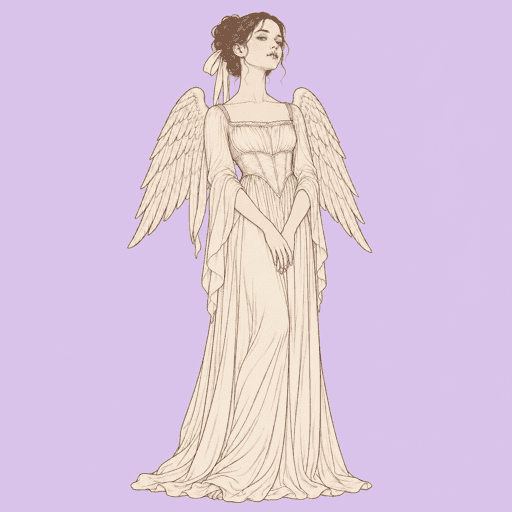
“Two large wings blossom from her back, leaving gashes in the stone. One of them stands proud, but the other is crooked, broken, and half fallen. Red is splashed on the edges—her virginal blood that I got on a canvas two years back.”
(Epilogue 2, Page 400)
The description of Landon’s masterpiece statue is a powerful symbol of Mia’s character arc. The verb “blossom” uses floral imagery to suggest natural growth and beauty emerging from something as hard as stone. The contrasting wings—“proud” versus “crooked, broken”—use juxtaposition to represent her dual nature as both a victim of trauma and a resilient survivor. This piece encapsulates her journey from a silent, controlled muse to a complex, empowered individual.

Unlock every key quote and its meaning
Get 25 quotes with page numbers and clear analysis to help you reference, write, and discuss with confidence.
- Cite quotes accurately with exact page numbers
- Understand what each quote really means
- Strengthen your analysis in essays or discussions
Related Titles
By Rina Kent






Featured Collections
Art
View Collection
Brothers & Sisters
View Collection
Childhood & Youth
View Collection
Class
View Collection
Class
View Collection
Fate
View Collection
Fear
View Collection
Forgiveness
View Collection
Hate & Anger
View Collection
Loyalty & Betrayal
View Collection
Memory
View Collection
Mortality & Death
View Collection
Pride Month Reads
View Collection
Revenge
View Collection
Romance
View Collection
Valentine's Day Reads: The Theme of Love
View Collection