God of Ruin
A modern alternative to SparkNotes and CliffsNotes, SuperSummary offers high-quality Study Guides with detailed chapter summaries and analysis of major themes, characters, and more.
Summaries & Analyses
Quizzes
NEWReading Tools
Symbols & Motifs
Content Warning: This section of the guide contains depictions of graphic violence, sexual content, emotional abuse, and child abuse.
Statues and Sculpting
The act of sculpting and the statues themselves are central symbols representing Landon’s desire for control and his evolving perception of Mia. Initially, sculpting is a way for him to impose order on a chaotic world, and he sees Mia as a perfect object to be captured and possessed. His impulse is to freeze her in a static, perfect form, telling her, “I can make a brilliant masterpiece out of you. I can freeze you and sculpt you from the finest stone that ever existed” (55). This desire reflects his initial inability to engage with her as a complex person, preferring to reduce her to an inanimate “doll” or “statue” that he can own and admire without contending with her trauma or defiance. This impulse to control and objectify is the foundation of their early, antagonistic dynamic.
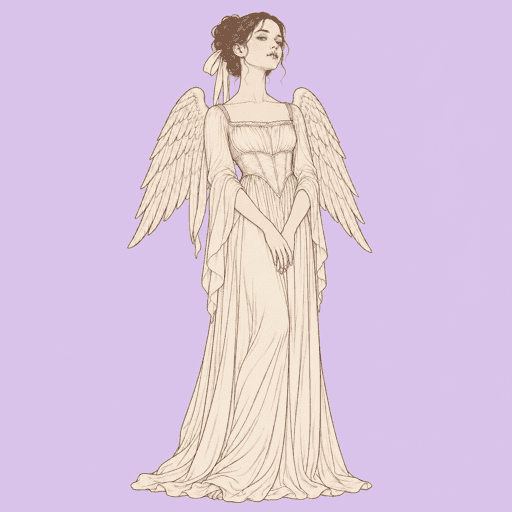
However, as their relationship deepens, the symbolism of his art transforms. He no longer seeks to create a flawless idol but instead becomes obsessed with capturing her true essence, including her brokenness and strength. The final masterpiece of the exhibition, The Mystery of a Muse, depicts Mia with stitched-shut lips and a broken wing, yet defiantly giving the middle finger to the world. Although Landon continues to regard Mia in possessive terms, the sculpture also expresses his growing understanding of her resilience and individuality. His ability to create it reflects a shift from pursuing technical perfection toward making art that communicates his emotional connection to her. Landon’s ability to create it signifies his acceptance of her whole self, moving beyond control to genuine appreciation. His art becomes the ultimate expression of Building Connection Through Trust and Mutual Exploration, as it is through sculpting her that he fully sees, understands, and cherishes her imperfections.
The Haunted House
The haunted house symbolizes the shared internal ruin of both Landon and Mia, functioning as a sanctuary where they can embrace their authentic, “monstrous” selves away from societal judgment. When Landon first brings Mia to the dilapidated estate, he frames it as a place for the disturbed, a home for those who do not come out “sane” (83). Initially a place where Landon intimidates Mia and exercises control over her, the house gradually becomes a refuge where both characters can explore aspects of themselves that they conceal from others. It is within these decaying walls that they are free to explore their darkest desires and vulnerabilities without pretense. For Mia, it becomes a space where her trauma can surface and eventually be soothed, while for Landon, it is the one place he can shed his charming public mask and engage with his true antisocial nature.
As their relationship progresses, the physical state of the house begins to mirror their emotional healing and growth. Landon renovates the structure, replacing broken windows and installing lights, while Mia cultivates a garden, bringing life and color to the withered grounds. This joint effort transforms the house from a symbol of decay into one of mutual creation and hope. What was once a representation of their individual brokenness becomes the physical embodiment of their shared project of Building Connection Through Trust and Mutual Exploration. The haunted house ultimately symbolizes their ability to construct something beautiful and lasting not in spite of their damage, but because of it.
Masks
The motif of masks, appearing both literally and figuratively, highlights the novel’s preoccupation with hidden identities and performative roles. The central conflict ignites at a party where “Masks are mandatory tonight” (4), allowing Mia and Maya to conceal their identities and enact their revenge plot. This literal masking enables a transgression that would be impossible otherwise, establishing a world where what is seen on the surface is rarely the truth. This act directly mirrors Landon’s primary social strategy: His public persona of a charming, sophisticated artist is a carefully constructed figurative mask that hides his true antisocial and manipulative nature. He is a master of emulation, wearing the appropriate face for every situation to achieve his goals, which conceals the “beast” he only unleashes in private. The motif takes on additional significance when Mrs. Pratt is exposed as Mia’s kidnapper and her husband, Frank, is revealed to have been impersonating the chess club owner, Mr. Whitby. Maya’s concealment of her involvement in the kidnapping similarly complicates her outward role as Mia’s devoted protector, demonstrating how deception can persist even within intimate family relationships.
The removal of these masks becomes a critical step toward intimacy and trust. The haunted house is a space where Landon can remove his mask of civility, and Mia can reveal the trauma she hides from the world. Their relationship deepens in these unmasked moments, where their authentic, flawed selves are exposed and accepted. The motif thus emphasizes a central argument of the novel: that genuine connection is impossible as long as characters are performing a role. True intimacy requires the vulnerability of revealing the uncurated self, making the shedding of masks essential to Building Connection Through Trust and Mutual Exploration.
Chess
The game of chess is a persistent motif representing the strategic power dynamics and psychological warfare that define Landon and Mia’s relationship. Landon initially perceives Mia not as a person but as an object for his amusement, a new piece in his manipulative games. The blurb explicitly frames this dynamic, stating, “He’s decided that I’m the new addition to his chess game” (xi), a metaphor for his intent to control her. Mia immediately resists this objectification, declaring, “Too bad for him, I’m no pawn.” Their early encounters, particularly their matches at the chess club, are extensions of this power struggle, with Landon using the game to test, provoke, and corner her. Chess is the language of his need for intellectual and psychological dominance.
However, as their connection deepens, the meaning of the motif evolves. While the game remains a space for intellectual sparring, it transforms from a purely adversarial contest into a shared, intimate ritual. It becomes less about a winner and a loser and more about a mutual understanding of strategy and intellect. The game shifts from a symbol of Landon’s manipulation to a representation of their intellectual equality and connection. This transition mirrors the broader arc of their relationship, moving from a battle of wills to a partnership. The chessboard, once a battlefield, becomes a private world where their minds can meet, reflecting the core process of Building Connection Through Trust and Mutual Exploration.

Unlock the meaning behind every key symbol & motif
See how recurring imagery, objects, and ideas shape the narrative.
- Explore how the author builds meaning through symbolism
- Understand what symbols & motifs represent in the text
- Connect recurring ideas to themes, characters, and events
Related Titles
By Rina Kent





Featured Collections
Art
View Collection
Brothers & Sisters
View Collection
Childhood & Youth
View Collection
Class
View Collection
Class
View Collection
Fate
View Collection
Fear
View Collection
Forgiveness
View Collection
Hate & Anger
View Collection
Loyalty & Betrayal
View Collection
Memory
View Collection
Mortality & Death
View Collection
Pride Month Reads
View Collection
Revenge
View Collection
Romance
View Collection
Valentine's Day Reads: The Theme of Love
View Collection