Goldfinch
Goldfinch
A modern alternative to SparkNotes and CliffsNotes, SuperSummary offers high-quality Study Guides with detailed chapter summaries and analysis of major themes, characters, and more.
Summaries & Analyses
Quizzes
NEWReading Tools
Chapters 31-45Chapter Summaries & Analyses
Chapter 31 Summary: “Slade”
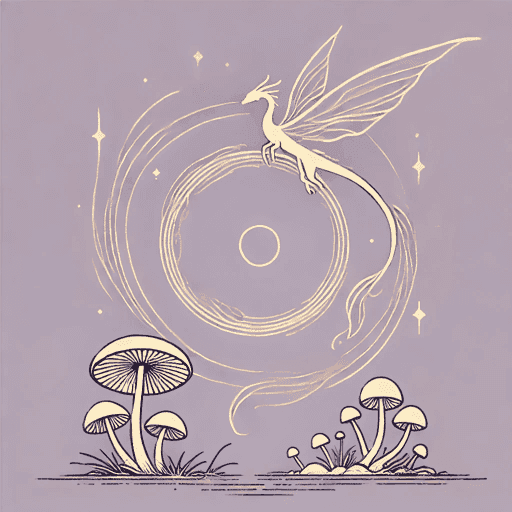
Slade follows Hare through Lydia’s canals in a gondola, providing a shortcut toward Auren. Slade sees that Auren’s golden aura is now entwined with the black tendrils of his own rot magic. His and Hare’s progress is blocked by a crowd watching a contingent of Stone Swords march through the street. The soldiers use wind magic to violently clear their path. A young fae boy named Baz confronts them, blocking their way with a web of magical saliva. The soldier leading the contingent kills Baz with a cyclone of wind. Enraged, Slade intervenes. He rots the soldier’s tongue and unleashes his magic on the other soldiers. For the first time, he manifests a fully solid, physical dragon, which breathes fire and rot upon the remaining Stone Swords. As the terrified crowd flees, Slade sprints down the cleared street and sees Auren running toward him.
Chapter 32 Summary: “Slade”
Slade sees Auren approaching, clad head-to-toe in gleaming golden armor. To his shock, she does not recognize him and regards him as a threat. She attacks, using her magic to form golden ropes that bind his arms and legs. Wick runs up and stops short at the sight of Slade’s dragon. Slade, confused and heartbroken by Auren’s lack of recognition, calls her “Goldfinch.” The word seems to stir something in her, but she remains wary, her sword held ready. She loosens his bonds slightly and again asks him who he is, but her voice is now uncertain. Slade senses her memories have been tampered with but is determined to break through to her.
Sensing a connection she cannot explain, Auren hesitantly walks toward Slade. As she gets closer, their auras collide, and their pāyur bond slams into place, shattering the magical interference in her mind. Her memories return in a flood, and she whispers his name.
Chapter 33 Summary: “Slade”
Overcome with emotion, Slade and Auren embrace. He’s amazed to see her golden ribbons again because Midas cut them off in a previous book. The fusion of their auras creates a powerful surge of magic, igniting their bond and filling them with an overwhelming, animalistic need for physical intimacy. Slade becomes fiercely protective, snarling at Wick when he speaks. Auren calms Slade and asks him to take her somewhere they can be alone. Wick gives Slade a key and directions to a Vulmin safe house accessible through a private underground waterway. Slade carries Auren into a cellar, where they find a boat.
Chapter 34 Summary: “Slade”
Overwhelmed by a primal, desperate need to physically consummate their pairing, Slade and Auren give in to their instincts and have sex in the boat as it drifts down the dark canal towards the safe house.
Chapter 35 Summary: “Slade”
They arrive at the safe house. Still driven by the bond’s feral energy, Auren methodically covers the entire bedroom in a layer of gold to block out the scents of anyone else and claim the space as theirs. During their union, Slade notices a golden scale already gleaming at the back of Auren’s neck, a mark of their bond. Later, he bites her neck and she drinks his blood, acts which fulfill the bond. As the bond’s initial intensity subsides, they express their deep love for each other. Slade promises Auren that she is his and he is hers in this life and all others.
Chapter 36 Summary: “Emonie”
The narrative shifts to Emonie’s perspective. King Carrick used a fairy ring to transport them to the deadlands, a desolate region of Annwyn near the broken Orean bridge. Carrick has amassed an army there as part of his invasion of Orea. Furious about the events in Lydia, he orders a contingent of soldiers to return, burn the city to the ground, and kill Auren and all Vulmin sympathizers. He states he will personally go with that contingent to see Auren killed. A lone, dying soldier crawls back across the bridge from Orea, reporting that everyone in his group was wiped out by a single man before he collapses and dies. The king’s disbelief and unease at this news are visible. Emonie, shackled, is thrown into a prisoner cart to be taken back to Lydia and publicly executed.
Chapter 37 Summary: “Auren Turley”
Auren awakens in the safe house with Slade, reflecting that their bond destroyed King Carrick’s magical manipulation, leaving her mind clear and her memories intact. Slade explains that he always knew they were a pāyur pair but didn’t tell her because he wanted her to have the freedom to choose him without the pressure of fate. They spend hours recounting everything that happened while they were apart; Auren learns Slade’s mother may still be alive, and Slade learns of the torture Auren endured in Annwyn. After bathing and finding new clothes, they prepare to leave the sanctuary of the safe house and face their enemies together.
Chapter 38 Summary: “Auren Turley”
Before they leave, Slade shows Auren that he kept a small piece of her ribbon, the piece Midas had cruelly tied around her wrist after cutting off the rest. They exit through the underground waterway and are met by two Vulmin guards, who have been standing watch. They escort Auren and Slade through the quiet streets of Lydia, explaining that the Vulmin took control of the city after the Stone Swords fled from Slade’s dragon. As they walk, citizens emerge to cheer for Auren, calling her the Lyāri. The guards lead them to the Vulmin headquarters, a building with a bright blue roof. Inside, they meet Wick. Slade is immediately hostile and protective of Auren, sensing that Wick has put her in danger in the past.
Chapter 39 Summary: “Auren Turley”
In a private office, Wick reveals his full name is Wickum Almon Turley, making him Auren’s second cousin. He confesses the secret he has carried his entire life: He was present in the city of Bryol on the night Carrick’s forces attacked and killed their parents. As an eight-year-old boy consumed by jealousy and fear, he ran and abandoned a five-year-old Auren, leaving her to be captured by the soldiers. He witnessed his own parents’ murders before escaping the city. Wracked with shame, he hid his identity and dedicated his life to the Vulmin cause as a form of penance, never feeling he deserved the Turley name. He admits that when he first met Auren in Geisel, he kept his distance because seeing her forced him to confront his own guilt and cowardice.
Chapter 40 Summary: “Auren Turley”
Though devastated by Wick’s confession, Auren decides to forgive him. She states that they have both lost too much and must now be a family to one another. Relieved, Wick accepts. They then turn their attention to Vulmin business. Wick explains that their control of Lydia is fragile and they must act decisively. Auren asks to see the fae who betrayed them. Wick confirms that the traitor, Brennur, is being held prisoner in the cellar.
Chapter 41 Summary: “Auren Turley”
Auren, Slade, and Wick descend to the cellar, which has been converted into a makeshift prison. Wick explains his policy of treating prisoners humanely, believing it is the only way to break Annwyn’s cycle of violence. They confront Brennur, who remains arrogant and unremorseful. He openly admits to betraying both the Vulmin and the crown, stating that his only loyalty is to himself and his own survival. Wick is enraged when he realizes Brennur was the informant responsible for the deaths of 40 Vulmin a year prior.
Auren begins to question him, and the scent of his oak-bark-tanned leather vest triggers a memory. She realizes he was the one who transported her out of Annwyn as a child. She uses her gold to bind his hands to the table, threatening to kill him if he doesn’t give her information. Brennur admits that he and a group of corrupt soldiers were involved in the raid on Bryol. Since Auren was too recognizable to sell in Annwyn, he separated her from the other children, told the soldiers he would kill her, and instead smuggled her through a fairy ring into Orea and sold her to flesh traders there for profit.
Brennur reveals that he can create fairy rings between realms, a skill he has been using to transport King Carrick to Orea secretly to prepare for his invasion. Believing this information secures his survival, he demands to be released. Auren informs him he has misjudged his value and uses her rot magic on him. As Brennur chokes and collapses, Auren tells him he is not worth more to her alive than dead. She leaves a single gold coin on the table as his “payment” and walks away, leaving him to die.
Chapter 42 Summary: “Queen Malina”
The narrative shifts to Queen Malina’s perspective. Several days have passed since the fae army was defeated at the Bridge of Lemuria in Orea. She and Dommik remain at the ruins of Cauval Castle, surrounded by the foul stench of the burning, rotted fae corpses. Malina has been working relentlessly to fortify the entrance to the bridge with immense ice barriers to prevent another invasion. Dommik finds her exhausted from magical overuse and insists she take a break from her work. He leads Malina away from Cauval to the edge of the world, where they sit with their feet dangling over the void. Malina finds the experience strangely calming and liberating.
Chapter 43 Summary: “Queen Malina”
Dommik and Malina discover the ruins of a small house from the ancient Seventh Kingdom capital city. Dommik produces a meal of fae bread, cheese, and wine. As they eat, Malina confesses her fear that her recent personal growth is only a product of desperation and that she will revert to her cold, bitter self once the danger has passed. Dommik reassures her, pointing to her repeated selfless choices as proof of her genuine change. Moved, they make love with a tenderness and emotional intimacy that is new to them both.
Chapter 44 Summary: “Rissa”
The story moves to Rissa. Anxious about being separate from Osrik, she demands that the soldier acting as her bodyguard bring her somewhere where she can watch the unfolding battle between the Oreans and the fae. The bodyguard brings her to the house where Manu is staying, which is equipped with a watchtower. Rissa loathes Manu because he participated in Auren’s abduction. Manu apologizes for his role in the events that led to Rissa’s stabbing. Together, they watch the fighting and try to maintain their hope.
Chapter 45 Summary: “Rissa”
Manu announces that the second phase of the Oreans’ plan has begun. Rissa, who despises warfare and violence, has been briefed on the plan but doesn’t remember the details. She watches in relief as a fleet of snow pirates called the Red Raids and their feline beasts, known as fire claws, sweep in and fight the fae. Both Rissa and Manu are astonished when armies from First Kingdom and Second Kingdom arrive to help their fellow Oreans. The reinforcements allow the Oreans to win the battle, and King Thold of First Kingdom’s serpent magic is especially crucial. After the fighting ends, Rissa searches the battlefield, passing the bodies of many fallen soldiers until she reunites with the unharmed Osrik with a passionate kiss. The victory gives the Oreans hope that they can win the war.
Chapters 31-45 Analysis
In the novel’s third section, Kennedy uses Auren and Slade’s passionate reunion to depict The Healing Power of Love. The pāyur bond’s magic is described as a feral, consuming force that overwhelms their rational thoughts, reducing them to base needs for protection, possession, and physical union. This powerful surge is strong enough to shatter the magical interference in Auren’s mind, instantly restoring her memories and undoing King Carrick’s psychological manipulation. The physical evidence of their union, a golden scale on Auren’s neck and a golden tint to Slade’s scales, cements their connection as a permanent alteration of their very beings. The intensity of this fated pairing illustrates The Healing Power of Love, portraying their bond as a foundational, world-altering force that physically and magically restores them. This depiction aligns with the conventions of the romantasy subgenre, where all-consuming passion often drives the central plot and is a catalyst for the protagonist’s empowerment.
Auren’s execution of Brennur, which she concludes by leaving a coin as “payment,” is a significant turn in her exercise of personal power. The act is a cold reframing of her own commodification: Brennur sold her for profit as a child, and she now reduces his life to the value of a single piece of gold, the very substance that defined her captivity. This personal, lethal justice stands in direct opposition to the political philosophy Wick articulates, which advocates for humane treatment of prisoners to break Annwyn’s “cycle of violence.” Auren’s choice is not about creating a better political system but about settling a deep and personal account. This moment advances the theme of The Triumph of Autonomy Over Tyranny by showing her defining and enforcing her own moral code. In doing so, she moves beyond survival to enact her own form of retribution, a development consistent with feminist retellings of myths that empower formerly objectified female characters with formidable, and sometimes deadly, agency.
In Chapter 39, Wick’s confession that his full name is Wickum Almon Turley reshapes the narrative’s understanding of his identity and Auren’s past. His story of abandoning her during the attack on Bryol out of childish jealousy and fear recasts him as a figure defined by decades of guilt and self-imposed exile. His choice to hide his name and dedicate himself to the Vulmin cause is revealed to be a form of penance, an attempt to atone for what he perceives as a foundational failure. Auren’s decision to forgive him showcases her growing capacity for leadership and compassion: “I think we’ve lost enough. We don’t need to add each other to the list” (370). She chooses to build a future by forging a new family bond rather than dwelling on past betrayals. The mending of the cousins’ bond offers another perspective on how devotion can heal in addition to the novel’s focus on romantic love.
The narrative structure of these chapters deliberately contrasts different forms of intimacy by shifting perspectives away from the central couple. While Auren and Slade’s reunion is a whirlwind of fated magic and feral passion, the subplot following Malina and Dommik offers a quieter, more deliberate exploration of emotional connection. Dommik leads Malina to the edge of the world, a space of quiet contemplation where he reassures her that her personal growth is genuine, pointing to her repeated selfless choices as evidence. Their subsequent lovemaking is marked by a tenderness and emotional vulnerability that stands in stark contrast to the overwhelming, instinctual force driving Auren and Slade. Dommik affirms her inner worth, telling her, “You are good, Malina. And I’m proud of the woman you are” (405). By juxtaposing these two relationships, the narrative presents a complex view of healing, suggesting that while destiny can be a powerful restorative force, recovery can also be found through conscious choice, earned trust, and gentle introspection.

Get in-depth, chapter-by-chapter summaries and analysis from our literary experts.
- Grasp challenging concepts with clear, comprehensive explanations
- Revisit key plot points and ideas without rereading the book
- Share impressive insights in classes and book clubs