Lady Tremaine
Lady Tremaine
A modern alternative to SparkNotes and CliffsNotes, SuperSummary offers high-quality Study Guides with detailed chapter summaries and analysis of major themes, characters, and more.
Summaries & Analyses
Author Insights
Quizzes
NEWReading Tools
Chapters 1-8Chapter Summaries & Analyses
Content Warning: This section of the guide includes discussion of death, emotional abuse, animal death, and gender discrimination.
Chapter 1 Summary
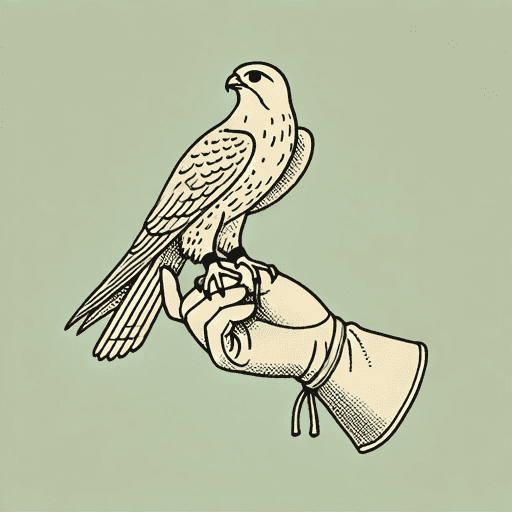
Lady Etheldreda Verity Isolde Tremaine Bramley takes a walk in the woods one morning with her hawk, Lucy. On her way out, she chats with one of the housekeepers, Alice, about the poor condition of the house, the leak in the roof, and the money they might get from selling Lady Tremaine’s daughters’ embroidery. Then, she heads out into the woods to hunt small game, thinking about her daughters, Mathilde and Rosamund; her stepdaughter, Elin; and their futures. Lady Tremaine inherited the land around Bramley Hall when her first husband, Henry Tremaine, died, but the game only lives on the opposite side of the river, which is technically royal land.
After catching a rabbit, Lady Tremaine runs into a man from the court who interrogates her about the origin of the rodent. She notices him studying her muddy, tattered dress, skeptical that she’s a lady and owns the adjacent manor. She cuts the conversation short when she notices a carriage stuck in the mud on the road to the house. Hopeful that it’s a royal carriage bearing an invitation to the upcoming hall, she races back up the hill.
Chapter 2 Summary
While trudging back to the house, Lady Tremaine reflects on her past life. She grew up in a village many miles from Bramley Hall. Her father “was a brewer—a respectable trade that was still far from gentility” but afforded Lady Tremaine some luxuries (12). When she was 12, her father hired her a tutor, Agatha. Agatha schooled Lady Tremaine in how to become a lady. Her lessons still play in Lady Tremaine’s mind. She learned early that women are born to marry and have children. Because her own mother died early, Lady Tremaine had little idea what motherhood entailed and knew little of her parents’ marriage.
Lady Tremaine returns to the house, recalling her first visit there as a young girl. She was stunned by the beautiful manor but hid her shock, having learned from Agatha to keep her reduced circumstances secret. Now, she sends Lucy up to a tree so that she can wake the girls and greet the carriage on the road.
Chapter 3 Summary
Lady Tremaine learns that the royal family is hosting a ball in search of a wife for Prince Simeon. She races inside to wake her daughters so that they might also greet the carriage. While she is unable to clean herself up, she is proud of her daughters’ appearances. At the door, the royal messenger reads a ball invitation aloud. Lady Tremaine is stunned that it only includes Elin and herself, or a chaperone. She insists that there must be a mistake, but the messenger insists otherwise. When he leaves, Lady Tremaine notices Elin on the stairs, delighted by the invitation. Meanwhile, her daughters demand to know why they aren’t included in the invitation. Lady Tremaine privately blames Henry.
Chapter 4 Summary
Lady Tremaine reflects on her relationship with Henry, her first husband. She knew him when she was a girl. His family would spend hunting seasons at their lodge in the village where Lady Tremaine grew up. Over the wall, Lady Tremaine would often watch Henry and his brothers train their hawks and falcons. She developed an interest in the birds and in Henry. They started spending time together, and he taught her about birds of prey. Henry soon began calling her “Ethel,” and they spent more and more time together. Because their families wouldn’t have approved of them spending time alone together, they hid their friendship. She recalls some of their secret interactions and all the fun they had together. One day, they snuck around together and spotted two falconers showing each other affection. Back then, Lady Tremaine didn’t understand that everyone has secrets.
Chapter 5 Summary
Back in the present, Lady Tremaine talks to her daughters about the upcoming ball. They each make suggestions for how to get invitations. Lady Tremaine announces that she will go and visit Sigrid, the queen. The girls are surprised she knows her.
Outside, Lady Tremaine runs into Alice while retrieving Lucy. She instructs the woman to pick the apples; the grounds are filled “with hundreds of apples” that often overwhelm the family (41). Then, they discuss the ball. Lady Tremaine is unsure of how to deal with the predicament and frustrated with Elin, whom she sees as useless. While Rosamund and Mathilde have learned to help keep house over the years, Elin spends her time reading her late mother’s etiquette book or practicing the fine arts. Lady Tremaine resents her stepdaughter for receiving an invitation. While ruminating, she convinces herself that her history with Sigrid is related to her daughters’ exclusion from the ball.
Chapter 6 Summary
Lady Tremaine continues to reflect on her relationship with Henry. After the two got close, Lady Tremaine spent the winter waiting for Henry to return to the village. When he finally did, he was with a young girl, Miss Sigrid Camelia White. Henry invited Lady Tremaine to spend time with them, but she resented Sigrid for intruding. She was delicate and disparaged Lady Tremaine, particularly her interest in falconry. As the summer waned on, Lady Tremaine became increasingly irritated by Sigrid’s presence. While out horseback riding with her and Henry one day, Lady Tremaine intentionally led them down a rocky path. Sigrid’s horse walked into a wasp’s nest and got spooked. Sigrid badly injured her hand in the incident. After Lady Tremaine and Henry delivered her to the house, Lady Tremaine tearfully admitted that she and Sigrid had been going head-to-head over him.
Chapter 7 Summary
Back in the present, Lady Tremaine converses with Alice and their other housekeeper, Wenthelen, about the prospect of Elin marrying the prince. However, Wenthelen is worried that she isn’t eating enough. Lady Tremaine heads up to the tower where Elin sleeps to talk to her. The two discuss the ball. Elin is thrilled to hear that Lady Tremaine will escort her if she can make her own dress.
Chapter 8 Summary
The narrative shifts back into the past. While Sigrid was healing from her hand injury, Lady Tremaine and Henry rekindled their relationship, even kissing several times. Sigrid immediately recognized their intimacy when the two visited her. Not long later, Sigrid returned home, insisting that she had countless better marriage offers. Soon, Lady Tremaine and Henry were engaged, and her father prepared her trousseau, or dowry. She relocated to Bramley Hall.
Not long after her marriage to Henry, Lady Tremaine gave birth to Mathilde. Rosamund was born just a year later. She reflects on her daughters’ births and early temperaments. She also remembers what it was like to become a mother. Just a few years later—when the girls were six and seven—Henry died while away on a trade trip. His death left Lady Tremaine and her daughters dependent on the Tremaines. For a time, she devoted herself to falconry, having inherited Lucy, a young bird that Henry had planned to train before his death. Meanwhile, Henry’s father became disgusted with supporting her and her daughters, having never liked Lady Tremaine. He insisted on marrying the girls off. Terrified of losing her daughters so young, Lady Tremaine resolved to remarry.
Chapters 1-8 Analysis
The opening chapters of Lady Tremaine introduce the main characters, conflicts, stakes, and themes of the novel via the protagonist Lady Tremaine’s first-person point of view. Structurally, the narrative toggles back and forth between the past and present to show how Lady Tremaine’s personal history has led her to her present circumstances. This temporal technique underscores her lifelong struggle to navigate an inherently unjust world, introducing the novel’s thematic focus on Women’s Survival Within a Rigid Patriarchal System. As a child, Lady Tremaine learned from her tutor, Agatha, that “women [a]re born and bred to expect marriage, and it all happen[s] when [they are] too young to know better […] so blind to the truth of what lay ahead” (15). Lady Tremaine longed for marriage—particularly to Henry Tremaine—because she understood marriage to be synonymous with both duty and security. She also eagerly anticipated motherhood as the role and identity that her society had prescribed for her.
The present-day chapters reveal that neither marriage nor motherhood has guaranteed Lady Tremaine lasting safety or stability. Rather, her circumstances are as defined by hazards and uncertainty as her young adult life, introducing the narrative stakes. When she was a girl, she longed to marry Henry so that she might have a husband, a home, an income, a property, and a family to insulate her from societal dangers. In the present, she seeks the same for her daughters because she’s desperate to shield them from her own hardship and disappointment. The juxtaposition between her childhood dreams and her present reality underscores the drive that Lady Tremaine feels to change her circumstances for herself and her daughters.
The recurring images and descriptions of Bramley Hall symbolically underscore Lady Tremaine’s precarious financial and social position. She muses on her initial amazement with the house: “I had been stunned by the beautiful gate out front: intricate ironwork covered in curls and gold that emulated the delicate tendrils of a climbing vine” (17). As a young woman eager to change her circumstances via marriage, Lady Tremaine was easily impressed by the house. Its “massive and pleasant” facade was an omen of all that was to come for her (17)—of the newly comfortable life she was prepared to lead in the wake of her first husband’s death. In the novel’s present, years have passed, and the house is falling into disrepair. There are leaks in the roof, and the front hall that was once filled with tapestries and paintings is empty of adornments other than “candlesticks and rugs,” items the family moved from the “other rooms of the house” to maintain the illusion of opulence in the entryway (24).
The juxtaposition of Lady Tremaine’s past memories of falling in love with her first husband and her present-day circumstances highlight The Tension Between Love and Ambition. She remembers watching a tender moment of affection between two falconers as a child—a moment that echoed “what [she] imagined [her] parents had had, a frisson of what [she] felt crouched in the mud beside Henry; it echoed love” (34). In the present, she and her hawk, Lucy, hunt mice to feed Lady Tremaine’s family alone. Her love left her vulnerable, and now only her ambition remains.
Lady Tremaine’s ruthless desire to provide for her daughters foregrounds the novel’s thematic emphasis on The Sacrificial Nature of a Mother’s Love. After Henry died, she was forced to rely on her father-in-law. When his good will ran out, Lady Tremaine “resolved to remarry” because she saw it as “the only way to protect [her daughters]” from premature arranged marriages (79). Knowing that her father-in-law would not take pity on her, remarriage was Lady Tremaine’s only way to reclaim autonomy over her own circumstances and her daughters’ fates. Her childhood flashbacks contextualize her present-day decision to visit the queen as an act of self-sacrifice since she and Sigrid have always been rivals. Nevertheless, Lady Tremaine understands that “a mother, in the bones of her bones, [i]s not in balance. She g[ives], without ending” (15). She understands herself according to her role as a mother; she navigates the world according to her responsibility to and ambition for her daughters.

Get in-depth, chapter-by-chapter summaries and analysis from our literary experts.
- Grasp challenging concepts with clear, comprehensive explanations
- Revisit key plot points and ideas without rereading the book
- Share impressive insights in classes and book clubs