Lady Tremaine
Lady Tremaine
A modern alternative to SparkNotes and CliffsNotes, SuperSummary offers high-quality Study Guides with detailed chapter summaries and analysis of major themes, characters, and more.
Summaries & Analyses
Author Insights
Quizzes
NEWReading Tools
Chapters 9-17Chapter Summaries & Analyses
Content Warning: This section of the guide includes discussion of death and gender discrimination.
Chapter 9 Summary
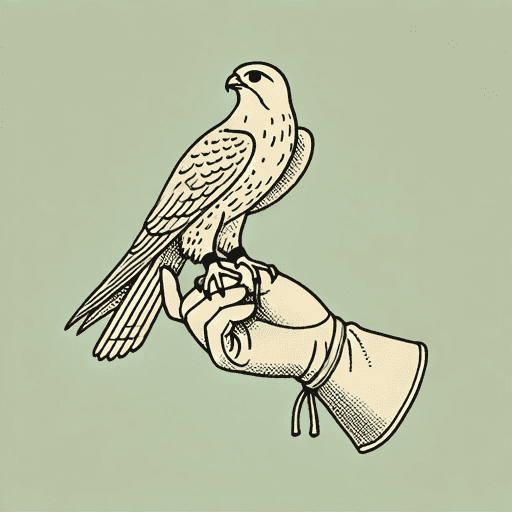
Lady Tremaine tries to navigate her daughters’ upset over the ball invitation. While Rosamund cries, Mathilde focuses on calculating the family finances. She suggests taking up falconry as a way to improve their circumstances, but Lady Tremaine is reluctant. She assures her daughter that she’ll do anything to ensure that she has a good future.
Lady Tremaine continues to reminisce about the past. Shortly after Henry’s father suggested marrying off the girls, Lady Tremaine met Lord Robert Bramley and baldly indicated her interest in remarrying. A widower himself, Robert was eager for his seven-year-old daughter, Elin, to have a new mother. Lady Tremaine presented herself as such, and she and Robert soon started courting.
A blubbering Rosamund appears, interrupting Lady Tremaine’s thoughts. She and her daughters discuss the possibility of Lady Tremaine paying the queen a visit regarding the ball invitation.
Chapter 10 Summary
Lady Tremaine muses on Sigrid’s drastically improved circumstances after the original acquaintance and the history of their relationship. She remembers Sigrid writing to her about her engagement to the future king. Lady Tremaine had hoped that her and Sigrid’s past connection would afford her family an entrance to society life, but they were excluded instead. She attributed Sigrid’s wasp injury and their rivalry over Henry as the reasons for this exclusion.
Chapter 11 Summary
Lady Tremaine heads out in the carriage for the castle. At the gates, she requests an audience with the queen, introducing herself as “Lady Tremaine” instead of “Lady Tremaine Bramley.” While waiting for the guard to “relay the message” (94), she continues to muse on her past.
When Lady Tremaine and her daughters moved to Bramley Hall, she tried to appeal to Elin and foster relationships between her and Rosamund and Mathilde. However, Elin proved disinterested in a new mother or new sisters. Meanwhile, Robert allowed Elin to spend all her time alone, spoiling her with gifts. Elin was preoccupied with memories of her late mother. Finally, Lady Tremaine asked Robert to remove his late wife’s portrait from the hall. He fell to his death while doing so.
After Robert’s death, Lady Tremaine learned that he had not paid taxes on the house. She couldn’t sell it because the taxes would come due. Further, she had no money to pay the staff. Only Alice and Wenthelen remained at the hall without pay because they were too old to continue working elsewhere. Meanwhile, Lady Tremaine taught her daughters to keep house and also assumed these responsibilities herself. Elin, however, refused to do her part, becoming increasingly reliant on her etiquette book for instructions on how to be in the world. She was convinced that her match would come and that marriage would deliver her from her circumstances.
The guard returns, interrupting Lady Tremaine’s thoughts and leading her to the queen. She is shocked by the sight of Sigrid after all these years and inspects her gloved hand for evidence of the finger she lost in the accident decades prior.
Chapter 12 Summary
Lady Tremaine and Queen Sigrid catch up. Lady Tremaine is careful about what she shares, aware of Sigrid’s judgment. Finally, she expresses her desire for a ball invitation for her daughters. Sigrid agrees, as if bored by the request.
On her way out, Lady Tremaine encounters the man she met on her property while hunting. She learns that his name is Otto and tries to correct his first impression of her. Before leaving, Otto confirms that Mathilde and Rosamund are invited to the ball.
Chapter 13 Summary
During the journey home, Lady Tremaine considers her circumstances. She’s proud of her success but realizes how much more she still needs to help her daughters. Back at home, she runs into Moussa, “the itinerant minstrel” who passes through the country each year (117). Lady Tremaine agrees to take a horse from him.
Inside, Lady Tremaine finds her daughters arguing over clothing to wear to the market. They are thrilled to learn of their mother’s successful visit with the queen and immediately begin discussing their dresses for the ball. First, Lady Tremaine insists that they’ll need money to afford new materials for their garments. She insists that they pick apples to sell at the market.
Lady Tremaine continues reflecting on Robert’s death. She tried appealing to Elin afterward, but she reiterated her disinterest in having a new mother. It became increasingly difficult for Lady Tremaine to communicate with her since she was always preoccupied and refused to help around the house. It was around this time that Moussa first visited the house, and he and Lady Tremaine struck up an acquaintance. Tonight, he stays near the house, playing music on the step. He also advises Lady Tremaine not to bring Lucy into the home.
Chapter 14 Summary
Later that evening, Lady Tremaine visits Moussa at his camp. They catch up and talk about their lives. After she tells him about the upcoming ball, Moussa tells her a story about his past, which intrigues Lady Tremaine.
Chapter 15 Summary
Over the following days, Lady Tremaine and the girls work hard to gather money for materials—doing embroidery and picking apples. They also review etiquette lessons and design their dresses. Later in the week, they go to the market together. While buying materials for her daughters’ dresses, Lady Tremaine runs into an important friend, Lavinia Enright. Lady Tremaine values this relationship because Lavinia is a lady. They discuss the upcoming ball, the royal family’s search for a bride for Prince Simeon, and travel arrangements to the event, agreeing to ride together and visit beforehand. Lady Tremaine also chats with Lavinia’s son, Finnian, who reveals that a royal hunt will soon be passing through. Lady Tremaine is delighted by this information and concocts a plan.
Chapter 16 Summary
Back at home, Lady Tremaine sets to enacting her plan. She digs through Elin’s late mother’s old things, finding two half-finished paintings of apples and taking them with her. She checks in on Elin to see how her dress preparations are coming, reminding her she can’t attend the ball unless she’s prepared. Then, she instructs Mathilde and Rosamund to dress well for an evening out.
Chapter 17 Summary
Lady Tremaine loads the carriage with food, housewares, and decor—including the paintings—and sets out with her daughters. In an open field, she instructs her daughters to set up a picnic, staging them with the half-finished apple paintings. Then, with Moussa’s help, she pushes the carriage and breaks it. Prince Simeon comes riding through and sees the women, their picnic, and broken carriage and insists on helping them. Lady Tremaine is thrilled with her successful plan but disappointed that Otto is in tow. Still, the prince shows Rosamund and Mathilde attention, joins the women for the picnic, and gives them a ride home.
Chapters 9-17 Analysis
Lady Tremaine’s ongoing efforts to orchestrate a stable future for her daughters continues the novel’s thematic exploration of Women’s Survival Within a Rigid Patriarchal System. As the novel continues to alternate between scenes from the past and the present, the narrative reveals the origin of Lady Tremaine’s ambition: her own fraught past. Her conversation with Mathilde about her future underscores Lady Tremaine’s desperation to protect her daughters from the same fate she has suffered. While Mathilde wants “to be able to take care of [her]self” (82), Lady Tremaine still only understands stability as proximity to powerful men. Although she has proven herself capable of an independent life, Lady Tremaine initially focuses all of her efforts on manipulating the systems of power that govern their lives rather than attempting to dismantle or live outside it. She insists that her daughters “comport [themselves] properly and continue to work on [their] accomplishments” while she devotes her energies to scrounging up money (81), negotiating with the queen, liaising with dignitaries, and engineering encounters between her daughters and the prince. The only way to survive in a world that disadvantages women, Lady Tremaine believes, is to manipulate the system in her favor.
Lady Tremaine’s internal monologue throughout these chapters develops her character and reveals her self-awareness. Although she adheres to a system that actively disenfranchises her, she’s driven to conform to society’s prescribed expectations, often at the expense of her own happiness, highlighting The Sacrificial Nature of a Mother’s Love. Hochhauser frames Lady Tremaine’s calculating actions and her resolution to use her wit to manipulate her circumstances as entirely motivated by a desire to protect herself and her children:
Was it deceitful to orchestrate a marriage based on my needs? We are all designed to sate our desires—and what is hunger if not a drive to survive? Is deceit less insidious if it is with noble purpose? There is nothing more noble than taking care of children—even if they are your own (86).
In this passage, Lady Tremaine asks herself a series of questions that reveal her self-reflective nature and willingness to interrogate her own actions and behaviors. Diction like “deceitful” and “insidious” makes clear that she’s aware that her decisions cast her as a person of dubious ethics. At the same time, she believes that her decisions are “noble” because they originate from a desire to protect her daughters—which she believes is her highest calling.
The picnic scene underscores the lengths to which Lady Tremaine will go to orchestrate the happiness and security of her daughters despite the associated risks. The entire outing is a ruse, carefully designed by Lady Tremaine: “The picnic had been prepared as a prop—a diversion to be observed through a carriage window from afar” as Prince Simeon and his entourage pass by (159). From afar, the picnic appears lavish. Up close, there are “bruises on the fruit” and “crumbs on the carpet” (159), which, to Lady Tremaine’s relief, the prince doesn’t notice. Her desperate attempts to fabricate the illusion of wealth, luxury, and ease on behalf of her daughters’ futures point to The Tension Between Love and Ambition. She’s aware that her games are tricks of the eye that might falter at any moment, but she’s willing to risk their exposure as the paupers they are because the illusion of grandeur might afford them a more stable future.

Get in-depth, chapter-by-chapter summaries and analysis from our literary experts.
- Grasp challenging concepts with clear, comprehensive explanations
- Revisit key plot points and ideas without rereading the book
- Share impressive insights in classes and book clubs