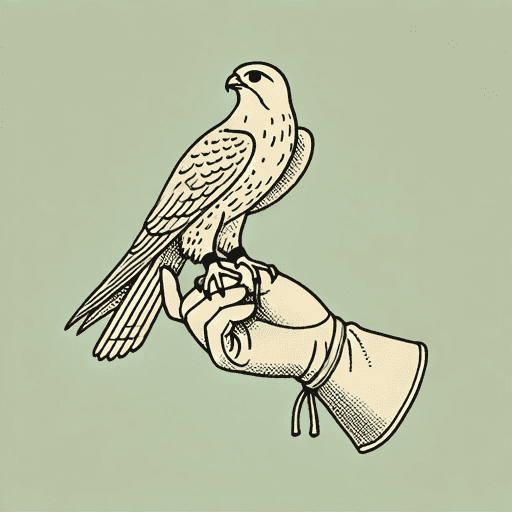
Lady Tremaine
Lady Tremaine
A modern alternative to SparkNotes and CliffsNotes, SuperSummary offers high-quality Study Guides with detailed chapter summaries and analysis of major themes, characters, and more.
Summaries & Analyses
Author Insights
Quizzes
NEWReading Tools
Chapter 26-EpilogueChapter Summaries & Analyses
Content Warning: This section of the guide includes discussion of graphic violence, death, child death, rape, physical abuse, animal death, and gender discrimination.
Chapter 26 Summary
Lady Tremaine is powerless to keep Otto and Prince Simeon from leaving. After they go, she sends the girls to bed and cleans up from the dinner alone. She realizes that not even their plentiful apples could hide the ruined house. While working, she worries about the future. Then, she encounters Morwen, who indicates that it’s better that the prince left and the engagement is ruined, as Simeon isn’t trustworthy. When Lady Tremaine presses her, Morwen reveals that she used to work at the palace. She used to be Princess Hemma’s lady’s maid. Now, Hemma is pregnant out of wedlock, and her parents are desperate to wed Simeon so that they might pass Hemma’s baby off as his. She suggests that the prince is a brute, but Lady Tremaine is too eager to investigate further to ask more questions of Morwen.
Chapter 27 Summary
All that night and into the next morning, Lady Tremaine reflects on Morwen’s story. She decides that the king and queen’s plan isn’t so different from her own. Come morning, she calls Lucy and prepares to leave the house for the city. She runs into her daughters on her way out and promises that she will fix the problem of the prince and Elin’s engagement soon enough.
On her way back to the castle, Lady Tremaine tries to decide how she might talk to Elin, believing that she should know about Hemma and the baby before marrying Simeon. At the castle, the guard recognizes her now as the prince’s future mother-in-law and leads her inside. She tells him that she needs a restroom and wanders off, finally finding Hemma’s chambers as planned.
Inside, Lady Tremaine explains who she is and what she knows. She is horrified when Hemma reveals that Simeon is the father of her baby and that he raped her. Before parting ways, Hemma urges Lady Tremaine to tell Elin the truth.
Chapter 28 Summary
While wending her way back through the palace halls, Lady Tremaine reels from all she has learned. The guard leads her to Queen Sigrid. Lady Tremaine immediately reveals what she knows, insisting that they call off the engagement. Sigrid insists that this is impossible and threatens her if she interferes.
Lady Tremaine encounters Otto on her way out of the palace. She informs him of what she knows. Otto knew about the pregnancy but is shocked to learn of the baby’s paternity. Still, he reveals that he has known about Simeon’s brutality and has been trying to protect Lady Tremaine’s daughters from him.
Chapter 29 Summary
Back at home, Lady Tremaine is shocked to discover that the prince came by and that Elin left with him. Her daughters are worried she will “put her honor on the line” (271), but Lady Tremaine understands that they must be planning to elope. She then informs her daughters of the truth, and they insist that Lady Tremaine go after Elin since she has endangered both her and them. Unsure of what to do, Lady Tremaine goes outside with Lucy, who flies off. Lady Tremaine worries that she won’t recover the bird, who might easily return to her wild nature. However, she can’t pursue Lucy, comfort her daughters, and recover Elin at the same time. Suddenly, Otto arrives in search of Prince Simeon and agrees to help Lady Tremaine find him and Elin.
Chapter 30 Summary
Lady Tremaine and Otto search tirelessly for Simeon and Elin. While traveling, Otto reveals his fraught past, explaining how his wife’s and child’s early deaths have inspired him to protect the innocent. They also talk about the ball, Simeon, and the royal family. The more they talk, the more drawn Lady Tremaine feels to Otto, and they end up kissing. Lady Tremaine tries to push away her desire, ashamed of her own feelings.
Finally, the two settle into an inn for the night. They ask about Simeon and Elin, but no one has seen them. After Lady Tremaine settles into her room, Otto knocks on her door; someone spotted the prince.
Chapter 31 Summary
Lady Tremaine and Otto find Elin at an inn. She is locked in her room alone. She says that Simeon went off to get more gold for them and told her not to talk to anyone. Lady Tremaine explains what is going on and who Simeon really is. A horrified Elin doesn’t want to believe the truth, insisting that they’re in love and that Simeon is charming and affectionate. Lady Tremaine continues talking to her and finally convinces Elin to leave with her. Then, Simeon appears, upset by Otto and Lady Tremaine’s presences and insisting that Elin stay with him. When she says she cannot, he slaps her in the face. Elin bursts out that she knows who he really is and what he has done. The argument continues until Otto reminds Simeon that taking “an unmarried girl” is always unacceptable (303). Finally, Lady Tremaine and Elin take the carriage home. Lady Tremaine comforts Elin along the way.
Chapter 32 Summary
Mathilde, Rosamund, Alice, and Wenthelen greet Lady Tremaine and Elin when they return home. They all catch up about what has happened, and Alice reveals that she recovered Lucy. Over the following days, Lady Tremaine’s daughters care for Elin, and they all discuss Hemma’s fate together. Lady Tremaine knows that Hemma isn’t the concern since she’s royal. She and the girls might still be in danger. Suddenly, a knock sounds at the door. There, a horrified Lady Tremaine greets Prince Simeon.
Chapter 33 Summary
Simeon barges into the house, demanding to see the girls. Lady Tremaine races after him, desperate to protect them. She pretends to lead him to the girls but really leads him into a dark hall. When Simone realizes what she has done, he attacks and strangles her. She thinks about her life as she suffocates. Just as she feels like she’s on the verge of death, she starts to scratch Simeon. Lucy flies out of the shadows and attacks him, too. Amid his screaming, he lunges at Lady Tremaine again. Elin enters and hits him over the head with a post, killing him. Lucy, however, does not survive.
Chapter 34 Summary
Lady Tremaine and the girls drag Simeon’s body downstairs and wrap him in rugs. She instructs the girls to clean up the blood. Then, they put the body on a cart and wheel it out to the yard, where they bury it. Upon seeing a carriage in the distance, they all race inside just in time. Still covered in dirt and mud, the women greet Queen Sigrid. They feign nonchalance, insisting that they haven’t seen the prince. Privately, Lady Tremaine tells Otto that the prince is gone for good. He covers for the women.
Later that day, Lady Tremaine and the girls bury Lucy. Lady Tremaine says goodbye to her friend but feels happy being with her family.
Epilogue Summary
In the following months, Lady Tremaine’s life settles into a new normalcy. Otto moves in with her and the girls, although he and Lady Tremaine do not marry. Hemma has her baby, and the palace covers up the scandal by announcing that the child is Queen Sigrid’s. Meanwhile, Elin, Mathilde, and Rosamund remain unmarried. Lady Tremaine knows their lives might not seem happy, but she wonders otherwise.
Chapter 26-Epilogue Analysis
The final chapters lead the narrative through its climax, descending action, denouement, and resolution. Lady Tremaine embraces the more gothic elements of the genre and the 1812 Brothers Grimm version of the story in these final sequences. However, in Hochhauser’s iteration, it’s Prince Simeon who meets a violent end rather than the stepsisters. By subverting the tale in this manner, Hochhauser restores the agency of the women in the story. The narrative reaches its climax when the characters learn of Simeon’s rape of his sister, compelling Lady Tremaine to sabotage the very marriage she once attempted to engineer for her own gain. In saving Elin from the prince, Lady Tremaine rejects the discriminatory infrastructure that she’s spent her life trying to manipulate, rejecting patriarchal control in favor of a life outside of conventional gendered expectations.
Lady Tremaine’s decision to embrace an unconventional life with her daughters and stepdaughter nuance the novel’s thematic examination of Women’s Survival Within a Rigid Patriarchal System. Throughout the novel, she has believed that abiding by the rules of a system that implicitly disadvantages and endangers her and her family is her only option. In the past, she’s married and remarried to protect herself and her daughters. In the present, she goes to extreme lengths to fabricate the illusion of wealth and status to arrange similar marital alliances for Mathilde, Rosamund, and Elin. The discovery of Simeon’s violent tendencies acts as a turning point in Lady Tremaine’s arc, calling into question the survival strategies that have defined her life. The revelation forces her to choose between passively accepting Elin’s violent fate or waging war against the system and saving her stepdaughter.
Lady Tremaine’s decision subverts her traditional role as the villain of the Cinderella story and casts her the hero of the tale. When she confronts the queen about Simeon and demands that she end the engagement, Sigrid tells her, “You do not have a choice” (267). Lady Tremaine could accept Sigrid’s words as an edict and a threat, but she chooses to defy the queen and pursues a dangerous villain, putting her life at risk for the sake of Elin, Mathilde, and Rosamund. In saving Elin, Lady Tremaine models her true values for her daughters: honor, truth, and agency over status, wealth, comfort, and the illusion of ease and happiness. In the classic fairy tale, the stepmother and stepsisters are punished, while Cinderella is “rewarded” with a happy, royal marriage to a prince. Here, Hochhauser frames marriage to the prince as a form of damnation rather redemption.
The Epilogue redefines the “happily ever after” ending for Lady Tremaine and her family. In Disney’s Cinderella, living “happily ever after” is defined by achieving riches and royalty. In Hochhauser’s retelling, the characters find happiness in casting off social expectations, embracing a simpler life, and choosing close relationships with their family at home. As Lady Tremaine herself asks at the novel’s end, “You tell me. Is this a happy ending?” (334). In the story’s final moments, Hochhauser has Lady Tremaine break the fourth wall and address the reader directly, encouraging the reader to interrogate the ways that traditional happy endings are prescribed by cultural myths and entrenched systems of power. Hochhauser’s narrative prompts the reader to rethink whether a heteronormative marriage to a wealthy and powerful man truly is the ultimate end for a female protagonist. Her conclusion presents an alternate form of happiness—a group of unmarried women living together, raising hawks, and tending a crumbling manor—as equally valid.

Get in-depth, chapter-by-chapter summaries and analysis from our literary experts.
- Grasp challenging concepts with clear, comprehensive explanations
- Revisit key plot points and ideas without rereading the book
- Share impressive insights in classes and book clubs