Lady Tremaine
Lady Tremaine
A modern alternative to SparkNotes and CliffsNotes, SuperSummary offers high-quality Study Guides with detailed chapter summaries and analysis of major themes, characters, and more.
Summaries & Analyses
Author Insights
Quizzes
NEWReading Tools
Character Analysis
Content Warning: This section of the guide includes discussion of graphic violence, death, rape, child abuse, and gender discrimination.
Lady Etheldreda Verity Isolde Tremaine Bramley (Lady Tremaine)
Lady Tremaine is the main character and first-person narrator of the novel. While her childhood love and first husband, Henry Tremaine, called her “Ethel,” she defines herself as Lady Tremaine throughout the novel—a name that represents a mashup of her two marriages. As she herself tells the reader,
Lady Tremaine did not exist […] But, though it was not the world’s name for me, it was my truest one: An accurate depiction of what I gave and took from each of my marriages. Lady Tremaine was the name from my first, the marriage of my heart. My title came from the second (94).
Lady Tremaine’s insistence on defining herself to the world signals her ability to push back against prescribed definitions of who she should be. Her name is a reflection of how she has learned to manipulate the rigid rules of her society to aid her survival.
Lady Tremaine is a dynamic, round, and sympathetic character. In the Brothers Grimm version of Cinderella, Lady Tremaine is cast as the wicked stepmother and the villain of the story. In Hochhauser’s retelling, she is the protagonist, the heroine, and the victim of an unjust patriarchy. Her first-person point of view offers access to her private interiority and reveals the true longings of her heart. This subversive point of view also reveals Lady Tremaine’s backstory. As a young girl, she lost her mother and was raised among men. The only female influence she had in her girlhood was her tutor, Agatha, “a severe woman with pox scars” who taught Lady Tremaine “how many raps a knuckle can take before it bleeds” while schooling her in the art of female gentility (13). Lady Tremaine was a wild, explorative young girl whose innate curiosity for adventure and discovery was beaten out of her, in hopes of helping her secure an advantageous marriage and a route out of her humble village beginnings. As a grown woman and a mother in the narrative present, Lady Tremaine is desperate to help her daughters live a happier life than she has. She wants to give them all the comfort and luxury she was never afforded. However, her unfortunate fate and lifetime of marital and romantic disappointment lead her to repeat many of her own forebears’ mistakes.
Lady Tremaine defines herself according to her role as a mother, highlighting The Sacrificial Nature of a Mother’s Love. Although she doesn’t feel like an old woman, she has been pushed to the margins of society because she is a widow and her late second husband left her with nothing but a crumbling manor, a mountain of debt, and the mere illusion of security. She therefore feels powerless to act in her own interests and devotes herself instead to the care of her daughters, Mathilde and Rosamund, perpetually trying to arrange better futures for them. Meanwhile, she disregards her stepdaughter, Elin, because Elin has refused to accept her offers of maternal love. Over the course of the novel, Lady Tremaine discovers that her constant self-sacrifice will not earn her or her daughters the happiness she desires, prompting her to define happiness on her own terms.
By the end of the novel, Lady Tremaine learns to cast off society’s expectations and follow her own moral code and instincts. She ultimately saves Elin from the prince, gives up her pursuit of royal comfort, and settles into a humbler, less conventional life with her daughters, stepdaughter, and new companion, Otto.
Mathilde and Rosamund
Mathilde and Rosamund are secondary characters and are Lady Tremaine’s biological daughters. Their father is Henry Tremaine. They were left without a father when Henry died while away on a trade trip, when they were only eight and seven, respectively. The girls “were born twelve months apart, almost to the day”; although “close enough to be twins, […] the girls turned out to be nothing alike” (72). Mathilde is the older of the two, and her birth and infancy were difficult for Lady Tremaine. Her name means “mighty in battle,” as she was “the victor of a tiny war, of [Lady Tremaine’s] womb” (72). She proves to be the stronger, bolder, and more assertive of Lady Tremaine’s daughters in the narrative present, too. When disaster or disappointment strike, Rosamund is more likely to descend into tears and despair, while Mathilde is more likely to assume a pragmatic stance and embrace logic and action over emotionality.
While Mathilde’s and Rosamund’s characters’ feature throughout the novel, they serve a supporting role, facilitating Lady Tremaine’s character arc. The two daughters give Lady Tremaine’s life meaning and purpose and motivate her actions throughout the story. She loves them dearly and genuinely, devoting all her energies to their lives in the present and orchestrating their fates. However, Lady Tremaine doesn’t often regard them as individuals. Her narrative mostly thinks of them according to how best to manipulate their futures—and how an advantageous alliance for one might lead to an advantageous alliance for the other. Over the course of the novel, Lady Tremaine’s failure to perceive their individual needs becomes more apparent. This is particularly true after she tells them the truth about Prince Simeon’s malicious nature and brutal past. The girls get upset with Lady Tremaine for treating them like pawns, jeopardizing their safety, and vacillating between siding with and endangering their stepsister.
Elin
Elina, Hochhauser’s version of the Cinderella character, plays a secondary role in this version of the story. Whereas Cinderella is most often presented as the sympathetic heroine, in Hochhauser’s retelling, Elin is quick to infatuation, married to convention, and resistant to love. Through the flashback scenes, Lady Tremaine underscores her early attempts to endear herself to Elin after marrying her father, Lord Bramley. Despite her desire to show Elin kindness and foster kinship with her daughters, Elin proved disinterested in welcoming her new family into her heart. Over the years, Lady Tremaine has become increasingly disgusted by Elin, frustrated with her refusal to adapt to their altered economic circumstances or pitch in and help the family support themselves, highlighting the novel’s thematic focus on Women’s Survival Within a Rigid Patriarchal System. When Elin shows up at the ball against Lady Tremaine’s wishes, she sees it as the ultimate sign of impertinence and entitlement. She disparages Elin’s belief that the ball could deliver her from Bramley Hall and into a life of royal luxury—even though this is the very thing Lady Tremaine hopes for her own daughters.
While Elin’s character doesn’t experience a full transformation by the novel’s end, she catalyzes change in Lady Tremaine. Via Elin, Lady Tremaine comes to understand her own shortcomings—particularly as a mother. She learns that while love for her biological children is easy, love for her stepdaughter requires more work yet is no less worthwhile. Despite her long-time resentment for Elin, Lady Tremaine rescues her from the prince and welcomes her back home as one of her own.
Henry Tremaine
Henry is Lady Tremaine’s childhood love, her first husband, and Mathilde and Rosamund’s biological father. Because he died when the two were just children, his character features most heavily in the scenes of flashback—where Lady Tremaine reflects on her early life and her romance with her first husband.
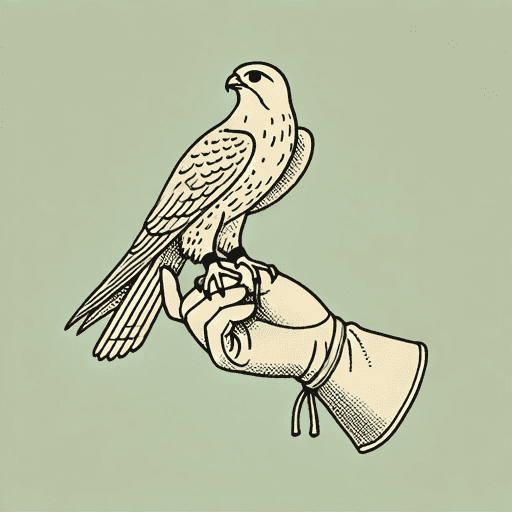
In Lady Tremaine’s memory, Henry appears like a mystical creature: the epitome of love, charm, and boyish kindness. When Lady Tremaine was young, she fell in love with Henry when his family would spend summers at their hunting lodge in her village. Henry taught her how to work with falcons and hawks and showed interest in her as a person. She quickly realized how advantageous it would be if Henry were to propose to her, as a marriage to Henry would mean a ready exit from her humble village. In retrospect, Lady Tremaine continues to think of Henry in loving terms—“He was patient,” “He was always ready to laugh,” “He asked for my thoughts,” “He responded in turn” (52). Her reflections set up the contrast between her first marriage and her second, highlighting Hochhauser’s thematic focus on The Tension Between Love and Ambition. Henry’s death also taught her that romantic love is both rare and fleeting and that a young woman should not stake her life on it.
Prince Simeon
Prince Simeon is the antagonist of the novel. In the early narrative sequences, he appears to be the same charming figure he is in more traditional Cinderella tales. He is of noble birth, and an alliance with him promises Lady Tremaine, her daughters, and her stepdaughter the possibility of a luxurious life at court. When the characters learn that his parents are hosting a ball in search of a match for the prince, they are desperate to secure an invitation to the event. Lady Tremaine goes so far as to ask the queen herself for an invitation for her daughters and later even stages a picnic along the prince’s hunting route to get an audience with the prince in advance of the ball. She is thrilled when these plans work and Rosamund dances with Simeon at the ball. Her plans are quickly thwarted by Elin when she shows up at the ball and wins over the prince.
Simeon ultimately reveals himself to be a sexual predator and wicked brute. Lady Tremaine discovers through her alliances with various minor characters that Simeon has a history of attacking, sexually abusing, and raping women—most recently, his own sister, Princess Hemma. The king and queen are eager to marry Simeon off so that they might pass Hemma’s impending child off as Simeon’s. When Lady Tremaine discovers the truth, she is initially reluctant to interfere in his and Elin’s engagement but changes her mind at her daughters’ and Otto’s behest.
Simeon meets a brutal end when Lady Tremaine, Lucy the hawk, and Elin team up to kill him. Simeon attacks Lady Tremaine in an effort to attack her daughters and stepdaughter. She fights back, and Lucy and Elin help conquer him. The women end up burying him in their back garden.

Unlock analysis of every major character
Get a detailed breakdown of each character’s role, motivations, and development.
- Explore in-depth profiles for every important character
- Trace character arcs, turning points, and relationships
- Connect characters to key themes and plot points