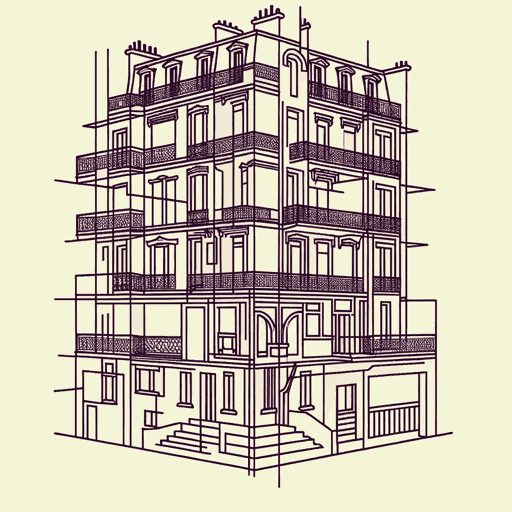
Murder at the Grand Alpine Hotel
A modern alternative to SparkNotes and CliffsNotes, SuperSummary offers high-quality Study Guides with detailed chapter summaries and analysis of major themes, characters, and more.
Summaries & Analyses
Quizzes
NEWReading Tools
Prologue-Part 1, Chapter 13Chapter Summaries & Analyses
Content Warning: This section of the guide includes discussion of graphic violence, death, sexual content, emotional abuse, physical abuse, substance use, addiction, cursing, and suicidal ideation.
Prologue Summary
In the Swiss Alps in 1950, a lift attendant at the Grand Alpine gondola station waits in his cabin as the gondola rises up to him. He hopes for a brief human interaction to break up his solitary workday. Inside the gondola is a single passenger, sitting still with their head thrown back. When the gondola arrives, the passenger’s body topples stiffly onto the floor. The attendant rushes toward the car, but he already knows the person is dead.
Part 1, Chapter 1 Summary: “Diana Glass: The Help”
It is two days before the discovery of the body. Diana Glass, a paid companion, travels up the mountain on the Grand Alpine Express with her employer, Mrs. Bantry, a wealthy widow, and Mrs. Bantry’s friend, Miss Jane Marple. Mrs. Bantry tells Miss Marple she hired Diana after Mr. Bantry died to help organize her affairs, and praises Diana’s efficiency. As the train climbs, Diana observes her fellow passengers, a mix of wealthy Europeans and Americans. Miss Marple watches Diana with keen interest, and Diana reflects on their shared status as unmarried, “left-behind” women. Miss Marple compliments the necklace Diana wears—a chain bearing a silver ring set with two hearts and seven garnets—and comments that Diana’s bird-watching hobby is a good pretext for observing people. On their arrival, the group is taken by sleigh to the Grand Alpine Hotel, where they are greeted with hot chocolate. Mrs. Bantry notes that, with the train gone, she feels “marooned” on the mountain.
Part 1, Chapter 2 Summary: “Catherine Narracott: The Wife”
In their hotel room, Catherine Narracott endures the anger of her husband, Anthony Narracott, a prominent politician, following an unsuccessful attempt at sex. While preparing a drink for him, Catherine discovers a jar labeled “RAT POISON” with a spoon in it on the cocktail tray. Though Anthony dismisses it as a macabre prank, he is visibly disturbed. Catherine is frightened by the thought that someone may have a key to their room and they go to the reception desk to change rooms. Anthony insists on upgrading to a more expensive suite, despite their financial troubles, claiming a recent investment will soon pay off.
Part 1, Chapter 3 Summary: “Diana Glass: The Help”
In the hotel lobby, Diana, Mrs. Bantry, and Miss Marple listen as the hotel manager details the resort’s amenities, including the dangerous Verglas toboggan run. Diana observes the elegant Catherine and the handsome Anthony Narracott at the next desk. Mrs. Bantry recognizes Anthony and Diana—who has seen him at the War Office—confirms he is a rising star in the Conservative party. When Anthony introduces himself to the women, Diana notices a “large and ungainly” man enter the lobby and stare intently at Anthony (23).
Part 1, Chapter 4 Summary: “Catherine Narracott: The Wife”
Anthony returns to Catherine and dismisses the three women as “old dears” but useful Tory voters. The ungainly man approaches, and Anthony introduces him as Bruno Crane, an “old friend” from the war. Catherine is surprised, as Anthony has never mentioned him. Bruno also seems startled to find Catherine at the hotel and Catherine observes a tense, warning look pass between the two men. Anthony suggests an ice-climbing trip to Bruno for that afternoon. Bruno appears uneasy with the suggestion but agrees.
Part 1, Chapter 5 Summary: “Sylvia Sinclair : The Star”
In a private, rustic-style Stübli bar, Hollywood actress Sylvia Sinclair talks to her dog, Herb, while drinking a rum-spiked hot chocolate. She reflects on her recent behavior, which she considers “foolish” now that she is in love. Back in her suite, she prepares to go out, putting on her signature dark glasses. She admits to herself that she is shy and uses the persona of “Sylvia Sinclair” as a protective disguise.
Part 1, Chapter 6 Summary: “Bruno Crane: The Friend”
High on a rock ledge after a difficult climb, Bruno Crane and Anthony Narracott talk privately. Anthony mocks Bruno for being out of shape and sneers at his black market dealings. Through binoculars, Bruno looks at a small shadow in the rock on the other side of the glacier. The men discuss an undisclosed plan, intended to act the following night during the full moon. Bruno is anxious, questioning why they have waited five years and expressing concern about being seen, especially by Catherine. Anthony argues that Catherine’s presence makes them seem less suspicious and says she takes sleeping pills that will keep her out of the way. Bruno reveals that actress Sylvia Sinclair is also a guest at the hotel. The news panics Anthony, who feels his plans are now in jeopardy.
Part 1, Chapter 7 Summary: “Diana Glass: The Help”
Diana joins Miss Marple and Mrs. Bantry on the hotel terrace for an alphorn concert. They marvel at the opulence, particularly the waiters who serve drinks on ice skates. They spot Sylvia Sinclair, who uses binoculars to watch a nearby cliff face. Another guest explains that people often watch climbers on the dangerous rock face, sometimes hoping for a fall. Intrigued, the binoculars are passed from Miss Marple to Mrs. Bantry and then to Diana, who sees two men on a high ledge. Diana is horrified to see one man stand directly behind the other and raise his hands as if to push him off. She glances at Miss Marple, who, without the aid of binoculars, has also caught the menacing gesture. Diana looks back to see the man has stepped away, the moment of danger having passed.
Part 1, Chapter 8 Summary: “Catherine Narracott: The Wife”
While Anthony is on the phone, Catherine is confronted on a terrace by an unkempt young man who warns her that her husband has a dark past. Frightened, she locks him outside. Later, in the dining room, she is embarrassed by an old schoolmate who brings up a youthful “scandal with the gardener” (44). Sylvia Sinclair makes a dramatic entrance. Catherine asserts that Sylvia winks at their table, implying jealousy, and Anthony denies knowing her. When a waiter brings a Nusstorte, triggering Anthony’s severe nut allergy, Catherine suspects this is a deliberate attempt on his life. The young man from the terrace approaches their table, trying to speak to Anthony, who curtly dismisses him and leads Catherine away. Anthony’s agitation causes him to forget his characteristic limp, caused by a “war wound.”
Part 1, Chapter 9 Summary: “Bruno Crane: The Friend”
Anthony confronts Bruno in his room, criticizing his shabby appearance and cheap meal of tinned fish. Bruno, goaded, mentions the awkwardness of Anthony having both his wife and his mistress, Sylvia, at the hotel. He expresses guilt over their secret plan, suggesting the object of their search is “cursed.” They argue about the past: During the war, Anthony shot Bruno in the ear and shot himself in the toe in order to avoid active service. Bruno moves to the balcony and begins shouting. He reveals that he still has the suicide pill issued to them during the war and has often considered using it. Anthony drags him back inside, warning him to be quiet and to stop being a “liability.”
Part 1, Chapter 10 Summary: “Diana Glass: The Help”
Meanwhile Diana, Mrs. Bantry, and Miss Marple play bridge in the library. When a guest opens a window, they and the other guests clearly overhear the heated argument from the balcony above. They listen as a man’s voice shouts about having a suicide “S pill” and contemplating throwing himself from the balcony. Diana says she thinks an S pill means a suicide pill of the kind used in the war, likely cyanide. Miss Marple observes that when someone speaks so loudly about such a private matter, it is possible they want to be overheard.
Part 1, Chapter 11 Summary: “Sylvia Sinclair: The Star”
Sylvia Sinclair luxuriates in her bathtub, reflecting on her fading career and her belief that her new love affair will save her. Anthony Narracott lets himself into her suite and angrily demands to know why she is at the hotel, insisting he told her not to come. Sylvia teases him about his wife and suggests that they can finally be together. Anthony cruelly dismisses her, calling her a “courtesan” whose only role is to be “fun.” Enraged, Sylvia hurls a heavy glass ashtray at him, which smashes against the wall. In response, Anthony grabs her and holds her head under the bathwater, attempting to drown her.
Part 1, Chapter 12 Summary: “Bruno Crane: The Friend”
At the casino in town, Bruno Crane wins £5,000. Elated, he believes the money will free him from his dangerous arrangement with Anthony. He buys champagne for his table, feeling triumphant. As he walks to cash in his chips, however, doubt creeps in: He worries the sum is not enough to truly secure his future and decides to risk everything to double his winnings at the roulette table. Placing his entire fortune on a single spin, the croupier’s impassive expression fills him with a sudden sense of dread.
Part 1, Chapter 13 Summary: “Diana Glass: The Help”
The next morning, Diana explores the hotel and its grounds before heading to the train platform to go to town for Mrs. Bantry. She encounters Anthony and Catherine Narracott, who are heading to the gondola for the first ski run of the day. Anthony grows strangely still when Diana mentions she has read about wolves in the area in a guidebook. After they leave, Diana sees the unkempt young man from the previous night stalking them in the trees. At the station, Diana opens a carriage door, and a man tumbles out, knocking her to the ground.
Prologue-Part 1, Chapter 13 Analysis
This first section immediately sets up the novel’s generic context of mystery and menace by introducing jeopardy to the opulent surroundings of the Grand Alpine Hotel. The Prologue’s description of the glacier, with its beautiful surface whispering of “hidden, lethal chasms beneath” (1), establishes the Alpine setting as both majestic and treacherous, while its flash-forward to the discovery of an—as yet unidentified—body. This uncanny combination of beauty and threat defines the atmosphere of the hotel itself. Upon arrival, Mrs. Bantry feels “marooned” once the mountain train departs, transforming the luxurious resort into an isolated, closed circle where guests are trapped with one another’s secrets. The opulence—its skating waiters and rich hot chocolate—is a thin veneer over escalating threats, complying with the generic expectations of murder narratives to create suspense and excitement. The jar of rat poison, the Nusstorte triggering Anthony’s allergy, the young man stalking the Narracotts, and the near-fatal push on the high ledge all demonstrate that the hotel is becoming a hunting ground rather than a retreat. A guest’s mention of the “Eiger Birds” (40), who watch climbers fall for sport, is a metaphor for the hotel guests’ morbid curiosity and the tense of rising tension. The growing atmosphere of danger through this section culminates in Anthony’s physical violence toward Sylvia, framed as a cliffhanger murder attempt to create the false suggestion that she will be the first murder victim. This is characteristic of the novel’s patterning of fragmented information, scenes and perspectives to reveal and hide clues to the mystery.
The narrative structure is established, rotating through the first-person perspectives of characters defined by their relational titles—“The Wife,” “The Help,” “The Star,” “The Friend”—reinforces the fragmented and deceptive nature of the novel’s elite world and its characters’ projected identities. This technique creates significant dramatic irony, as the reader pieces together the real women behind their external characters. It also introduces the theme of Respectability as a Cloak for Corruption, enabling Lucy Foley to control the reader’s unfolding perception of the antagonist, Anthony Narracott, gradually building up a villain who is far more sinister than any single character comprehends. We are privy to Catherine’s suspicions about his lies, Bruno’s terror of their shared past, and Sylvia’s abusive relationship with him, showing Anthony as the manipulative antagonist of each perspective. The structure mirrors the detective process itself, forcing the reader to synthesize subjective, often contradictory accounts to approach the truth. For instance, Diana and Miss Marple witness Anthony’s threat of Bruno from afar as an anonymous tableau, followed by Bruno’s chapter that reveals the contextualizing conversation that preceded it. This fragmentation ensures that no single perspective is authoritative, showing how truth is obscured by personal motive and limited knowledge.
The novel builds tension and reveals clues by hinting at hidden secrets about to erupt into the public sphere. Bruno Crane’s agonized shout from his balcony, revealing he still has his wartime suicide pill, makes the private history between him and Anthony a public spectacle. The argument, overheard by the guests in the library, brings the past into the present with violent force. Their relationship is based on coercion and rooted in a shared crime for which Bruno feels guilt but which Anthony sees as leverage. The revelation that Anthony shot Bruno in the ear during the war—while shooting himself in the toe to create a more “aesthetic injury” (52)—fundamentally reframes his heroic limp as an act of calculated deception rather than sacrifice. This history, full of violence and moral compromise, demonstrates The Long Shadow of Wartime Betrayal as the personal conflicts are increasingly connected to crimes committed in World War II. Bruno’s despair and Anthony’s ruthlessness shown to be the direct consequences of a past that refuses to stay buried, and the “S pill” is a literal relic of that time, a tangible symbol of a pact that governs their present actions.
Diana Glass’s reflection on her and Miss Marple’s shared status as socially insignificant “left-behind women” introduces the theme of Women Subverting Societal Expectations. The novel explores how society overlooks these women, assuming they are harmless companions or dithering spinsters, yet this invisibility grants them a unique vantage point. Miss Marple weaponizes this perception, using the benign hobby of bird-watching as a cover for her true interest: keenly observing human nature.. Similarly, Diana’s own “hobby” of photography positions her as an unnoticed observer, mapping the physical and social landscape. Similarly, Catherine Narracott’s prescribed role as a silent, beautiful accessory allows her to witness her husband’s deceptions, while Sylvia Sinclair’s hyper-visible persona as a “showgirl” is a different kind of disguise, causing men like Anthony to see the role rather than the real woman, underestimating her capacity to disrupt his plans. In each case, being socially underestimated allows these women to see and understand more than the men around them suspect, laying clues for the following chapters.

Get in-depth, chapter-by-chapter summaries and analysis from our literary experts.
- Grasp challenging concepts with clear, comprehensive explanations
- Revisit key plot points and ideas without rereading the book
- Share impressive insights in classes and book clubs
Related Titles
By Lucy Foley