Pay Attention, Carter Jones
Pay Attention, Carter Jones
A modern alternative to SparkNotes and CliffsNotes, SuperSummary offers high-quality Study Guides with detailed chapter summaries and analysis of major themes, characters, and more.
Summaries & Analyses
Quizzes
NEWReading Tools
Chapters 11-15Chapter Summaries & Analyses
Content Warning: This section of the guide contains discussion of illness and child death.
Chapter 11 Summary: “An Innings”
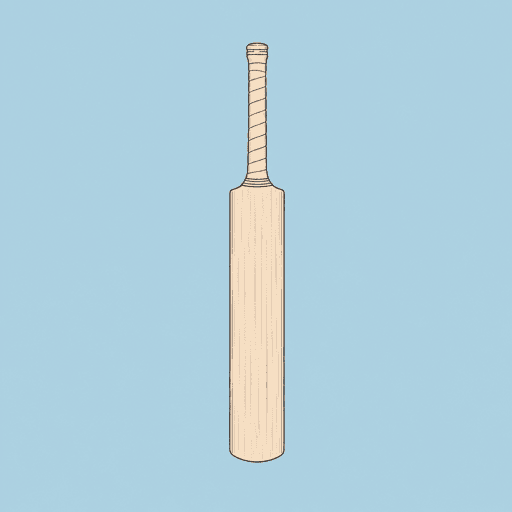
At cricket practice, the Butler easily bowls Carter out four times in a row, once with a tricky pitch called a googly. When Carson Krebs takes a turn to bat, he expertly hits every ball. The Butler explains that Krebs lived in New Delhi for two years and was once given a bat by a famous cricketer. After some coaching from Coach Krosoczka, Carter’s own batting improves, and he successfully hits four consecutive balls. During the next practice, the team plays a match, and though his side loses, Carter is proud to have scored three runs.
Later, the Butler takes Carter and his sister Annie to an art exhibition featuring the works of British Romantic painter J.M.W. Turner. Carter is deeply affected by a painting of a ship being towed away, concluding that its message is about the inevitability of loss. On another evening, he chaperones his younger sisters to a ballet performance, which he strongly dislikes.
Chapter 12 Summary: “A Googly”
At school on Monday, Carson Krebs asks Carter to propose that the Butler become the coach for a new school cricket team. The team is officially formed, and Carter and his friend Billy Colt are the only sixth graders invited to join the Eighth-Grade Varsity team. The school principal, Principal Swieteck, expresses her excitement about the new sport.
That afternoon, Carter attends his sister Annie’s robotics club open house, noting that his mother, who had planned to come, does not show up. When he returns home, he finds his mother in her bedroom holding Ba-Bear, the teddy bear belonging to his deceased younger brother, Currier. She tearfully reveals that she has received an email from Carter’s father, who is on military deployment. As Carter imagines his father severely injured or dead, she explains that he is unhurt but has met someone else and has decided to stay in Germany, abandoning the family.
Chapter 13 Summary: “The Stumps”
Reeling from the news of his father’s abandonment, Carter reflects on his younger brother, Currier, who died at age six from a sudden illness. He remembers that the day Currier fell ill, he gave Carter his favorite green shooter marble, which Carter still carries. His father, who was also on deployment at that time, did not arrive home before Currier passed away.
After his brother’s death, the family stopped attending St. Michael’s church and became socially isolated. Carter describes his constant grief as a physical sensation. Now, facing his father’s desertion, this old grief resurfaces, and Carter feels completely alone with no one to talk to about his pain.
Chapter 14 Summary: “Side Out”
The Butler agrees to coach the new cricket team. During practice, an eighth grader named Michael Chall is hit in the stomach by two cricket balls and vomits. Carter feels a sense of connection to this, as it mirrors how he feels emotionally. At home, he and his mother keep the news about his father a secret from his younger sisters, though the family dinners feel strained.
Carson Krebs asks Carter to stay late for extra batting practice. Afterward, Krebs reveals that his own mother abandoned his family when he was young, causing his father to become emotionally withdrawn. He encourages Carter to stay strong and not “let the bails come down” (102), quoting the Butler’s habitual advice to “make good decisions and remember who you are” (160). The conversation makes Carter feel understood and less alone.
Chapter 15 Summary: “The Shooter”
Carter confronts the Butler, correctly deducing that he arranged the private practice with Carson Krebs. The Butler admits that he told Krebs about Carter’s family situation, explaining he hoped to foster a supportive friendship between two boys with similar experiences of abandonment. The conversation triggers a memory for Carter of a time he hiked with his father in Australia’s Blue Mountains, a moment of peaceful connection that now feels lost. The Butler assures Carter that he will eventually learn to manage his difficulties.
Over a rainy weekend, Carter works on a school report about the Declaration of Independence. The Butler encourages Carter to make the report more interesting by arguing the British perspective. He engages Carter in a lively debate about the rightness of the colonies’ decision to declare independence, skillfully and humorously refuting all of Carter’s points, trying to teach Carter not to accept dogma uncritically. To playfully annoy Carter further, the Butler has Annie play “Rule Britannia!” on the piano.
Chapters 11-15 Analysis
The news of Captain Jones’s desertion of the family arrives as a “googly,” a deceptive cricket pitch that gives a name to the central trauma of these chapters. The title of Chapter 12 uses this specific term to structurally parallel the narrative with the sport’s mechanics. The news arrives amid Carter’s triumph—he is celebrated for being invited to the eighth-grade cricket team, building an expectation of success that is completely shattered by the revelation of his father’s abandonment. The emotional shock is as disorienting as a pitch that “seems as though it must angle one way, when in fact it unexpectedly angles exactly the opposite way” (83). This use of cricket terminology extends across the section, providing Carter with a vocabulary for his chaotic emotional world. The title of Chapter 13, “The Stumps,” refers to the three stakes that a batsman must protect, symbolizing the family’s core foundation, which is now under direct assault. The shock of Carter’s father’s email serves as a catalyst, forcing the family to confront the pain they’ve been repressing for years. The sport, introduced as a discipline, becomes a metaphorical language for Navigating Grief and Abandonment.
Viewing an exhibition of paintings by the British Romantic painter J.M.W. Turner, Carter remarks that the paintings evoke an awareness that “everything has to leave us, sometime or other” (81), an observation that prefigures the imminent news of his father’s abandonment. This moment reveals Carter’s underlying preoccupation with loss but also begins preparing him to accept the inevitability of loss. His father’s desertion reactivates and compounds the unresolved trauma of his brother Currier’s death, with the father’s absence being an important element in both events. The symbol of the green marble physically links these two destructive experiences; Carter clutches the marble, a final gift from Currier, when confronted with the Turner painting, connecting the object to his deepest anxieties about family dissolution. His description of grief as an embodied, chronic condition—“like being hit in the glutes and the stomach and the face all at the same time” (92)—demonstrates that for him, trauma is an ongoing physical assault. By juxtaposing the fresh wound of abandonment with the older scar of his brother’s death, the narrative establishes that Carter’s current crisis is not a singular event but an echo of a foundational family tragedy.
The private cricket practice between Carter and Carson Krebs represents the Butler’s effort toward Redefining Family and Community. Recognizing Carter’s deep isolation, the Butler engineers a peer relationship grounded in shared experience. Krebs’s disclosure that his own mother abandoned his family provides Carter with a form of understanding his immediate family cannot offer, showing Carter that the cricket pitch can be a site of therapeutic community. Krebs’s advice to “not let the bails come down” (102) uses the rules of cricket as a metaphor for emotional resilience, reinforcing the sport’s role as a tool for character building. This new alliance contrasts sharply with Carter’s memory of the silent, isolated hike he undertook with his father. The Butler actively addresses the absence of Carter’s father not by acting as a surrogate father, but by facilitating a support network. His admission that he hoped to “encourage camaraderie during a time when you might feel a tad lost” (106) confirms his role as a careful orchestrator of Carter’s healing.
Carson Krebs’s comment to Carter that his batting improved because he “paid attention” (79) recalls the novel’s title and hints at moral lessons that extend beyond the cricket pitch. The Butler’s entire methodology is an exercise in The Power of Paying Attention. He perceives Carter’s unspoken loneliness and sets up the important conversation with Krebs. He notices the family’s drift into chaos and imposes a routine of cultural education and household chores. This meticulous care contrasts sharply with the inattention of Carter’s parents. His mother’s inattention is not her fault. She lost her son just a few years ago and has now lost her husband. After holding her family together alone for years, she is sometimes too consumed by own grief and overwhelmed by responsibilities to attend closely to her children’s personal lives. Carter’s father’s abandonment, by contrast, represents a willed refusal to attend to his family’s emotional needs. Amid this absence of attention, the Butler’s deeply attentive care is a necessary corrective. Carter himself begins to internalize this lesson, recognizing his conversation with Krebs as “something that really mattered” and “Something I should pay attention to” (103). The narrative suggests that mastering the skill of paying attention is essential for both excelling at cricket and navigating personal tragedy.
While Carter and his mother privately grapple with their new reality, the Butler keeps the household functioning with a strict, if eccentric, routine. The intellectual sparring over American history, which culminates in Annie playing “Rule Britannia!” on the piano, provides necessary comic relief and an essential distraction. The debate forces Carter to engage with an external, solvable conflict, allowing him to channel his anger and confusion into a low-stakes argument rather than letting it fester internally. This routine is a form of care, creating pockets of normalcy and intellectual challenge that prevent the family from being entirely consumed by grief and silence. The Butler’s actions provide the stability Carter needs to begin processing his loss.

Get in-depth, chapter-by-chapter summaries and analysis from our literary experts.
- Grasp challenging concepts with clear, comprehensive explanations
- Revisit key plot points and ideas without rereading the book
- Share impressive insights in classes and book clubs