Pay Attention, Carter Jones
Pay Attention, Carter Jones
A modern alternative to SparkNotes and CliffsNotes, SuperSummary offers high-quality Study Guides with detailed chapter summaries and analysis of major themes, characters, and more.
Summaries & Analyses
Quizzes
NEWReading Tools
Chapters 26-29Chapter Summaries & Analyses
Content Warning: This section of the guide contains discussion of illness, child death, and emotional abuse.
Chapter 26 Summary: “Run Out”
The Butler modestly accepts the team’s thanks and congratulations for getting the game reinstated. Krebs is stunned and deeply happy that his father has been named Athletic Director. As captain of Team India, Krebs sets the batting order, needing 47 runs to win. Carter’s mother and sisters watch from the stands as the game resumes. The first batsman is out on the first ball. After two more batsmen are caught out, the team has only 29 runs. With 11 balls remaining and 18 runs needed, Krebs puts Carter, a sixth-grader, in as the next batsman. Krebs reminds Carter that he started this and must “pay attention.” Resolved to defend his wicket, Carter, wearing his Virender Sehwag hoodie, steps up to bat.
Chapter 27 Summary: “The Drive”
Carter bats, scoring two runs for Team India. On a subsequent play, however, his batting partner is run out. This forces Carson Krebs to bat alongside Carter, with their team now needing 16 runs from the final six balls. As Krebs prepares, Carter imagines that he can see his own father in the distance, sweeping away the fire he has carefully built. Krebs bats masterfully, and he and Carter run repeatedly between the wickets, accumulating runs. On the last ball, Krebs hits it across the boundary for four runs, securing victory. The team triumphantly carries both Krebs and Carter off the field on their shoulders. The next morning, however, Carter discovers that the Butler has left without explanation.
Chapter 28 Summary: “Milestones”
The Butler is gone for nearly a month, leaving only a note stating he had an important decision to make. During his absence, the Jones family settles into a new routine, and Carter begins running with Carson Krebs and his father. The Butler eventually returns and explains that he traveled to Bamberg, Germany, to visit Carter’s father, Captain Jones. He confronted Captain Jones about his ungentlemanly abandonment of his family and praised Carter’s developing character. Carter correctly deduces that his father asked the Butler to stay in Germany with him and his new family. The Butler confirms this but says he refused, instead going to London to settle his affairs before returning. Leaning down to Carter, the Butler says, “you are my home.” (212) That night, Carter cries for his family and his losses before choosing to send a final email to his father, saying goodbye.
Chapter 29 Summary: “Toe End”
Carter reflects on his identity, accepting his new family structure with his mother, sisters, and the Butler. The entire family is on a plane to Italy for Christmas, a trip funded by his grandfather’s endowment. Carter carries his deceased brother Currier’s green marble in his pocket and his father’s beret, a gift from the Butler, in his backpack. His mother is now the full-time administrator at St. Michael’s Church, and the family has resumed attending mass. Carter looks forward to eating pizza and climbing mountains in Italy, comparing the anticipated blue mountain air to the blue he remembers from Australia. He feels he has his “eye in now” (217)—an expression he learned while playing cricket—and is ready to find all the places in the world that have their own kind of beauty.
Chapters 26-29 Analysis
The climactic cricket match transforms from a simple school game into a public test of character, partnership, and resilience. When team captain Carson Krebs puts Carter, a sixth-grader, in to bat under immense pressure, he tells him, “You started this. So pay attention” (198). This command explicitly links the game to Carter’s broader journey of taking responsibility, crystallizing the novel’s central theme, The Power of Paying Attention. Carter’s internal mantra as he prepares to bat—“Not all the bails get knocked down” (196)—functions as an incantation of hope, a fragile defense against the emotional wreckage of his family life. His successful partnership with Krebs is built on a shared history of parental failure. Their collaboration on the field forges a bond of mutual respect that provides an alternative model of community. The narrative arc of the game is mapped by the chapter titles: “Run Out” signifies the precarity and risk of failure inherent in their task, while “The Drive” refers not only to Krebs’s powerful batting but also to the internal fortitude that secures their victory. Their triumph is a communal one, culminating in both boys being carried from the field on their teammates’ shoulders, suggesting the formation of a new, supportive community to replace a broken family structure.
Upon the Butler’s return after a month-long absence, his account of his travels solidifies the novel’s redefinition of family. He reveals that he went to Germany to confront Carter’s father about his abandonment, labeling it “ungentlemanly behavior” (210), before declaring his decision to stay with Carter’s family rather than work for Carter’s father in Germany. The Butler’s quiet declaration to Carter, “you are my home” (212), marks the narrative’s emotional climax, formalizing his choice to commit to the found family he has nurtured in America. This decision deliberately severs his traditional obligation to his former employer’s lineage, reframing loyalty not as an inherited duty but as an active, moral choice. In this, the Butler embodies the gentlemanly code he teaches, demonstrating that its core tenets are honor and accountability, not social status. The chapter title, “Milestones,” refers not to an athletic achievement but to this deep emotional turning point. The Butler’s unwavering allegiance provides Carter with the paternal stability and validation his biological father withheld, creating the secure foundation necessary for Carter to complete the work of Navigating Grief and Abandonment. This intervention mirrors psychological pathways to resilience, where a consistent mentor figure helps a child process trauma.
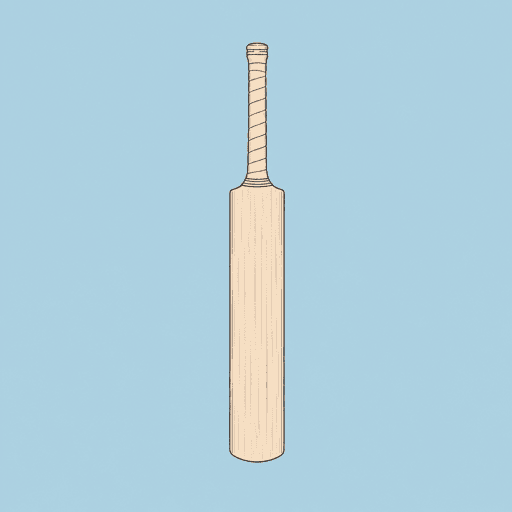
Carter’s decision to send a final goodbye email to his father, after a night of cathartic crying for his brother, his mother, and the father he has lost, represents his ultimate act of agency and emotional closure. Heeding the Butler’s earlier advice that he must “actively choose what to do” (211) in the face of hardship, Carter takes control of his paternal relationship by ending it on his own terms. He moves beyond anger and internalized self-blame, resolving to be the kind of steadfast and supportive figure in his siblings lives that his father never was. The chapter title, “Toe End,” serves as an apt metaphor for Carter’s condition. The toe end of a cricket bat is its most vulnerable part, made of untreated wood that requires special care. Like the bat, Carter has been damaged and remains susceptible, but through the Butler’s tutelage, he has learned the importance of attending to his own needs and is now prepared to protect his emotional well-being.
The novel’s final chapter solidifies Carter’s newfound maturity by showing him integrating his past traumas into a hopeful vision for the future. As he flies to Italy with his reconstituted family, he carries physical emblems of his history: his brother’s green marble and his father’s beret. These objects function as talismans that allow him to acknowledge his losses and his complicated heritage without being constrained by them. His internal monologue, in which he defines himself as the son of both his parents and the brother to all his siblings, demonstrates an acceptance of the unchangeable facts of his life. This act of self-definition is a key element of Redefining Family and Community on a personal level. The recurring motif of the Blue Mountains of Australia is consciously reframed; once a site of painful memory, it now is a benchmark for discovering other kinds of beauty in the world. Carter’s concluding assertion, “I’ve got my eye in now” (217)—a cricket term for a batsman who sees the ball clearly—confirms that the lessons of the game have been fully internalized. It signifies his readiness to face a messy world with focus and resilience, embodying author Gary Schmidt’s philosophy of finding hope and strength amid loss.

Get in-depth, chapter-by-chapter summaries and analysis from our literary experts.
- Grasp challenging concepts with clear, comprehensive explanations
- Revisit key plot points and ideas without rereading the book
- Share impressive insights in classes and book clubs