The Color of Death
A modern alternative to SparkNotes and CliffsNotes, SuperSummary offers high-quality Study Guides with detailed chapter summaries and analysis of major themes, characters, and more.
Summaries & Analyses
Quizzes
NEWReading Tools
Important Quotes
Content Warning: This section of the guide includes discussion of death, child death, graphic violence, mental illness, and suicidal ideation.
“‘This isn’t about money,’ JD cut him off. ‘It’s about seeking justice for Larry Stafford and our mom.’”
(Chapter 1, Page 2)
This quote establishes the antagonist JD’s primary motivation. Her blunt interruption, signaled by the dialogue tag “cut him off,” signals urgency and control, reframing her actions from a simple kidnapping to a mission of vigilante justice. The parallel structure of naming two victims (“Larry Stafford and our mom”) personalizes the grievance and introduces the central conflict between the legal system’s version of justice and the personal, violent retribution that JD and Knox seek.
“Time doesn’t change anything. Closure is a myth created by those who haven’t suffered loss.”
(Chapter 2, Page 8)
This direct statement of belief introduces The Lasting Nature of Grief as a primary theme and characterizes Colm’s internal state. The first sentence is an oblique subversion of the idiom that “time heals all wounds,” suggesting that he has already tried to seek closure and healing but has found none. By labeling closure a “myth,” Colm uses the language of storytelling to dismiss hope itself as fiction, establishing the depth of his trauma following the deaths of his wife and daughter. This worldview establishes his struggle to find a new purpose throughout the narrative.
“I look out through the rain-covered windshield. If it weren’t for me, they wouldn’t be here. No flowers or apologies can absolve me of my guilt. They’re here because of me.”
(Chapter 2, Page 10)
This internal monologue reveals the deep guilt that Colm carries from a past case. The “rain-covered windshield” works as a visual metaphor for his blurred, obstructed view of himself and the world. The repetition of Colm’s self-blame (“If it weren’t for me,” “because of me”) traps the reader inside his looping thoughts of guilt. This burden is the source of his burnout and his desire to resign, which deepens his characterization as a person experiencing grief.
“Something about her seems so out of order with her being in this place—like finding the Mona Lisa hanging in a gas station.”
(Chapter 6, Page 30)
This simile introduces Belle as a character of unique significance. By comparing Belle to the “Mona Lisa,” the author elevates her to something rare, priceless, and even mysterious, while the mundane “gas station” image emphasizes how mismatched she seems with her surroundings. This contrast positions Belle as a potential force for good in Colm’s life, and the diner where she works becomes a sanctuary that stands apart from the corruption of his professional world.
“I can’t get rid of the book. The best I can do is make those pages disappear, for now at least. But I do need you to convince me you had nothing to do with this.”
(Chapter 7, Page 37)
Sheriff Lloyd’s statement to Martin reveals the casual corruption within the local justice system. The euphemism “make those pages disappear” softens the crime of evidence tampering, showing how those in power sanitize their own wrongdoing through careful word choice. His conditional demand (“But I do need you to convince me”) also reveals a transactional loyalty, establishing a dangerous alliance and demonstrating how personal ties can undermine the law.
“I turn on the light and reality hits. There are no windows. The room feels like a crypt.”
(Chapter 8, Page 41)
The simile comparing the office to a “crypt” visualizes Colm’s perception through the lens of grief. The clipped rhythm of the passage mirrors Colm’s shock, while the personification of “reality hits” suggests that he’s being physically struck by his circumstances. The windowless basement room symbolizes his professional demotion, his isolation from his colleagues, and his feeling of being buried alive by his grief, emphasizing the severity of his depression.
“The best homicide prosecutors try to feel like a victim and think like a killer. The dualism wrecks you. You aren’t getting inside a killer’s head so much as they are taking up residence in yours.”
(Chapter 13, Page 62)
This passage is a direct articulation of the theme of The Psychological Toll of Prosecution. The parallel phrasing “feel like a victim and think like a killer” captures the paradoxical labor that affects a prosecutor’s mental and emotional health. While empathizing for the victim or survivor of a crime, the prosecutor must also understand how to hurt the very people he represents, compounding the pain he feels on their behalf. Moreover, the reversal from “you get inside” to “they take up residence” flips agency away from the prosecutor, showing how the dualism of thinking like the killer corrodes their identity.
“Apathy is just a slow, socially acceptable form of suicide.”
(Chapter 15, Page 73)
This metaphor directly addresses the theme of The Lasting Nature of Grief, which the novel demonstrates through Colm’s experience of depression. By equating apathy with a hidden form of self-destruction, Colm collapses the line between simply going through the motions of life and actively giving up on it. The qualifier “socially acceptable” adds bitter irony, suggesting that his internal state is masked by outward functioning. This implies a normalization of the internal state, enabling thoughts of suicidal ideation.
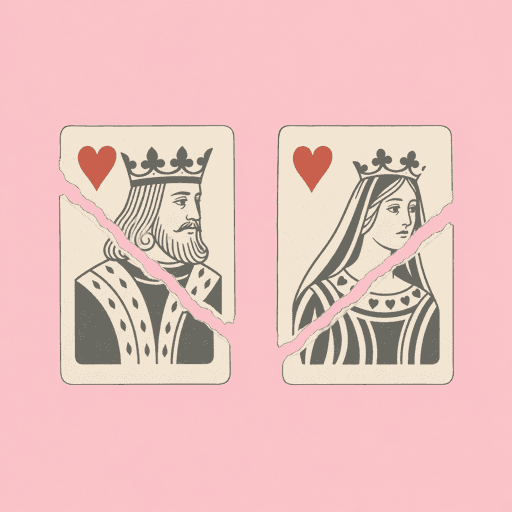
“Tearing the card in two, JD placed them in an envelope and addressed it to Colm Truesdale.”
(Chapter 16, Page 76)
This action introduces the symbol of torn playing cards, a key element of JD’s parallel revenge plot against Colm. The physical act of “tearing” mirrors the emotional splitting that JD hopes to inflict on her victim. JD’s decision to taunt Colm with the torn card concretizes her intentions while foreshadowing a personal vendetta that goes beyond a typical criminal case.
“The killer used the scissors to cut off the victim’s hair before plunging them into her chest.”
(Chapter 25, Page 109)
This key finding from the autopsy establishes the hair motif, which is later revealed to be central to the killer’s motive. The violent verb “plunging” emphasizes rage, while the sequence of violent actions suggests a ritual of humiliation that goes beyond the killing itself. This detail signals to investigators that the crime was intensely personal, rather than impulsive or spurred by a foiled robbery.
“I am rejecting this application for a search warrant because the underlying affidavit for the warrant is fundamentally flawed as written.”
(Chapter 27, Page 115)
This quote uses dramatic irony to illustrate The Dangers of Deception, as Martin abuses his official power to obstruct the investigation into a murder that the prosecutors don’t realize he’s connected to. The formal, legalistic diction (“underlying affidavit,” “fundamentally flawed”) masks a self-serving act of corruption behind a shield of professional authority. The language of the law ironically becomes a weapon against justice, escalating the conflict between the pursuit of truth and the protection of power.
“You were put on earth to advocate for people who cannot advocate for themselves. That’s your gift.”
(Chapter 28, Page 125)
Mae’s statement directly addresses the theme of The Psychological Toll of Prosecution by defining Colm’s professional identity as an innate calling. The repetition of “advocate” and the elevated phrase “put on earth” frame his work in almost spiritual language, reshaping his suffering into the necessary cost for him to fulfill his purpose. In this way, the novel reframes the psychological toll of Colm’s work as a transformative form of toil.
“Fixing your issue has come at considerable expense to my employer.”
(Chapter 31, Page 137)
This line from Beau’s enforcer codifies Martin’s Faustian bargain. By seeking help to conceal his affair, Martin has indebted himself to a dangerous criminal, illustrating how a single deception can spiral into a web of dangerous obligations. The vague euphemisms “fixing,” “issue,” and “considerable expense” hide criminal actions behind the polite language of a business transaction, showing how corruption disguises itself in neutral terms.
“The missing page is for October 8. MARTIN WEBER. 1:00-4:00. LIGHT TRIM. $0.”
(Chapter 33, Page 143)
The discovery of Martin’s name is a major plot development that pivots the trajectory of the entire investigation. The stripped-down, fragmented style of the passage (dates, name, times, dollar amount) mimics the clinical format of a ledger. This stylistic verisimilitude makes the evidence feel undeniable and adds to the weight of its discovery.
“Why didn’t I try to run? Why did I stand there? Mae would have a field day with that, but I don’t need a psychiatrist to understand why. I stood there because I want to see Ally again.”
(Chapter 40, Page 168)
This moment of introspection underscores the depth of Colm’s grief. The rhetorical questions at the start show him interrogating his own instincts, while the brief flash of dark humor (“Mae would have a field day”) gives way to a raw, honest confession. Colm is beginning to experience suicidal ideation as a way to reunite with the spirit of his wife, signaling the way his grief has impacted his will to live.
“These aren’t breaks, Travis. Someone is covering their tracks.”
(Chapter 42, Page 173)
Colm’s assertion reframes a series of setbacks as deliberate sabotage, solidifying the idea of a wider conspiracy running across the narrative. The metaphorical phrase “covering their tracks” suggests two things: that the guilty parties are desperate to ensure that their guilt remains hidden and that the investigators are getting dangerously close to uncovering the perpetrators. In this way, the discovery of the conspiracy hints to Colm and Travis that they’re moving in the right direction.
“You can make a living and still follow your passions. You don’t have to choose between the two. I would close the books for a minute and think. Think about what you love and what you’re good at. And find a way to marry the two into what others call a career.”
(Chapter 44, Page 180)
This quote marks a significant step in Colm’s character arc, as he momentarily shifts focus from his overwhelming grief to mentor someone else. The repetition of “think” and the metaphor of “marrying” love and skill give the advice a gentle, almost paternal rhythm. His words to Belle echo his own past passion for his work, which contrasts against the inertia that his despair effects on him.
“I am deeply ashamed of what happened between Rachel and me. We had a brief romantic relationship beginning three months ago. It eventually became intimate, for which I am embarrassed and ashamed and remorseful. I let myself down and succumbed to weakness, but having an affair is not murder, nor is it a crime.”
(Chapter 48, Page 195)
Martin’s confession of infidelity is calculated to absolve himself of the greater crime of Rachel’s murder. The pile-up of emotional words (“embarrassed and ashamed and remorseful”) uses polysyndeton to perform sincerity, as though he were summoning similar adjectives on the spot to underscore his guilt, while the final sentence pivots sharply to legal defense (“not murder, nor is it a crime”).
“The last message the phone received is displaying on the locked screen. It’s from Rachel, and it reads: DON’T COME. LEAVE ME ALONE!”
(Chapter 49, Page 201)
This discovery is a key plot point, appearing to be the definitive evidence that confirms Martin’s guilt. The use of all capital letters and the exclamation point convey panic and urgency, pulling both the investigators and the reader toward the obvious conclusion. However, the message is a red herring, intensifying the investigation’s focus on the judge while concealing the true perpetrator’s identity.
“Correct me if I’m wrong. That would mean you have a decent case against his shoes, his tires, his car, and his cell phone, but nothing placing him there. In fact, there is a witness who alibis him as, in fact, not being there. Is that about right?”
(Chapter 53, Page 217)
Cindy’s sharp rebuke highlights the chasm between circumstantial evidence and direct proof. Her use of listing (“his shoes, his tires, his car, and his cell phone”) piles up items to expose how absurd it is that none of them actually place the suspect at the scene. The sarcastic bookends of the passage (“Correct me if I’m wrong. […] Is that about right?”) turn her critique into a pointed interrogation, emphasizing the difficulty of building a case beyond a reasonable doubt.
“Colm, we’re going to give a new quarterback a chance. I’m switching you out for Dillon. If he wants you to stay on and help or second chair him, well, that’s his call. I’m sorry, Colm. I gave you a chance, but it isn’t working out. You can blame me for letting you come back too soon.”
(Chapter 56, Page 228)
Cindy’s decision is a destructive professional blow for Colm, intertwining his personal tragedy with his perceived failure. The sports metaphor of the “new quarterback” softens the demotion by dressing it in the language of teamwork. Cindy knows how much Colm’s work means to him, which is why she tries to make her reasoning for removing him from the case as sympathetic to him as possible.
“There’s a difference between wanting to die and being tired of living. Right now—I’m tired.”
(Chapter 59, Page 237)
This distinction articulates the core of Colm’s struggle, illustrating the theme of The Lasting Nature of Grief. The antithesis between “wanting to die” and “being tired of living” carefully separates active suicidal ideation from exhaustion. The dash before “I’m tired” creates a pause that syntactically mimics his hesitation and depletion, emphasizing the weight that characterizes his emotional health at present.
“The only thing worse than failing enough to kill yourself is failing at killing yourself. He’s suffering, but not enough. Not like I want him to.”
(Chapter 60, Page 239)
JD’s chilling internal monologue reveals the depth of her sadism and the true nature of her revenge plot. The wordplay on “failing” twists the term into two cruel meanings, showing how JD relishes Colm’s despair as both cause and punishment. The clipped final sentences (“Not enough. Not like I want him to”) reveal a cold, calculating mindset focused on prolonging torment rather than delivering justice.
“It occurred to me recently, when I was getting my own blood drawn, how messy murder is. Especially stabbing someone nineteen times. And then I realized it was your ring that broke through the gloves, not Martin’s. So I took the liberty of sending your rings to the state lab for DNA testing. You’ll never guess what they found. Rachel Simone’s DNA, in the form of blood, trapped between the center diamond and the gallery of your engagement ring.”
(Chapter 66, Page 266)
This climactic reveal in the courtroom signifies the triumph of forensic evidence in legal disputes. Colm’s slow build from personal memory of having his “blood drawn” to the specific number “nineteen times” to the final image of blood “trapped” in the ring creates rising suspense that mirrors a closing argument. The diamond ring, traditionally a symbol of love and union, is turned into the instrument that exposes the murderer, bringing the novel’s central mystery to a dramatic close.
“Jane. But my friends call me JD.”
(Chapter 70, Page 275)
The final line of the novel is a cliffhanger that leaves Belle’s fate open and in potential danger. JD’s casual, friendly phrasing (“my friends call me”) contrasts violently with the menace she has shown throughout the novel, creating dramatic irony since neither Belle nor Colm know what JD has in store for them. This foreshadows the follow-up to the novel, establishing the stakes for Colm and Belle as parallel protagonists.

Unlock every key quote and its meaning
Get 25 quotes with page numbers and clear analysis to help you reference, write, and discuss with confidence.
- Cite quotes accurately with exact page numbers
- Understand what each quote really means
- Strengthen your analysis in essays or discussions

Featured Collections
Books on Justice & Injustice
View Collection
Family
View Collection
Forgiveness
View Collection
Grief
View Collection
Guilt
View Collection
Mortality & Death
View Collection
Revenge
View Collection
Safety & Danger
View Collection
Trust & Doubt
View Collection
Truth & Lies
View Collection