The Color of Death
A modern alternative to SparkNotes and CliffsNotes, SuperSummary offers high-quality Study Guides with detailed chapter summaries and analysis of major themes, characters, and more.
Summaries & Analyses
Quizzes
NEWReading Tools
Symbols & Motifs
Content Warning: This section of the guide includes discussion of death.
The Junction Diner
The Junction is a recurring motif that represents normalcy for Colm, offering a contrast to the violent, corrupt world of his professional life. Amid the grim realities of his cases, the diner represents an escape into a space governed by simple decency, where waitresses cut up food for elderly patrons and Belle’s genuine warmth provides a source of human connection. This setting is important to Colm’s character arc, as it’s the only place where he begins to emerge from his self-imposed isolation. His visits become a ritual of healing, a conscious choice to engage with a world outside his grief. The diner is a counterbalance to The Psychological Toll of Prosecution, showing that even for someone immersed in darkness, pockets of light and empathy exist and are essential for survival.
More than just a location, the diner symbolizes the possibility of a new beginning. It’s where Colm’s friendship with Belle blossoms, a relationship untainted by the trauma that defines the rest of his existence. While the outside world eventually intrudes upon the borders of this space, as when reporters confront him in the parking lot, the diner itself remains protected. Colm’s internal monologue reveals its importance when he reflects on his drive there, calling it his “hour of peace” (202). This peace, embodied by the diner and his conversations with Belle, is what ultimately allows him to resist the complete despair threatened by his grief and his job, offering him a tangible reason to choose life and connection over the isolation that nearly consumes him.
Hair
Hair is a motif in the novel, linked to identity, sacrifice, and the deeply personal nature of Tiffany’s rage. Rachel’s murder is marked by the killer cutting off her long, blond hair and scattering it at the scene, an act of postmortem desecration designed to humiliate and erase her identity. This detail initially appears to be a sign of random, frenzied violence. However, the motif gains its full significance when contextualized through Tiffany’s experiences, transforming it from a simple crime-scene detail into the central clue to the killer’s motive. Hair becomes a symbol of the femininity and youth that Tiffany felt she had lost and that Rachel possessed, making the act of cutting it a transfer of Tiffany’s own sense of violation onto her victim.
The motif’s true power is revealed during Tiffany’s courtroom confession, where she connects her own sacrifice to the violence she inflicted. She explains that she cut her own hair at Martin’s suggestion, an act of submission to please her unfaithful husband. She screams, “Nineteen inches I cut off because he said it was time I embraced the hands of time and not fight against it” (267). This line chillingly links the number of inches she sacrificed to the 19 times she stabbed Rachel, reframing the murder as a methodical and symbolic act of revenge. The haircut, an emblem of her marital oppression, becomes the blueprint for her crime, starkly illustrating how The Dangers of Deception and suppressed rage can fester into calculated, deadly violence.
Mirrors
Mirrors appear as a recurring motif that symbolizes hidden truths and the idea that reality is often perceived indirectly. The salon where Rachel is murdered is filled with mirrors, creating a visual environment where images are fractured and reflected, suggesting from the outset that the initial facts of the case may be deceptive. The mirrors in the salon reflect the crime scene’s brutality while also hinting at a deeper, less obvious truth lurking beneath the surface of the investigation. This imagery establishes a thematic connection between reflection and revelation, proposing that understanding the crime requires looking beyond the immediate evidence to see what is being reflected or obscured. The motif of mirrors thus emphasizes the central challenge of the investigation: piecing together a coherent truth from fragmented and misleading clues.
The symbolic importance of mirrors culminates in the discovery of the most important piece of evidence against Martin. The missing page from Rachel’s appointment book, which contains the judge’s name, is seen in a reflection. Colm notices that a deputy’s “body camera is focused on a mirror on the wall and not the appointment book itself. In the reflection, the appointment book is visible” (142). This breakthrough moment literalizes the motif’s meaning, as the truth is only revealed by looking at an indirect, reversed image. It reinforces the theme of The Dangers of Deception by showing that while corruption can hide evidence from direct view, reflections of the truth may still be caught, waiting to be discovered by an observant eye.
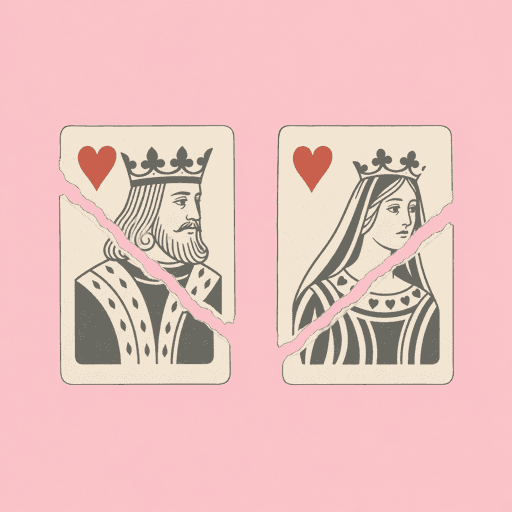
Torn Playing Cards (King and Queen of Hearts)
The torn playing cards function as the antagonist JD’s manipulative worldview. The first card sent to Colm is the king of hearts, torn in two. This “Suicide King” directly represents Colm’s deep grief and the despair he experiences following the loss of his family, a vulnerability that JD intends to exploit. The act of tearing the card symbolizes a broken heart, linking Colm’s personal tragedy to JD’s perception of him as a failed protector. The card is thus a psychological weapon, a recurring reminder to Colm that his pain is being watched and judged. This symbol is central to understanding the personal and cruel nature of JD’s quest for what she sees as justice, turning Colm from a prosecutor into a pawn in a vengeful game.
The symbol’s meaning expands when JD later tears the queen of hearts, drawing a noose around the queen’s neck. This act explicitly marks Belle as the next target, transforming her from a beacon of hope for Colm into a point of leverage for JD. By targeting Belle, JD aims to orchestrate a repeat of Colm’s past failure, forcing him to watch another person he cares for come to harm. JD thinks, “Suicide King. So close” (275), revealing a frustration over the apparent end of Colm’s suffering and a determination to escalate the psychological torment. The torn king and threatened queen encapsulate a dark perversion of love and connection, illustrating how the desire for retribution can corrupt the very emotions it claims to avenge, a tragic outcome of The Lasting Nature of Grief.

Unlock the meaning behind every key symbol & motif
See how recurring imagery, objects, and ideas shape the narrative.
- Explore how the author builds meaning through symbolism
- Understand what symbols & motifs represent in the text
- Connect recurring ideas to themes, characters, and events

Featured Collections
Books on Justice & Injustice
View Collection
Family
View Collection
Forgiveness
View Collection
Grief
View Collection
Guilt
View Collection
Mortality & Death
View Collection
Revenge
View Collection
Safety & Danger
View Collection
Trust & Doubt
View Collection
Truth & Lies
View Collection