The Green Ember
The Green Ember
A modern alternative to SparkNotes and CliffsNotes, SuperSummary offers high-quality Study Guides with detailed chapter summaries and analysis of major themes, characters, and more.
Summaries & Analyses
Quizzes
NEWReading Tools
Background
Genre Context: The “Noblebright” Fantasy Subgenre
The Green Ember is a key example of the “noblebright” fantasy subgenre, a movement defined by its optimistic tone and emphasis on moral clarity. Emerging in online communities around the 2010s, noblebright arose as a direct response to the prevailing trend of “grimdark” fantasy. Grimdark, exemplified by works like George R. R. Martin’s A Song of Ice and Fire, features morally ambiguous anti-heroes, pervasive cynicism, and settings where evil often triumphs. In contrast, noblebright stories champion hope, heroism, and the idea that individuals’ virtuous actions can make a positive difference. This subgenre focuses on protagonists who, despite their flaws, are fundamentally good and strive to uphold ideals such as honor, sacrifice, and loyalty. The conflict is typically a clear struggle between good and evil, with the narrative affirming the ultimate triumph of the former.
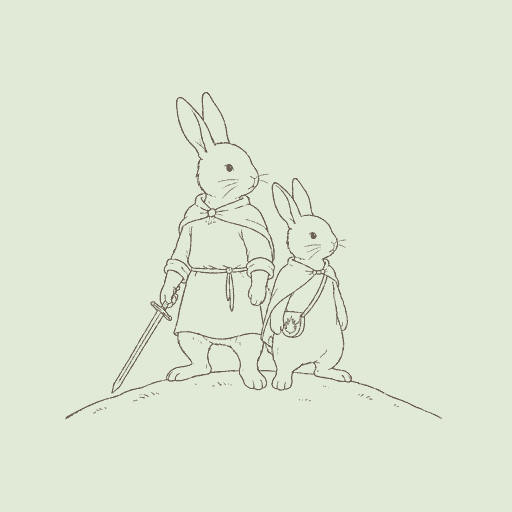
S. D. Smith’s series fits squarely within this framework. The protagonists, Heather and Picket, are classic heroes who are thrust into a conflict where the lines between right and wrong are clearly drawn. The antagonists, such as the wolves led by Redeye, represent a malevolent force intent on destruction. The rabbits’ society is built on the vision of a Mended Wood, a restored and peaceful kingdom, and their guiding oath encapsulates the noblebright focus on self-sacrifice and unwavering loyalty. J. R. R. Tolkien’s Lord of the Rings series (the first book of which is The Fellowship of the Ring) is often cited as an example of the genre due to its themes of hope and redemption and epic struggle between good and evil. Other noblebright fantasies include Brian Jacques’s Redwall series, which, like The Green Ember, features talking animals on heroic quests to end tyranny and defend peace. By embracing these uplifting themes, the novel offers a direct alternative to the nihilism of grimdark, resonating with readers seeking stories of courage and lasting hope.
Literary Context: The Inklings and the Moral Imagination
Smith’s work is deeply influenced by the literary philosophy of the Inklings, an informal group of Oxford scholars and writers active in the 1930s and 1940s, most famously including J. R. R. Tolkien and C. S. Lewis. Central to their approach was the concept of the “moral imagination,” the idea that fantasy narratives can shape a reader’s understanding of virtue and ethics not through direct instruction but through story, symbol, and myth. Lewis, for instance, believed that fiction can “baptize the imagination,” preparing the heart to receive truths that reason alone cannot (Dearborn, Kerry. “The Baptized Imagination.” The Center for Christian Ethics at Baylor University, 2004). By embedding concepts like sacrifice, redemption, and courage into fantastical worlds, as Lewis did with Aslan in the Chronicles of Narnia series (the first book of which is The Lion, the Witch and the Wardrobe), these authors sought to cultivate a reader’s moral sensibilities. For the Inklings, fantasy was a potent vehicle for conveying truth by making it meaningful and resonant on an emotional and imaginative level.
The Inklings’ tradition is evident in The Green Ember. Smith has cited both Tolkien and Lewis as major inspirations, saying that the Lord of the Rings series “has made [him], more than almost any other book […] love the things (and persons) [he] ought to love” (Mesa, Ivan. “On My Shelf: Life and Books With S.D. Smith.” Christian Living, 18 Sept. 2017). His narrative reflects the Inklings’ focus on heroic virtue and moral formation. The story presents a world where courage, loyalty, and hope aren’t just abstract ideals but are embodied in the actions of characters like Heather and Picket. The central conflict between the noble rabbits and the predatory wolves and birds is a classic struggle between good and evil. The lore of King Jupiter, his betrayal, and the longing for the Mended Wood creates a mythological framework that, like the worlds of Tolkien and Lewis, explores themes of loss, duty, and hope, thereby engaging the reader’s moral imagination.
Cultural Context: The Independent Christian Publishing Boom
The Green Ember’s journey from a family story to a bestseller is rooted in the rise of independent publishing and the growth of the Christian homeschooling movement. In the 2010s, crowdfunding platforms like Kickstarter democratized publishing, allowing authors to bypass traditional gatekeepers and connect directly with niche audiences. Simultaneously, the classical and Christian homeschool communities developed into a robust, interconnected market seeking literature that aligned with their educational and moral values. These communities prioritize stories that reinforce virtues, feature strong role models, and are suitable for family read-alouds.
Smith successfully tapped into this ecosystem to launch his series. In 2014, he ran a Kickstarter campaign for The Green Ember that significantly surpassed its goal, raising over $21,000 from 577 backers, which demonstrated a clear demand for his “new story with an old soul” (“New Green Ember Book (& Audiobook) Officially Launches Into Space?” S. D. Smith). This initial grassroots support was amplified by influential voices within the homeschooling world. Sarah Mackenzie, host of the popular Read-Aloud Revival podcast, became a vocal champion of the book, calling it a “community favorite” that inspires “heroic virtue” (Mackenzie, Sarah. “The Green Ember.” Read-Aloud Revival). Her endorsement introduced the series to a large and receptive audience, fueling its word-of-mouth success. The Green Ember thus became a cultural touchstone within this network, its popularity illustrating how a self-published work can achieve widespread success by serving the specific literary and cultural needs of a dedicated community.

Get in-depth, chapter-by-chapter summaries and analysis from our literary experts.
- Grasp challenging concepts with clear, comprehensive explanations
- Revisit key plot points and ideas without rereading the book
- Share impressive insights in classes and book clubs