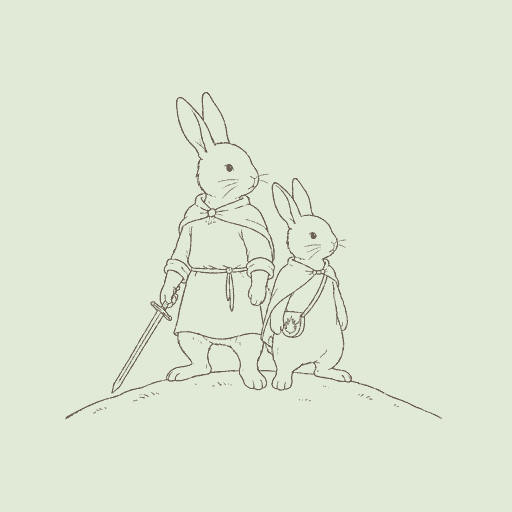
The Green Ember
The Green Ember
A modern alternative to SparkNotes and CliffsNotes, SuperSummary offers high-quality Study Guides with detailed chapter summaries and analysis of major themes, characters, and more.
Summaries & Analyses
Quizzes
NEWReading Tools
Themes
Content Warning: This section of the guide includes discussion of death and bullying.
Hope as the Fuel of Moral Resistance
In S. D. Smith’s The Green Ember, hope is an active and creative force that enables moral resistance against overwhelming despair. The novel argues that by collectively envisioning a restored future, symbolized by the “Mended Wood,” the characters can find the strength to endure present suffering and imbue their struggle with deep meaning. This forward-looking faith is established through prophecy, cultivated through communal practice, and made tangible in art, transforming hope from a private emotion into a public, world-shaping power.
The foundation of this hope was laid in King Jupiter’s final moments. Facing betrayal and death, he prophesied that even if the Great Wood was burned, a green ember would remain as “the seed of a new world” that would one day yield a “Mended Wood” (268). This declaration reframes his murder from an absolute defeat into a sacrificial act that planted the seeds for future restoration. His words gave the survivors a promise to cling to, preventing their cause from dissolving into despair. The prophecy has become the central narrative of the resistance, a story of inevitable victory that sustains them through years of exile and hardship.
The community at Cloud Mountain has institutionalized this hope, turning it into a shared identity and a daily practice. As Maggie explains, their purpose is to “anticipate the Mended Wood, the Great Wood healed” (220). Their work, whether farming, crafting, or singing, becomes a form of prophecy. The community song with its refrain, “It will not be so in the Mended Wood” (312), is a constant reminder of their ultimate goal, uniting them against the grim reality of their present circumstances. By embedding hope in their culture, they make resistance a sustainable, collective effort.
This abstract hope is given concrete form in Lighthall, particularly in the unfinished 10th window. This work of art in progress depicts the Mended Wood and the future reign of a crowned Jupiter Smalls, with the Green Ember restored to its rightful place. It’s a tangible icon of their faith and a visible confirmation of King Jupiter’s prophecy. For a community living in hiding and facing constant threats, this artwork is a declaration that the future they’re fighting for is real and attainable. By turning their ultimate hope into a physical object, the rabbits of Cloud Mountain ensure that their resistance is fueled by a clear, unwavering vision of the world they intend to build. In keeping with the “noblebright” genre, Smith encourages his readers to hold onto hope and live by their consciences even in times of difficulty.
Family Legacy as a Moral Burden
The weight of family history and the struggle to define oneself against a legacy of shame is a central theme in The Green Ember. The novel explores this through the Longtreader name, which has been transformed from a mark of honor into a “curse word” by the treason of Garten Longtreader. For his innocent relatives, particularly Picket, Heather, and Uncle Wilfred, this legacy becomes a deep moral and social burden. They must navigate a world that views them with suspicion and scorn, forcing them to prove their loyalty through their own actions. The book argues that honor is ultimately forged not through ancestry but through personal courage, sacrifice, and an unwavering commitment to one’s duty.
The burden of the Longtreader name is immediately apparent in the social prejudice that the protagonists face. Wilfred admits that their family name is hated, and this scorn manifests in direct confrontations. Captain Frye of the Halfwind Citadel openly accuses them of being traitors, leading to a public shaming where the room chants the slander, “The Longtreaders are an awful lot” (295). This external judgment isolates the young protagonists, making their integration into the resistance community a constant struggle. They’re judged not for who they are but for their relative’s actions, demonstrating how a family’s past can create a nearly inescapable prison of public perception.
This external pressure forces the characters into a difficult choice between fleeing from their legacy or striving to confront and redeem it. Picket and Heather’s parents chose flight by hiding in the obscurity of Nick Hollow. In contrast, Picket defiantly embraces his identity, declaring that “from now on [he] will never go by another [name]” (272). This decision is a key moment in his development. By choosing to bear the burden of his family legacy, he opens the possibility of redeeming their name through his deeds. His journey becomes a conscious effort to redefine what it means to be a Longtreader, shifting the focus from his uncle’s betrayal to his own potential for heroism.
The novel ultimately affirms that a legacy of shame can be publicly redeemed. This begins at the climax, fittingly at Jupiter’s Crossing, the site of Garten’s original treason. After Picket saves Smalls, the prince makes a public declaration to the assembled warriors, stating that on that day, “the name Longtreader mean[s] salvation” (358). This act, performed by the heir to the betrayed king, officially begins the restoration of the family’s honor. The novel’s triumphant ending validates the steadfast loyalty of Wilfred, Picket, and Heather, proving that their courageous actions have finally outweighed the stain of their uncle’s crime, thereby resolving the central moral conflict tied to their name. Smith’s novel demonstrates how family legacy can be both a moral burden and a powerful motivator for change.
Sacrifice as the Foundation of Victory
Smith argues that true heroism is defined not by inherent strength or status but by the willingness to sacrifice for the well-being of others and the greater good of the cause. The novel consistently demonstrates that victory, survival, and moral integrity are built upon acts of selflessness, whether it’s risking one’s life on the battlefield or enduring years of shame for a hidden purpose. This ideal demonstrates that the readiness to place others above oneself is the ultimate measure of a hero.
The foundational code of honor in the book is the oath introduced in the Prologue. Facing a hopeless battle, the warrior Fleck Blackstar declares, “My place beside you, my blood for yours! Till the Green Ember rises, or the end of the world!” (9). This oath encapsulates the theme: Loyalty is absolute, and personal survival is secondary to protecting one’s leader and comrades. The sentiment is a living principle that characters like Picket and Smalls later adopt, linking their modern struggle to a long tradition of sacrificial valor. This code provides a moral compass that guides characters to choose the difficult, selfless path in moments of crisis.
Heather and Picket grow into this heroic ideal through their own sacrificial choices. When wolves attack, Heather demonstrates this principle by choosing to confront the predators alone to give her brother a chance to escape. Her action is born of love and a sense of duty. Picket’s journey culminates in a similar, though more dramatic, sacrifice. At Jupiter’s Crossing, he sets aside his debilitating fear of birds and hurls himself into a seemingly unwinnable fight to save Smalls. His desperate, heroic act is the ultimate expression of the code, demonstrating that he has fully embraced a life of service over self-preservation.
The novel expands the concept of sacrifice beyond the battlefield to include the endurance of long-term hardship and dishonor. Uncle Wilfred embodies this quieter, more sustained form of selflessness. For years, he has lived as an exile, bearing the scorn associated with his traitorous brother’s name, all to secretly protect the young prince. He sacrifices his reputation, his comfort, and his place in society for the sake of the future king. His quiet, uncelebrated dedication proves that sacrifice can be a lifelong commitment rather than a single moment of glory, as his years of loyal service provide the quiet, steady foundation upon which all of the rabbits’ hope for victory is built. In The Green Ember, Smith offers his young audience a model of heroism in which selflessness is the true measure of courage.

Unlock every key theme and why it matters
Get in-depth breakdowns of the book’s main ideas and how they connect and evolve.
- Explore how themes develop throughout the text
- Connect themes to characters, events, and symbols
- Support essays and discussions with thematic evidence