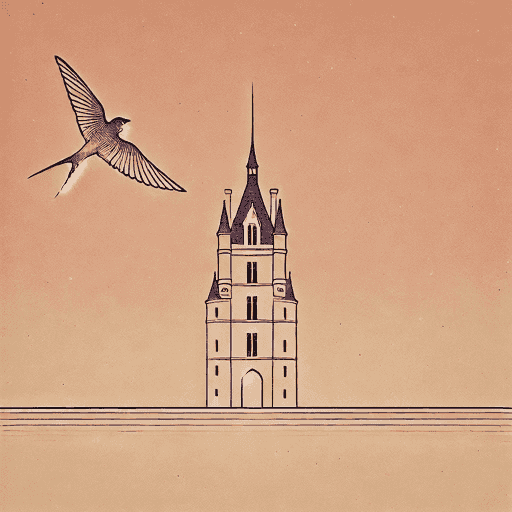
The House Saphir
The House Saphir
A modern alternative to SparkNotes and CliffsNotes, SuperSummary offers high-quality Study Guides with detailed chapter summaries and analysis of major themes, characters, and more.
Summaries & Analyses
Quizzes
NEWReading Tools
Character Analysis
Mallory Fontaine
Mallory Fontaine is the 17-year-old cynical and resourceful protagonist whose primary motivation is survival and the protection of her older sister, Anaïs. Orphaned and impoverished, Mallory relies on cons to survive. Her pragmatic and often combative nature are established early on; she knows that a salad fork is best held “in a tight fist while you sent those sharp little tines straight into the thigh of a would-be attacker” (1). This self-reliance masks a deep-seated distrust of others who may threaten her independence, including potential love interests. Mallory contends, “I’ve had enough sense not to fall in love to begin with” (164). Her surname, Fontaine, meaning “fountain” or “spring,” suggests a hidden wellspring of power, which she eventually discovers in her own dormant witchcraft.
Mallory’s relationship with magic is central to her identity and development. She loses her own innate “petty magic” in a botched séance and ends up being cursed with the ability to see and speak with ghosts. The god-gift hourglass mark on her neck is described as “[w]et, shiny, bloody. A festering wound” (300), an emblem of her feelings of shame and sense of failure. She views this ability not as a gift but as a secret, corrupt burden, another element of her life she must hide to appear normal. This central irony defines her character: the one piece of genuine magic she possesses is the one thing she cannot use in her fraudulent business. Her journey at the Saphir château forces her to confront this hidden part of herself. Her interactions with the ghosts of Bastien’s wives evolve from a tool for her tours into a genuine source of information and alliance, demonstrating her growing acceptance of her unique abilities. The narrative arc culminates in Mallory reclaiming her ancestral magic, proving that her true power was never stolen, only suppressed.
Mallory’s transformation is most evident in her evolving relationship with Count Armand Saphir, which explores the theme of Vulnerability as a Prerequisite for Trust and Love. Initially viewing him with suspicion, she slowly allows herself to trust him, a process fraught with setbacks and misunderstandings. Her toggling between believing in his guilt and innocence mirrors her internal struggle between self-preservation and the desire for connection. She admits that falling in love with Armand “scared her so much. Far more than bloodthirsty monsters or odious spirits” (335). By the end of the novel, Mallory moves beyond her cynical, fraudulent exterior to embrace both her magical heritage and her capacity for love, completing her transformation from a guarded con artist into a self-actualized witch.
Count Armand Saphir
Count Armand Saphir serves as the novel’s deuteragonist and primary love interest. A round, dynamic character, he is initially presented under the alias Axel Badeaux, a mysterious and skeptical client on Mallory’s ghost tour. Armand is the thematic embodiment of Blurring the Lines Between Human and Monster, as the narrative positions him as a potential villain. His uncanny resemblance to his murderous ancestor, Bastien Saphir, cast him in a suspicious light. However, his true nature is gentle, responsible, and burdened by the dark legacy of his family name, symbolized by the dilapidated Saphir Houses. Unlike the archetypal arrogant nobleman, Armand is unassuming and kind. Mallory finds him “[c]lever. A little reckless. Far kinder than she would expect a nobleman to be, especially to a lowly tour guide like herself” (86). Armand performs tasks like driving his own carriage and tending to his greenhouse, which reveals a humbleness and passion for nature and nurturing that contrasts with the violent history of his lineage.
Armand’s central conflict is largely internal and beyond his control, as he is the unwitting vessel for Bastien Saphir’s spirit. This possession makes him both a victim and, through his body, a perpetrator of monstrous acts. His struggle becomes a literal battle for control over his own mind and body. Once the truth is revealed, Armand proclaims, “I will turn myself in for the crimes I committed, and gods willing, I will be put into prison and no one will be in danger from me—or him—ever again” (337). His self-sacrifice demonstrates the essential “goodness” (86) Mallory sees in him and confirms his integrity, even when his worst fears are actualized by an external force.
Count Bastien Saphir (Monsieur Le Bleu)
Count Bastien Saphir, known by as Monsieur Le Bleu, is the primary antagonist of the novel. A charismatic and sociopathic sorcerer, he is a flat, static character whose evil is deeply embedded in the Saphir family history. He functions as a modern reimagining of the classic Bluebeard archetype: a wealthy, handsome nobleman who murders a series of wives. His seeks immortality through a dark ritual that requires the blood sacrifice of five wives. This perverts the sacred vow of marriage, a theme symbolized by the motif of wedding rings that anchor his victims’ spirits to his unfinished spell. To Mallory, he violates “[t]he power of giving yourself over to another person—of relinquishing your heart with complete and total trust” (269) and epitomizes betrayal.
Released from Verloren by Mallory’s childhood séance, Bastien is a relentless predator. He views everyone, including his own descendant, as a pawn in his quest for eternal life. His interactions with Mallory are a game of psychological torment. He taunts her with knowledge of her past and exploits her deepest insecurities by referring to her as “little witch” (169, 172), “child” (170), and “little girl” (171) to demean her. He tries to manipulate her memories by insinuating she sought his powers and claims, “You asked to be like your sister. To share the same magic. Isn’t that right?” (170). Bastien’s eventual resurrection into a mortal body makes him a physical and formidable threat, a tangible villain who must be confronted and destroyed. His defeat requires Mallory to embrace her own magical power, positioning him as the ultimate obstacle she must overcome to achieve self-actualization.
Anaïs Fontaine
Anaïs Fontaine is Mallory’s older sister and serves as a key supporting character and a foil to the protagonist. Whereas Mallory is cynical, pragmatic, and sharp-edged, Anaïs is a romantic, optimistic, and more traditionally feminine figure. She dreams of opening a dress shop in a far-off city and is more inclined to believe in the good of others. Despite these differences, she is a willing and adept partner in Mallory’s cons, using her charm to sell fake relics and conduct phony séances. Her participation is rooted in the same need for survival that drives Mallory, but she lacks her sister’s hardened exterior. She often acts as Mallory’s conscience and urges her toward more ethical choices, such as insisting they come clean to Armand. Anaïs stands up to Mallory and frames their scam as a dishonor to their mother, a woman who devoted her services to “comfort, closure, even joy” (204). By asserting, “Sometimes I wonder if she would be horrified to see what we have become in her name” (204), Anaïs represents self-reflection, responsibility, and a contrast to Armand’s plight, where the sisters’ lineage is a source of pride instead of shame.
Anaïs possesses a true god-gift from Velos, the ability to temporarily resurrect the recently deceased. Unlike Mallory, who laments her lost magic, Anaïs despises her gift, viewing it as a “terrible, vulgar curse” (314) that is both unnatural and frightening. This contrast highlights their different perspectives on magic and power. Anaïs’s eventual willingness to join Fitcher’s Troupe and use her gift to help others marks a significant development. She writes to Mallory, “Though I dread being called on to use this abysmal curse, I draw strength in knowing it may help bring justice to the deceased” (420). Anaïs’s learns that it’s what she does with her death magic and not the ability alone that makes all the difference.
Triphine Maeng
Duchess Triphine Maeng is the ghost of Bastien Saphir’s first wife and a significant supporting character. As a spirit, she is a flat, static character who primarily provides comic relief and exposition. Bound to the House Saphir in Morant for over a century, her constant presence reinforces the motif of Ghosts and the idea that the past is inescapable. She is characterized by her vanity, her incessant complaints about imagined ailments, and her gossipy nature. Her commentary often undercuts the tension of a scene, such as when she critiques Mallory’s tour guests and inserts, “Where do you find such gullible patrons?” (26) or when she offers unsolicited and unhelpful marital advice: “Honestly, Mallory. How are you ever going to find yourself a suitable husband if you go around thinking every handsome boy you meet is trying to kill you?” (19).
Triphine’s light humor contrasts with her deep fears of Bastien and the violent horrors of her death. Although she and Mallory often engage in querulous banter, Mallory reveals a deep desire to humanize her and the other wives and acknowledge their pain by insisting “They were real people. Real women, their lives taken too soon” (23). Her sketches of the ghost wives are empathetic and “capture the essences” (185) of their unique personalities and identities beyond that of victims. Though Triphine is initially terrified of confronting Bastien again, she eventually finds solidarity with the ghosts of his other wives, and her participation in the final confrontation shows a spark of courage beneath her querulous exterior.
The Other Wives (Lucienne Tremblay, Béatrice Descoteaux, Julie, Gabrielle Savoy)
The wives of Bastien Saphir, both living and dead, collectively drive the plot and represent the legacy of his evil and the demand for justice. Lucienne Tremblay and Béatrice Descoteaux represent the vulnerability of social marginalization as women who were deemed “undesirable” (23). They sought upward mobility through their marriage with Bastien, only to be murdered and have society willing to overlook “a little murder when there was wine to be had” (90). The housemaid Julie also represents the exploitation of vulnerable women. As a girl without a family, she falls for Bastien’s seduction because “things like this don’t usually happen to plain nobodies like me” (207). Her murder forces the sisters to acknowledge the moral implications of their scam. Mallory’s flight from Comorre was motivated both by self-preservation and a hope she “might give justice to Julie” (275) by reporting the murder to the local constable. Finally, Gabrielle Savoy, Bastien’s fourth wife and the “one who got away” (309) is Mallory and Anaïs’s great-grandmother. A powerful witch who escaped Bastien by transforming into a barn swallow, she acts as a secret guardian and mentor, revealing the full extent of Bastien’s plan and providing Mallory with the key to reclaiming her own magic. Her role as a revered ancestor serves as a foil to Bastien’s horrific legacy.
Fitcher & Constantino
Fitcher and Constantino, operating as Fitcher’s Troupe, are monster hunters who act as allies and mentor figures to Mallory. They represent a legitimate and ordered world of magic that contrasts sharply with the Fontaine sisters’ fraudulent practices. Fitcher is the stoic and serious leader whose primary motivation is to gather a group of god-blessed individuals to break his curse. Constantino is his flamboyant and charming partner, a skilled archer with the god-gift of Tyrr. His lighthearted demeanor provides a foil to Fitcher’s grim gravity, and he functions as a positive role model for Anaïs, who has only found shame in her god-gift. Together, Fitcher and Constantino provide Mallory with the magical support needed to confront Bastien Saphir, acting as catalysts for the final resolution.
Yvette
Yvette is the longtime housekeeper of the Saphir estate and a minor antagonist. A devout follower of the Seven, her primary characteristic is her fierce loyalty to the Saphir family name, which she desperately wishes to cleanse of Bastien’s murderous legacy. She is stern and judgmental with a “signature scowl” (175) and often at odds with Armand’s more lenient management of the household. Her character represents an old-world adherence to tradition and propriety, acting as a source of conflict and suspicion within the château’s walls.

Unlock analysis of every major character
Get a detailed breakdown of each character’s role, motivations, and development.
- Explore in-depth profiles for every important character
- Trace character arcs, turning points, and relationships
- Connect characters to key themes and plot points