The House Saphir
The House Saphir
A modern alternative to SparkNotes and CliffsNotes, SuperSummary offers high-quality Study Guides with detailed chapter summaries and analysis of major themes, characters, and more.
Summaries & Analyses
Quizzes
NEWReading Tools
Symbols & Motifs
The Saphir Houses
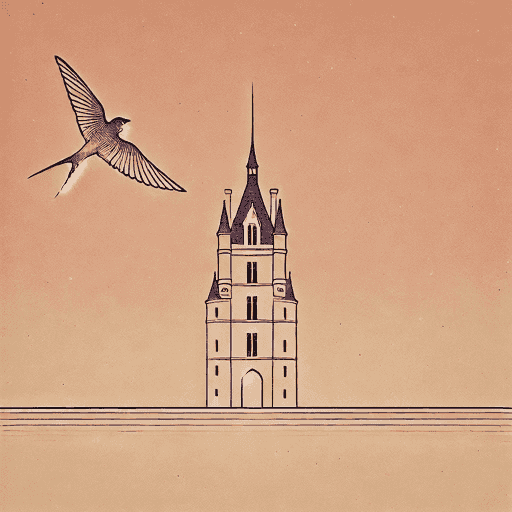
The two Saphir mansions are a symbol of a corrupt family legacy that is physically embedded in wealth and prestige. The dilapidated house in Morant and the grand château in Comorre are active, malevolent spaces where the past’s violence haunts the present. The Morant house serves as the stage for Mallory’s cons, a theatrical space where she stages fraudulent ghost appearances, sensationalizing the very real horrors contained within the family’s history. This connection illuminates the theme of Deception as a Means of Survival, as Mallory exploits a tainted legacy to make a living and even considers how she could expand the “market for tours” (59) in Comorre. The houses represent how evil can become foundational, a structural part of a family’s identity that cannot simply be renovated or abandoned; it must be confronted and destroyed, as seen in the climactic fire that consumes the Comorre château.
The Comorre estate, in particular, becomes a literal extension of Bastien’s villainy, blurring the line between man and monster by making the house itself monstrous. As Armand explains, the danger feels as though it comes from the house itself: “It isn’t him, so much as it is the house itself. He controls it somehow” (97). This personification of the estate demonstrates how the Saphir family’s evil has seeped into the very stone and timber of their fortune. The narrative thread of blood and wine reinforces this idea, most vividly when the courtyard fountain runs red, symbolizing that the family’s luxurious lifestyle, funded by their famous Ruby Comorre wine, is irrevocably stained by murder. As a form of poetic justice, Mallory uses the wine as fuel to burn the house and its corruptive legacy down, destroying both the ghost that haunts it and the physical embodiment of the family’s monstrous history.
Ghosts
The motif of ghosts drives the plot and reinforces the idea that the past is never truly dead. For Mallory, the ability to see ghosts is her only authentic magic, a secret she must hide while making her living as a fraudulent witch. This creates an irony that supports the theme of deception for survival; she is a con artist who pretends to have magical abilities, yet her genuine power is a liability she cannot reveal. The ghosts of Le Bleu’s murdered wives eventually help Mallory come to terms with her past and awaken her innate powers. Rather than passive apparitions, they are active characters: Triphine provides cynical companionship and key information, while the other wives, who provided solace to a young Armand struggling with loneliness, become allies in the fight against their murderer. Their constant presence serves as a reminder of unresolved trauma and lingering injustice, motivating the living characters to confront a history that refuses to be buried and set things right.
The motif is also crucial in Blurring the Lines Between Human and Monster. The primary antagonist is the spirit of a cruel aristocrat, whose evil is psychological and spiritual. When Bastien confronts Mallory in the cellar, his greeting, “I wondered when you would come to see me, little witch” (169), reveals an intimate malevolence that is far more terrifying than the impersonal violence of a creature like the voirloup. His return, inadvertently caused by Mallory’s childhood séance, represents an inherited trauma that she is ultimately forced to address. The novel uses this motif to suggest that the most dangerous and persistent monsters are the specters of human cruelty, which can haunt generations.
The Wedding Rings
The wedding rings are a symbol of the perversion of trust into an instrument of control and dark magic. As the physical anchors for Bastien’s sacrificial spell, they transform a sacred vow of love and protection into a tool for murder. This inverts the novel’s central theme of vulnerability as a prerequisite for love, showcasing its terrifying alternative. Bastien’s ritual of carving the words “trust” and “betrayal” into his victims’ arms before taking their rings makes this symbolism explicit. The rings become an emblem of broken faith, representing how the most intimate bonds can be exploited for the most monstrous ends. Their magical function in the plot is inextricably linked to their symbolic meaning; they are powerful precisely because they represent the violation of a profound human connection, turning the energy of that betrayal into a source for sorcery.
The rings also link the Saphir family’s aristocratic evil to Mallory’s street-level deception, connecting to the theme of deception as a means of survival. To survive, Mallory sells cheap replicas of Triphine’s ring, boasting that they are “[m]ade of the finest quality silver and authentic blue sapphires imported from the mines of Dostlen” (26). This line is ironic, as she unknowingly mimics the fraudulent promise of the original rings while creating a counterfeit of an artifact used for murder. Armand’s fake Saphir medallion, given as collateral, further reinforces this idea. The novel shows that symbols of love, trust, and legitimacy are easily forged, both by desperate con artists and by corrupt noblemen hiding monstrous intentions.

Unlock the meaning behind every key symbol & motif
See how recurring imagery, objects, and ideas shape the narrative.
- Explore how the author builds meaning through symbolism
- Understand what symbols & motifs represent in the text
- Connect recurring ideas to themes, characters, and events