Wild Dark Shore
Wild Dark Shore
A modern alternative to SparkNotes and CliffsNotes, SuperSummary offers high-quality Study Guides with detailed chapter summaries and analysis of major themes, characters, and more.
Summaries & Analyses
Author Insights
Quizzes
NEWReading Tools
Charlotte McConaghy on Wild Dark Shore
In her own words: quotes and insights from the author.Why she wrote it
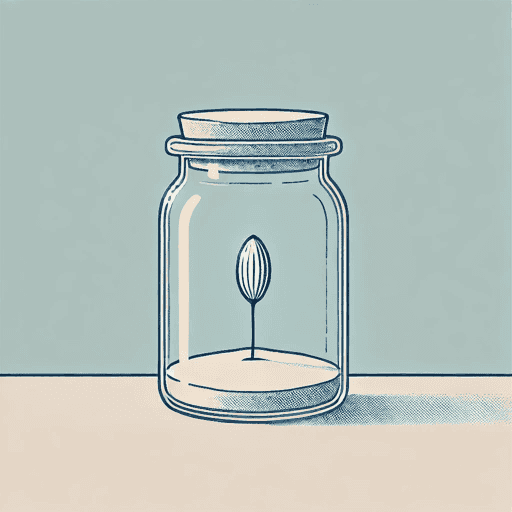
When the indestructible vault floodedThe novel’s first seed came from a 2017 news story about a facility that was supposed to be immune to the very crisis it was built to survive. The Svalbard Global Seed Vault, buried in Arctic permafrost to protect the world’s plant diversity, flooded when rising temperatures melted the ground around it. The seeds were saved, but the event cracked open a question McConaghy couldn’t leave alone: if we had to choose what to preserve, what would we pick, and why?
The whole idea of this vault is that it should withstand anything and last well into the future. But the insane thing is that they did not predict the rise in temperatures that would lead to melting permafrost, and [in 2017] the vault flooded. They salvaged all the seeds — it was OK — but when I read about the story, it piqued my fascination. I was interested in the question of what we would choose to save if we had the chance.
The seed vault story was already turning in her mind before she had children. When she did, the abstract question became a personal emergency. The novel arrived, she has said, at exactly the moment her family was expanding, and the two things could not be separated: becoming a parent inside an accelerating ecological crisis forced every question the book would eventually ask.
This novel came to me at the same time my children did, and so I knew it was going to explore the questions that were troubling me: how do we raise our children in a time of ecological collapse? In what ways do our responsibilities change? How do we teach them about the world and our part in it, how do we teach them what love means in the face of loss and impermanence?
McConaghy has described her three adult novels as a loose thematic trilogy, each approaching ecological grief through a different emotional state. Placing this book in that sequence clarifies what changed: the earlier books processed what had already been lost. This one runs on something rawer.
Each of my novels takes a look at the wildness both beyond us and within us, but they do so through a different emotional lens. Migrations came from a starting point of sadness and loss, Wolves started from a place of rage. Wild Dark Shore is about fear. Fear of how perilous the world grows, fear of the future we are facing, fear of the life we are leaving to our children, and how we are going to keep them safe. Ultimately, I think it’s an exploration of how we love in the face of this fear, in the face of loss.
How she wrote it
Four false starts and one research voyage with a toddlerBefore the trip that eventually broke the block, McConaghy spent months in a cycle of abandonment. The opening quarter of the novel was drafted and deleted four consecutive times. The problem wasn’t the world or the premise; it was the basic architecture of who was telling the story and how close the narration should sit to them.
I wrote the first 25,000 words four times and deleted them four times. I couldn’t work out whose story it was, whose point of view it would be told in, what tense it would be in.
The solution was to travel. Macquarie Island, the remote subantarctic island she chose as the model for the fictional Shearwater, can only be reached by a single vessel that makes the journey once a year. She had a 16-month-old child. She rang the boat company, asked if they had ever taken a baby, and they agreed. What she found on the island gave the book its tone in a way no amount of desk research could have: the physical evidence of a nineteenth-century slaughter, still rusting in the grass.
I also saw the huge rusting ‘penguin barrels’ which were a remnant of the 1800s oil exploitation trade, during which the animals on this island were nearly wiped out, and I could feel the hauntedness of this place, it has a strange eeriness like the blood spilt here lingered. All my uncertainty fell off me and I knew what this book was about — it would be a gothic mystery about a family haunted by ghosts on an island haunted by ghosts.
She returned home having found the book’s register. Within weeks, choices that had resisted four drafts resolved themselves.
The trip didn’t just supply atmosphere; it solved the architecture problem she had been circling for months. Once she understood the tone, the characters became legible, and the structure followed from them rather than being imposed on them from outside.
This textural and tonal revelation allowed me to finally understand my characters deeply enough that when we got home from the research trip, I knew how to structure the story using multiple points of view, and so I was able to write the first draft quickly in a little over a month.
The multi-perspective structure she landed on was arrived at by elimination. In the Kobo interview she described trying the whole novel in Rowan’s first person, then trying everyone in third person. The first version was too narrow; the second lost the intimacy the family story required. The arrangement she eventually settled on, Rowan and Dominic in first person and the three Salt children in third, came from noticing what each failed experiment had cost. [paraphrased from audio]
In the end what unlocked my writing was making it a combination of both, which allowed me to create a lot of dramatic tension and dramatic irony, connect intimately with the characters while also serving the mystery element, it created a sort of dynamic texture and flow, and honestly it just felt right.
Her Master’s degree in screenwriting from the Australian Film, Television and Radio School left a permanent mark on how she handles the gap between action and interiority. The discipline of that training, where every word must justify itself against what an audience can actually see, became a governing principle for her prose.
You have to be extremely clear with screenwriting about what you’re seeing, what’s happening on screen, what the characters are doing. I like to make my internal emotional descriptions poetic and lyrical, but I like to keep the action simple.
The personal thread
Characters she only met by writing themWriting to music is not, for McConaghy, a mood-setting ritual but a method for reaching a particular cognitive state. She draws a distinction between words that feel constructed and words that feel received, and the music is what gets her to the second condition. The scenes she values most were written that way.
I always write to music. It helps me to sink into the right flow state, where the words feel like they’re flowing through me instead of coming from me. All of my favourite scenes are written because of my favourite songs.
She brought her infant son on an ocean voyage to a subantarctic island and wrote a first draft in just over a month, but the part of the process she describes with the most feeling is what happened at the end: the discovery that she had grown attached to people who didn’t exist before she invented them.
I think I fell more in love with each of them. You only sort of get to know them as you write them, as you let them lead you through the story. I missed them deeply when I finished.
On what’s at stake
Saving things that exist for themselvesA second news story, earlier than the seed vault, shaped the novel’s moral logic. The Wollemi Pine, an Australian tree species thought extinct for millions of years, was rediscovered in the 1990s in a secret grove. When recent wildfires approached, emergency crews were winched by helicopter into the forest to build a protective perimeter around the trees. That image of humans going to extraordinary lengths for a plant with no immediate utility to them crystallised the question the book would keep returning to. [paraphrased from audio]
She described wanting her books to look at what the climate crisis is doing to wildlife and plant life for their own sake, not for what they provide to us. The central question of Wild Dark Shore, she said, is whether we would choose to save only what feeds and benefits humans, or fight for things that exist purely for themselves.
That question runs directly against how most climate communication is framed. McConaghy has argued that when the rhetoric focuses on human survival, it leaves out the thing that first made her care: the animals, plants, and ecosystems disappearing regardless of their usefulness. The novel’s seed vault at the centre of the plot, Shearwater, exists to hold plant varieties with no guaranteed human application, and the family guarding it has staked their lives on that premise.
Wild Dark Shore is about fear. Fear of how perilous the world grows, fear of the future we are facing, fear of the life we are leaving to our children, and how we are going to keep them safe. Ultimately, I think it’s an exploration of how we love in the face of this fear, in the face of loss.
What she wants us to sit with
From feeling moved to being moved to actThe novel is set in a world where ecological collapse has already arrived, not one where it might be averted. That framing is deliberate: it removes the debate about whether disaster is coming and forces both characters and readers toward the only question that remains. When she talks about what she wants from readers after the last page, she starts not with argument but with emotion, because she believes emotion is what overcomes apathy.
I’m hoping that people, first of all, feel moved, and then it would be incredible if they felt moved to action. We’re at a crucial point in time right now, and it’s very easy to feel overwhelmed by what’s happening in the natural world with the climate catastrophe. It’s also easy to become apathetic because it’s very difficult to know what to do, but sometimes intimate, human stories are the things that can make us feel the most and provide us with the most hope.
She does not leave the call to action vague. When pressed on what she actually wants readers to do, her answer is about accumulation rather than single dramatic gestures: daily choices, each small, each costing something, each adding up.
I hope they consider closely their impact on the world, and think about how they can make it a more positive one. That happens in small day-to-day choices, which sometimes aren’t the easier choices, sometimes they require a bit more from us, but they do add up and they do help. I hope they feel more deeply connected to their own loved ones, their landscapes, and to the wilderness within themselves.
She returns, at the end, to the word purpose. Having written a novel about a family that has sacrificed almost everything to guard a vault of seeds in the remote subantarctic, she wants readers to arrive at something similar: not despair, not even hope exactly, but the sense that their own choices have direction and weight.
Aside from feeling deeply moved by the human capacity for love, courage and sacrifice, I hope readers feel inspired towards purpose. I hope they feel energised and galvanised towards that purpose, and encouraged to think about their own impact on this world, and the decisions they can be making to ensure that impact is a positive one.