Coach
A modern alternative to SparkNotes and CliffsNotes, SuperSummary offers high-quality Study Guides with detailed chapter summaries and analysis of major themes, characters, and more.
Summaries & Analyses
Author Insights
Quizzes
NEWReading Tools
Important Quotes
“If I had all the money in the world, know what I’d buy? A time machine. And if I had a time machine, know the first thing I’d do with it? Fast-forward straight to the future.”
(Chapter 1, Page 1)
The novel opens by establishing the time machine as a key motif, immediately revealing Otie’s desire to move beyond his present situation and imagine a different future. The repeated idea of fast-forwarding and rewinding shows how he tries to deal with embarrassment and lack of control. This desire to fast-forward past adolescent humiliation and rewind to correct injustices underpins Otie’s entire character arc.
“So because of all that, Dad only cut my hair whenever he got good and ready. Which means…he’s also to blame for me getting joked to death at school—because of that saying, I’ll cut it whenever I get good and ready, despite how bad and ready I already was.”
(Chapter 1, Page 9)
This quote shows how Otie connects his father’s actions to his own embarrassment at school, linking his experience to the gap between what he needs and what his father provides. The contrast between “good and ready” and “bad and ready” highlights this mismatch clearly. This moment reflects the beginning of The Painful Disillusionment of Childhood Hero Worship, as Otie starts to question his father’s reliability.
“And second, even though your ears never seem to hear a word I say, something tells me they’ll be turned up and tuned in, in there. And them men be talking grown. And you ain’t grown.”
(Chapter 2, Page 22)
After Otie asks to go to a barbershop, his mother’s refusal shows that she is trying to protect him from something he does not yet understand. Her explanation suggests that certain environments and conversations are not meant for him at his age. This moment connects to The Painful Disillusionment of Childhood Hero Worship, as it hints that there are parts of his father’s life being hidden from him.
“‘I mean, maybe we can say the hair was causing drag, and you needed as much aerodynamics as possible,’ she said.”
(Chapter 3, Page 30)
In response to Otie’s self-inflicted haircut disaster, his mother invents the central lie that drives the plot forward. This moment shows how she tries to protect him while helping him manage embarrassment, connecting to Community and Sport as an Anchor Amidst Chaos, where sport becomes a way to create stability and explanation.
“Because Torrie had definitely told me some. Like, how when he was born, his parents dropped him off to be raised by his grandmother […] I could’ve just told him about the razor, my eyebrow, my mother balding me, and all that. But at the same time, I figured if there was anyone to try my mother’s fib on, it was Torrie.”
(Chapter 3, Pages 38-39)
This passage highlights the depth of Otie and Torrie’s friendship while simultaneously revealing Otie’s choice to prioritize social survival over honesty. By juxtaposing Torrie’s profound vulnerability about his family with Otie’s decision to lie, the narration explores the intense peer pressure that can compel a person to deceive even their most trusted friend.
“‘Structure, discipline, and fun will defend against the gun,’ Coach Marvin always blabbed, followed by my father’s go-to, ‘The best never rest!’”
(Chapter 4, Page 43)
Coach Marvin’s rhyming motto explicitly states the mission of the Defenders track team, positioning it as a sanctuary against the violence and chaos of the neighborhood. This directly reflects Community and Sport as an Anchor Amidst Chaos, where the team provides guidance, routine, and a sense of belonging.
“And when Carl Lewis crossed the finish line way ahead of everyone else, I spat the beer out in a spray. […] He reached over and hugged me, sore back and all. He squeezed the practice and hard work and excitement into me. It was like he knew. And I knew too.”
(Chapter 4, Page 55)
This memory shows how Otie’s father inspires him through a shared moment of excitement and encouragement. The experience strengthens Otie’s belief in his father as a source of strength and guidance. This establishes the theme of The Painful Disillusionment of Childhood Hero Worship. The moment is a pure instance of paternal bonding and inspiration, with the father symbolically transferring his passion to his son through a hug.
“I didn’t even hear the neighborhood, a place with a broken volume knob. Always loud. But I didn’t hear no horns or mothers screaming for their kids to get out of the street […] Couldn’t even hear Torrie, who walked right next to me the whole time blabbering, probably about the same thing that had me dazed.”
(Chapter 4, Pages 57-58)
Following the news of the scout’s visit, Otie becomes so focused on his goal that he stops noticing what is happening around him. The description of the neighborhood as a place with a “broken volume knob” creates a vivid auditory backdrop that is suddenly muted, emphasizing the singular power of his Olympic dream to insulate him from his chaotic environment.
“Maybe not, but I just don’t know what to make of this neighborhood anymore. The junkies ain’t got nothing better to do but find junk, and them knuckleheads don’t got nothing better to do but flash their little cash and show off their fancy cars while the community eats itself alive.”
(Chapter 5, Page 63)
Otie’s mother offers a bleak, adult perspective on the neighborhood that contrasts with Otie’s more naive admiration for the local gang’s material wealth. Her bitter summary of the community’s decay provides crucial social context, framing the drug dealers not as cool figures but as agents in a self-destructive cycle.
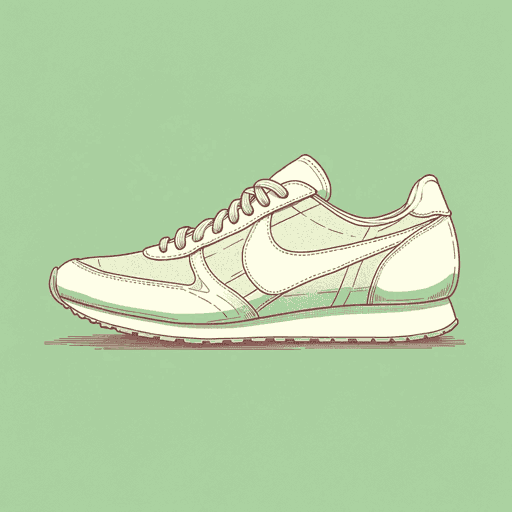
“If sneakers could be cars, these were better than Lamborghinis. Better than Benzes. Mr. Jefferson had DeLoreans strapped up around his ankles. I’m talking about the brand-new Air Jordan 3s.”
(Chapter 6, Page 79)
This passage uses a metaphor equating sneakers with luxury cars and the iconic DeLorean, establishing The Air Jordan 3s as a symbol of status, power, and even time travel. Otie’s awe illustrates the theme of The Illusory Power of Material Status, as he attributes magical qualities to the shoes.
“But my body. It shut down. Locked up. And then. I pulled up, in pain. Hopped as much as I could to the finish line and once I got there, I fell to my knees, my legs throbbing.”
(Chapter 7, Page 100)
Otie’s body suddenly fails him during the race, and he is forced to stop despite pushing himself forward. The moment shows how physical effort does not always lead to success, even when he is fully committed. This connects to Community and Sport as an Anchor Amidst Chaos, as the track becomes a space where he learns through both success and failure.
“‘To me, the moral of the story is, don’t let nobody embarrass you so much that it convinces you to embarrass yourself,’ Dad said.”
(Chapter 8, Page 107)
This statement reflects Big Otis’s advice about maintaining self-respect even when others try to embarrass you. It shows the importance of controlling one’s own response rather than reacting to others. This connects to The Painful Disillusionment of Childhood Hero Worship, as Otie later sees the difficulty of living by this principle.
“‘Noooo!’ Dad groaned. ‘Shoes are personal. You can’t just put on another man’s shoes. These are yours. They just for you.’”
(Chapter 8, Page 113)
Big Otis frames this rule in terms of simple personal ownership, yet the statement holds a deeper, ironic significance that is revealed later in the novel. His words show how he sees the sneakers as something tied directly to Otie. This connects to The Illusory Power of Material Status, as the shoes appear important, but their meaning depends on the person wearing them.
“Long jump? I’d never seen him do the long jump before. I’d never watched past the hundred because that’s the race I run. The race I’d been running since I was a kid. The race my father ran when he was young.”
(Chapter 8, Pages 123-124)
This moment of discovery marks a pivotal shift in Otie’s identity as a runner, moving beyond the legacy defined by his father. The repetition of “the race” emphasizes the singular, inherited path Otie has followed until this point, creating a restrictive tone.
“Is that right? Well, if that don’t work out for you, come see me and I’ll tell you how a different kind of running can get you a car like this.”
(Chapter 9, Page 136)
Biscuit offers Otie an alternative path that promises quick success through illegal means. The phrase “a different kind of running” suggests a contrast between sport and crime. This reinforces Community and Sport as an Anchor Amidst Chaos, as the track represents a safer and more structured path in comparison.
“I couldn’t believe it. I’d never seen him get hit ever. I’d never seen anyone get the best of him, or even try him. He was Big Otis. A Glass Manor giant. A neighborhood hero.”
(Chapter 10, Page 152)
Biscuit offers Otie an alternative path that promises quick success through illegal means. The phrase “a different kind of running” suggests a contrast between sport and crime. This violent moment marks a crucial turning point in the narrative, initiating the painful process of disillusionment central to the theme of The Painful Disillusionment of Childhood Hero Worship.
“What if my dad had died? What if it wasn’t a phone? What if it was a knife? […] Glitch. But the Clippers ain’t really killers, right? […] He knows where we live! Glitch.”
(Chapter 10, Page 155)
The rapid series of questions shows how Otie reacts with fear after witnessing violence involving his father. His thoughts move quickly between possibilities, showing how unsettled he feels about what could have happened. This reflects The Painful Disillusionment of Childhood Hero Worship, as he begins to recognize his father’s vulnerability and the risks around him.
“To me, they were more than just cool. They were also the possibility of magic. They were transportation to the sky. Leather and laced-up time machines.”
(Chapter 12, Page 180)
When his father questions him for wearing the new sneakers to practice, Otie’s internal monologue reveals the symbolic weight he has placed upon them. The author uses a metaphor, equating The Air Jordan 3s with “time machines,” directly linking the novel’s primary symbol and motif. This connection illustrates The Illusory Power of Material Status, showing Otie’s belief that a material object holds the power to transcend his circumstances and control his future.
“Dad sighed, winced as he lifted himself off the toilet seat. ‘Well, kid, some deeds can’t be undone.’”
(Chapter 13, Page 186)
While teaching Otie how to clean his sneakers, Big Otis delivers a line laden with dramatic irony. On the surface, he refers to the permanent creases in the shoes, but the statement functions as foreshadowing for the later revelation of his addiction. This moment poignantly underscores the theme of The Painful Disillusionment of Childhood Hero Worship, as Otie begins to understand the impact of his father’s choices.
“You don’t need money to buy you a time machine, Otie. You got legs.”
(Chapter 13, Page 199)
After breaking the news that Otie did not make the Junior Olympics team, his father reframes the Time Machines motif. He shifts it from a fantasy of escape into something Otie can create through his own movement and effort. This moment reflects the Time Machines motif, as Otie begins to understand that moving forward depends on what he does with his own ability rather than an imagined solution.
“But just remember there’s always a thin line between clean and dirty. Two opposite sides of the same street, but a short crosswalk, understand?”
(Chapter 13, Pages 205-206)
Mr. Charles uses this idea to describe the small distance between what is seen as “clean” and “dirty” in the neighborhood, showing how closely different choices and outcomes exist. His statement highlights how easily a person can move between these conditions in that environment. The imagery of “two opposite sides of the same street” suggests that people and situations are rarely as simple as they appear.
“You think Michael Jordan wasn’t Michael Jordan before he had them shoes? […] Nike gave him that sneaker deal because he was already doing all that, right?”
(Chapter 14, Page 223)
In this moment of mentorship, Coach Marvin challenges Otie’s belief in the sneakers’ power. His questions show that skill and performance exist before the object and are not created by it. This reinforces The Illusory Power of Material Status, as Otie is encouraged to recognize that his ability comes from his own work rather than the shoes.
“‘Sometimes, when you get too high, and you go too far, the only way to land is on your butt,’ Coach said […] ‘Ain’t no graceful way down.’”
(Chapter 14, Pages 224-225)
This piece of coaching advice about the long jump functions as an extended metaphor for a fall from grace and the humbling nature of confronting failure. The statement foreshadows the “hard landing” of the Brody family’s confrontation with Big Otis’s addiction. The physical act of landing on one’s butt in the sand mirrors the emotional messiness of the truth that is about to emerge, suggesting that such reckonings are rarely dignified.
“‘Don’t you dare!’ The sound, loud enough to push me back in my chair. ‘Don’t you dare call your father that!’”
(Chapter 15, Page 237)
Sonya’s forceful interjection during the family’s climactic confrontation marks a turning point in Otie’s understanding. As Otie tries to label his father a “junkie,” his mother’s raw command insists on her husband’s humanity beyond his illness. This directly reflects The Painful Disillusionment of Childhood Hero Worship, as Otie is pushed to revise his understanding of his father.
“But I didn’t because…they got too many creases. They for your feet only.”
(Chapter 15, Page 240)
In his confession, Big Otis explains why he could not sell the sneakers. The creases show that they are shaped by Otie’s use and belong specifically to him. This reinforces The Illusory Power of Material Status, as the meaning of the shoes comes from the person rather than their material value.

Unlock every key quote and its meaning
Get 25 quotes with page numbers and clear analysis to help you reference, write, and discuss with confidence.
- Cite quotes accurately with exact page numbers
- Understand what each quote really means
- Strengthen your analysis in essays or discussions
Related Titles
By Jason Reynolds