Summaries & Analyses
Author Insights
Quizzes
NEWReading Tools
Character Analysis
Content Warning: This section of the guide includes discussion of child abuse, emotional abuse, physical abuse, sexual harassment, graphic violence, and death.
Leila Reynolds/Delilah
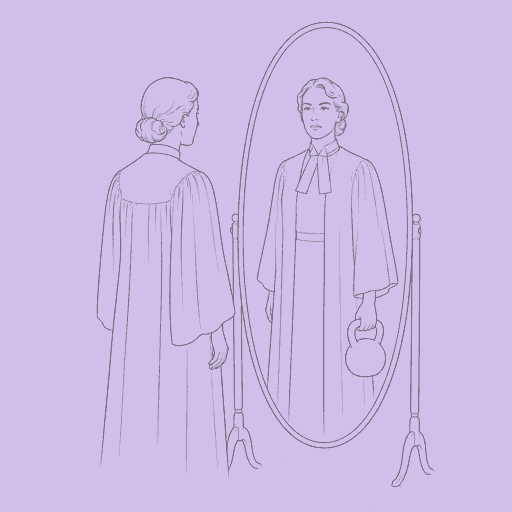
Leila Reynolds is the novel’s protagonist and its primary narrator. Her narrative viewpoint is unreliable, conveying the carefully constructed façade that has helped her to become a successful barrister. Meanwhile, her true identity, Delilah, is revealed through the anonymous “Witness X” sections. This dual identity makes her a dynamic and round character, shaped by a past of severe paternal abuse. This history of abuse is the core of her psychology, providing her with a cynical, manipulative worldview codified in her father’s twelve “Rules,” which she uses as a survival mechanism. Through her character, the novel explores The Negative Impact of Childhood Trauma on Relationships, as she views human connections, including her marriage to the powerful King’s Counsel Julian Kesler, as transactional tools for professional and social advancement. Her career is driven by a determination to seize the power she was denied as a child and ultimately escape the legacy of her childhood.
Leila’s character is defined by a deep internal conflict between the ruthless survivor, Delilah, and the ethical professional, Leila, she aspires to be. Before Anton Smythe’s murder, her relationship with Jack Millman serves as a catalyst for transformation. For the first time, Leila experiences a love that challenges Delilah’s cynical worldview and the control of her father’s “Rules.” This connection makes her vulnerable but also offers a path to redemption. Leila’s observation, “I was almost free of her. And now, after all this time, I need her help” (24), conveys how she is forced to revert to Delilah’s calculated mindset after killing Anton. The complex cover-up involving manipulating the legal process itself requires a return to her former self’s deviousness.
Leila’s character illustrates The Limitations of Legal Justice as she engineers a plan to defend Jack for a crime she committed. Even as she manipulates the trial for her own survival, her actions are driven by a genuine desire to protect Jack. Her final confession at the airport, where she exonerates Jack and accepts responsibility, marks the culmination of her character arc. In this moment, she sheds the manipulative persona of Delilah and embraces the accountability of Leila, choosing love and sacrifice over the survival-at-all-costs ethos that has governed her life. This ultimate choice suggests a move toward healing, even as it leads to her downfall.
Jack Millman
Jack Millman is initially presented as a stereotypical criminal with a long rap sheet. Yet, as the narrative progresses, he emerges as a round and dynamic character whose actions reveal a man of deep loyalty, integrity, and surprising emotional intelligence. Leila observes of Jack that “Like most people who had a traumatic childhood, he’s a survivor, a fighter” (32). Raised in the foster care system, he began offending from a young age. Jack possesses a cynical understanding of how power operates stemming from his harrowing childhood, yet unlike Leila, he refuses to become entirely corrupted by it. His defining motivation is a fierce loyalty to those he loves, most notably Leila. He willingly accepts the role of the accused murderer after she kills Anton, risking life imprisonment to protect her. His sacrifice contrasts sharply with the self-serving actions of Leila’s husband Julian.
Jack’s role in the narrative is to embody an alternative form of justice, one that operates on a personal code of ethics rather than legal statutes. His decision to remain silent about the real killer until the trial is a strategic one, born from his previous wrongful conviction, where his honesty was weaponized against him. This experience taught him The Limitations of Legal Justice in a system rigged by the powerful. His plan to expose Quinn Smythe’s responsibility for Lewis Sorrington’s death is motivated by a desire to deliver justice for the Sorrington family, which he believes the legal system would otherwise deny. He is a character who, despite his criminal background, consistently acts with more honor than representatives of the legal community.
Jack’s relationship with Leila is transformative for both characters. He is the first person to see and accept Leila for who she is, offering her a love and safety she has never known. This trust allows Leila to begin to dismantle the psychological walls built by her trauma. He is an active participant in Leila’s plan, trusting that her legal acumen and strategic thinking will navigate them through the crisis. His unwavering faith in her, even when she is at her most manipulative, highlights his capacity for love and forgiveness, making him the novel’s most steadfast and morally centered figure.
Julian Kesler
Julian Kesler is the primary antagonist who embodies the arrogance and corruption of the legal elite. As Leila’s former pupilmaster and husband, he exploits his professional status to make her feel both professionally and personally dependent on him. His character is defined by a deep-seated narcissism and a win-at-all-costs mentality. Professionally, he is a formidable and ruthless prosecutor, but his success rests on intimidation, manipulation, and superficial charm. He views the trial as a “game” where his victory is paramount. This approach is evident when he uses personal information gleaned from Leila to attack Jack on the witness stand and deliberately serves evidence late to sabotage her preparation.
Julian’s actions illustrate the theme of Deception as a Mechanism of Power. He uses his status as a King’s Counsel to project an image of unimpeachable authority while privately engaging in an affair with the head of chambers’ wife and emotionally manipulating his wife. His hypocrisy is apparent in his casual reaction to being confronted with his own infidelity while remaining profoundly bitter about his first wife, Sienna’s betrayal of him years earlier. His affair with Demi is an exercise in ego, and once she reveals her pregnancy, he discards her without any sense of accountability.
As a mentor figure, Julian represents the toxic system that Leila must ultimately overcome. He teaches his wife the tactics of the legal world, but she is forced to turn these lessons against him to achieve justice. His condescending attitude toward Leila, refusing to see her as an equal, becomes his undoing. Consistently underestimating her, he views her as an “average barrister at best” (329) who owes her success to him. This hubris blinds him to her strategic brilliance, allowing her to outmaneuver him in court by anticipating his moves and exploiting his weaknesses. His defeat at the hands of his own pupil shows a symbolic overthrow of the corrupt, patriarchal order he represents.
Elise Vernon
Elise Vernon is a foil and a secondary antagonist to Leila, representing a past that refuses to stay buried. The daughter of Chester Vernon and Leila’s childhood best friend, Elise is driven by a 14-year-old vendetta rooted in a deep sense of betrayal. Having discovered Leila’s affair with her father, which led to the collapse of her family, Elise is consumed by a desire for revenge. She is a mirror image of Leila in many ways: intelligent, manipulative, and deeply wounded by her father. She even adopts a false working-class persona, mimicking the identity Leila created for herself. This parallel highlights their shared history and their similar methods of navigating a world they perceive as hostile.
Elise’s re-emergence is perfectly timed to exploit Leila’s vulnerability during the trial. She has patiently waited for the ideal moment to strike, embodying the principle of Rule #8: “Be Patient.” By tracking Leila, discovering her affair with Jack, and ultimately stealing the phone containing the incriminating video, Elise methodically strips away Leila’s defenses. Her confrontation with Leila on the bridge is the climax of their long-standing conflict, a final battle between two former allies who know each other’s deepest secrets and weaknesses. Her actions force Leila to confront the consequences of her past choices and the destructive nature of the “Rules” they both learned to live by. Her death at Leila’s hands represents Leila’s violent and final severing of ties with the person she used to be.
Anton Smythe
Anton Smythe is the murder victim whose death serves as the novel’s central catalyst. Though he is deceased for most of the narrative, his character is retrospectively developed as a complex and morally compromised figure illustrating The Limitations of Legal Justice. As a respected Crown Court judge, he represents the pinnacle of the legal establishment. However, his actions on the night of his death reveal a deep hypocrisy. Faced with his son Quinn’s criminal culpability, Anton abandons his judicial principles and attempts to use bribery and intimidation to cover up the crime. This attempt to subvert the law he is sworn to uphold exemplifies Deception as a Mechanism of Power, as he leverages his authority to protect his family’s reputation. His angry confrontation with Jack, culminating in him pulling a knife, shatters his public image as a fair and impartial dispenser of justice. His death is a direct consequence of his decision to operate outside the legal system he represents.
Chester Vernon
Chester Vernon is the head of chambers and a flawed mentor figure for Leila. He is a relic of an older, more patriarchal legal world, known for his eccentric personality, love of wine, and reputation for “taking young female members of the Bar out to lunch” (19). Chester’s exploitation of his powerful role to engage in sexual relationships with much younger women ultimately alienates his daughter, Elise. However, he is one of Leila’s earliest and most steadfast professional supporters, recognizing her talent and championing her career. He provides Leila with an important, albeit complicated, source of counsel and support during the trial, contrasting with Julian’s role as a saboteur. His own troubled marriage to the much younger Demi provides a parallel to the novel’s central themes of infidelity and deception, and his suspicion that Demi is having an affair unwittingly gives Leila a clue about Julian’s betrayal.
Quinn Smythe
Quinn Smythe, Anton’s 18-year-old son, acts as a symbol of unearned privilege and moral cowardice. His responsibility for the death of Lewis Sorrington is the inciting incident that leads to the novel’s central murder. Rather than taking responsibility for his actions, Quinn hides behind his father’s power and money. He willingly participates in a cover-up and lies under oath in court, coached by Julian Kesler, to protect himself. His entitled and panicked behavior, both in his confrontation with Jack captured on CCTV and in the witness box, contrasts sharply with Jack’s resolve and self-sacrifice. Quinn’s character demonstrates how the wealthy and well-connected are often shielded from the consequences of their actions, forcing others to seek justice outside the established system.
Demi Vernon
Demi Vernon, Chester’s young wife, is initially portrayed as a superficial and naive character, seemingly content in her role as “the obedient, perfect wife” (22). However, she is later revealed to be a key player in the narrative’s web of deceit. Her secret affair with Julian Kesler and her subsequent pregnancy become the ultimate tool Leila uses to gain leverage over her husband. Though largely unaware of the central murder plot, Demi’s personal deceptions have significant consequences, ultimately allowing Leila to secure her freedom from Julian. Her character underscores the novel’s depiction of a world in which secrets and lies permeate every social level, often with unintended and far-reaching consequences.

Unlock analysis of every major character
Get a detailed breakdown of each character’s role, motivations, and development.
- Explore in-depth profiles for every important character
- Trace character arcs, turning points, and relationships
- Connect characters to key themes and plot points