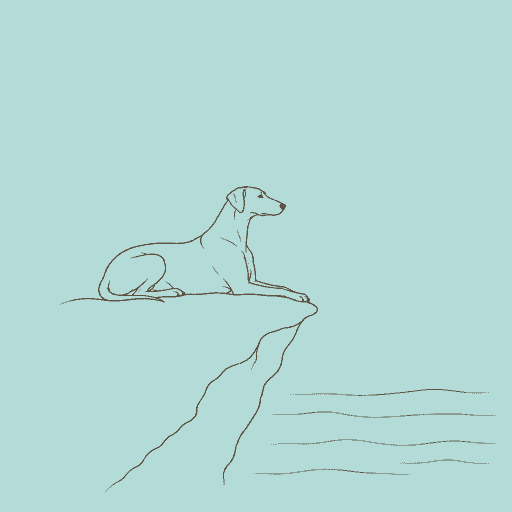
Etna
A modern alternative to SparkNotes and CliffsNotes, SuperSummary offers high-quality Study Guides with detailed chapter summaries and analysis of major themes, characters, and more.
Summaries & Analyses
Quizzes
NEWReading Tools
Part 3Chapter Summaries & Analyses
Content Warning: This section of the guide includes discussion of death, animal death, animal cruelty, graphic violence, and illness.
Part 3 Summary: “The Mountains”
Etna travels in the truck with Semeru, Hong, and the driver. He recalls his time in the war with his handler, Jason, and Fuji. Jason wasn’t born in this country, Etna notes, but his parents were. Etna, Fuji, and Jason once stayed in an abandoned house in Jason’s mother’s hometown, a town that had been destroyed in the previous war, then rebuilt, and then destroyed again. There, with Fuji recovering from a wound, they saw a butterfly emerging from the empty eye socket of a long-dead dog.
In the present, their truck is ambushed on a mountain road. The terrified driver flees into the woods. Hong returns fire, and Etna attacks and kills one of the ambushers. Hong and the two dogs continue on foot, and upon arriving at a seemingly abandoned house, they meet the woman in the mountains. As Etna suspected, it is Soojin. She recognizes him, telling him that he has “gotten old.” While speaking to Hong, she reveals that she fired at the fleeing driver and may have clipped him, recovering the medicine that he stole from the truck.
They bring the supplies to a remote village. Soojin and Etna communicate telepathically. Etna asks Soojin about Fuji, but Soojin doesn’t know anything about Fuji’s whereabouts. Though she tells him that there is “no home to go back to” (154), she agrees to take him to the coast after they deliver the medicine. Later, Soojin tells Etna about her history. Her parents lived in a village near this place. Her mother, Faye, was from a different country; she came to this country because she was sick and she met Soojin’s father. Shortly after giving birth to Soojin, she died. Soojin is pleased that her mother didn’t live to experience the war. She says that she would not like to have children of her own and that she now feels old. She also feels as though her telepathic gift is more of a curse. She fought in the war and pushed back an invasion, she says, but now she fears that “all of this” will happen again (160).
Etna detects, by smell, that Soojin has multiple tumors; when he’s about to tell her, she says she already knows. She makes Etna promise to take Semeru with him when he leaves. As they set out, now accompanied by Hong, they realize that they’re being pursued by the men from the ambush, who want Soojin and the dogs. To escape, Etna, using his training to find explosives, leads the group up a road blocked with signs warning of unexploded ordnance (UXOs).
After navigating the UXO road, they find the way blocked by a collapsed mountainside beside a large waterfall and are forced to retrace their steps. The firefight begins as they head back up. Hong is shot and killed, falling over the edge into the waterfall after he detonates buried ordinance using his rifle. After Etna attacks the men, Semeru is grazed on his hind leg, and Soojin is shot in the stomach and then wounded again at the neck. With her last strength, she throws first Semeru and then Etna into the rushing river below before collapsing by the tree.
Etna is pulled from the water by Semeru, who then collapses; his heart speeds up and shuts down, and he dies. Etna lies beside his friend’s body for an unknown number of days, drifting in and out of consciousness. Eventually, a man arrives with a wheelbarrow, lifts the barely alive Etna into it, and carries him away, leaving Semeru behind.
Part 3 Analysis
The reunion between Etna and Soojin establishes the central tension between memory and reality in Part 3. When Soojin reveals Etna’s name and his origin on a coastal farm, she also delivers the destructive news that his destination no longer exists: “‘My darling,’ she says, ‘There’s no home to go back to’” (154). This statement illustrates the theme of The Illusory Nature of Home, framing Etna’s journey as an internal one. The home he seeks is an inaccessible past, a time of peace before the landscape was irrevocably scarred by conflict. Soojin’s revelation confirms that the object of his journey is an idea rather than a place, a feeling of belonging that cannot be reclaimed simply by returning to a geographical location. His persistent desire to go anyway—“To see and to smell the place where I was born and used to live” (155)—demonstrates that the act of returning is more important than the destination itself. This dynamic reflects Yoon’s recurring interest in characters displaced by war, for whom the past is both a source of identity and an unrecoverable place.
Etna’s use of his military skills to navigate a road blocked with UXO illustrates the theme of The Lasting Toll of War. The conflict in this region has ended only in a bureaucratic sense. Instead, it has instead seeped into the very landscape, leaving behind a permanent legacy of danger. The road, marked with faded multilingual warnings, is a physical manifestation of how the violence of the past continues to dictate the present, rendering simple travel a life-threatening act. Even during peace time, people must tread carefully lest they risk their lives with a false step, unexpectedly triggering the hidden violence of the past that still litters the landscape. Etna’s meticulous work detecting explosives shows that the skills honed for organized combat are still essential for survival in this chaotic, lawless environment, which Soojin calls the “Wild West.” The ambush over a bag of medicine further emphasizes this point; the fighting is no longer between armies over territory but between desperate survivors over basic resources. War’s aftermath isn’t peace but a fractured, ongoing struggle for existence.
The climactic firefight by the waterfall delineates the boundaries between species, invoking the theme of The Shared Vulnerability of Humans and Animals. In the hail of gunfire, the fates of Hong, Soojin, Etna, and Semeru become tragically intertwined. Hong is killed instantly, Soojin is mortally wounded, and Semeru is grazed by a bullet before dying from the trauma of the fall. Soojin’s final act—throwing the dogs into the raging river—is a desperate, violent gesture of love, blurring the line between salvation and destruction. As with Jason earlier in the book, she saves Etna’s life while accepting her own fate. Her screamed words, “Forgive me. For it all” (175), acknowledge the terrible choice she must make, sacrificing their safety in the moment for a slim chance at future survival, as well as the choices she made in the past, such as taking Etna from the farm many years earlier. This brutal sequence confirms that, in the face of overwhelming violence, all beings are equally fragile. Their brief time together as a self-made pack makes their shared destruction all the more moving, demonstrating that the powerful bonds of loyalty and affection are no defense against bullets and the indifferent force of nature.
The motif of voices and communication gains a deeper, more tragic resonance through Soojin’s presence. Rather than a magical gift, her ability to speak with animals is depicted as a deep and painful form of empathy. She confesses that she stopped dreaming after discovering her ability, which burdens her with the final thoughts of dying creatures, like the American military dog who spoke only of the valley in which she was born. This capacity for direct communication allows for moments of incredible intimacy, such as when Etna smells her tumors and she confirms that she already knows, or when she secures his promise to care for Semeru. Yet this same connection makes the section’s losses more acute, opening her mind to a much larger volume of pain and trauma that she can now more readily comprehend. The shared language fosters a bond of a chosen family, only to have that family annihilated. Etna’s own silent, internal narration provides a constant counterpoint, proving that, even without a shared spoken language, deep understanding and loyalty can exist. The motif suggests that true communication is a source of both deep connection and immense sorrow.
The section is framed by two surreal images of life emerging from death, which complicates a purely bleak reading of the events. It opens with Etna’s memory of a butterfly climbing out of a dead dog’s empty eye socket, a juxtaposition of wartime decay and natural beauty. This memory foreshadows the section’s conclusion, where Etna is pulled from the river by Semeru, who gives his last measure of strength to save his friend. In both instances, life perseveres in the most unlikely of circumstances yet is also intertwined with death. The butterfly emerging from the eye socket mirrors Etna’s own reemergence from the watery, sleep-like darkness of the river. While the conclusion is steeped in loss—with Hong, Soojin, and Semeru all dead—Etna’s survival is proof of this recurring pattern. He is carried away in a wheelbarrow, a passive object saved by the intervention of others, his future uncertain but his life, improbably, intact.

Get in-depth, chapter-by-chapter summaries and analysis from our literary experts.
- Grasp challenging concepts with clear, comprehensive explanations
- Revisit key plot points and ideas without rereading the book
- Share impressive insights in classes and book clubs