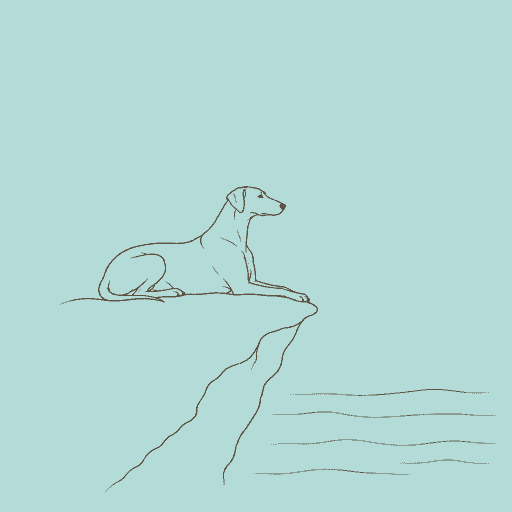
Etna
A modern alternative to SparkNotes and CliffsNotes, SuperSummary offers high-quality Study Guides with detailed chapter summaries and analysis of major themes, characters, and more.
Summaries & Analyses
Quizzes
NEWReading Tools
Themes
Content Warning: This section of the guide includes discussion of death, animal death, animal cruelty, and graphic violence.
The Lasting Toll of War
Instead of a series of discrete events, Paul Yoon’s Etna presents the impact of war as a pervasive condition that irrevocably alters every facet of existence. The novel argues that armed conflict’s true toll extends far beyond active combat, leaving permanent physical and psychological scars on all creatures and transforming the landscape into a desolate monument to violence. Even after the fighting officially ceases, survivors—both human and animal—are left to navigate a ruined world where trauma persists in memories, wounds, and a new, brutal struggle for survival. Through the eyes of its canine narrator, the book illustrates that the end of a war does not bring an end to its consequences, which continue to shape life long after the last shot is fired.
The physical and psychological wounds of war are inescapable, defining the survivors’ every moment. Etna’s own body is a map of his experiences, with stripes of scars “like old worms” growing across his forehead and sides (26). Deeper than these physical marks are the psychological ones, particularly the memory of his handler Jason’s violent death, a moment of sacrificial love that haunts him throughout his journey. This fusion of physical and mental trauma is even more pronounced in the old dog whom Etna meets at the abandoned way station. He’s physically worn down, with a “disfigured nose” and cataracted eyes, and he’s also psychologically trapped, endlessly pacing a circle in the grass as he searches for the family he fears is dead but can’t confirm. Similarly, the human characters carry their own invisible burdens. Hong, a former war doctor, admits to his partner that he remains afraid to sleep, haunted by the horrors he witnessed in the field hospitals, demonstrating that the terror of war becomes a permanent part of one’s inner landscape.
The devastation of war extends beyond living beings to the natural and built environments, creating a desolate world that mirrors the characters’ internal ruin. The narrative is replete with images of a fractured landscape: burned-out forests, bombed-out roads, and cities reduced to rubble, all as the result of the conflict. A soldier, contemplating the aftermath, encapsulates this bleak reality when he asks, “When was the last time you saw a standing building? An animal other than a mangy cat or a half-dead, starving dog?” (30), showing how the world itself has been corroded and depleted by the war. The absence of birds becomes a recurring motif, a symbol of a world stripped of its natural music and vitality. This environmental destruction is an active force in the story, shaping the survivors’ journeys and reinforcing their sense of loss and isolation as they search for their humanity among the ruins. The world itself has become a casualty, a constant, silent reminder of the violence it endured.
Finally, the novel makes clear that the official cessation of conflict doesn’t end the violence but merely alters it. In the mountains, bandits ambush supply trucks, fighting for medicine and resources. In the city, Etna is immediately attacked by a pack of dogs, a grim reflection of the human struggles unfolding in the shantytowns, where humans are similarly turning on one another. The donkey whom Etna meets articulates this new reality, explaining that his greatest fear is no longer bombs or gunfire but being butchered for food by desperate humans. As Soojin observes, many survivors have grown so accustomed to fighting that they simply continue, unable to break the cycle of violence. The war has created a new order where survival depends on a ruthlessness born from years of trauma, ensuring that the conflict, in a different form, rages on.
The Shared Vulnerability of Humans and Animals
By narrating from a dog’s perspective, Etna challenges the traditional hierarchy between humans and animals. The novel posits that, in the face of widespread violence, all living beings share a deep vulnerability to trauma, displacement, and the need for connection. War acts as a great leveler, stripping all species of their homes, families, and sense of safety. The novel argues that this shared suffering forges a common ground where species distinctions become secondary to the universal experiences of loss and the instinct for survival. Through deep interspecies bonds and parallel struggles, the novel suggests that the agonies of conflict are not an exclusively human domain.
The deep, loyal bonds between humans and dogs in the story transcend a simple owner-pet dynamic, showing a mutual dependence rooted in shared emotional lives. The relationship between Etna and Jason is the central example, and it culminates in an act of sacrifice when Jason, counting his “last heartbeats,” lifts Etna and throws him to safety, using his own body as a shield against a mine explosion. More than a soldier saving a piece of equipment, this moment is one being saving another whom he loves. This interspecies connection is made even more explicit through Soojin, the doctor with the unique ability to communicate telepathically with certain dogs. Her conversations with Etna and Semeru bridge the species gap, allowing for a depth of understanding that proves essential for survival and emotional solace in a broken world. Her final, desperate act to save Etna and Semeru by throwing them into the river emphasizes a responsibility that transcends species, born from a shared, desperate will to live.
Furthermore, the narrative portrays animals as possessing complex inner lives and social structures that mirror human society, particularly in how they process grief, form alliances, and navigate a hostile environment. Etna’s relationships with other dogs are as subtle as any human friendship. He and Fuji form an immediate pact, for example, looking out for each other from their first day in training. The old dog at the way station is defined by a tragic, unwavering loyalty to his lost family, a grief that has hollowed him out. In the desolate city, Semeru’s energetic companionship provides Etna with an important sense of belonging, a new “pack” to replace the one he lost. Even the cynical donkey offers a deep philosophy on survival, articulating a worldview shaped by labor and fear that is humane and cynical at the same time. These characters aren’t mere symbols or foils for human action; they’re protagonists in their own right, with their own histories, motivations, and emotional landscapes.
The trauma of war also blurs the lines between species by reducing humans to their most basic, instinctual states of being. Etna observes a man pulling an empty cart with a harness on, “as if he were a horse or a donkey” (35), his humanity erased by toil and desperation. The Greek soldier, Achilles, survives his ordeal by becoming almost feral, walking instinctively through the snow after losing his entire unit. By the novel’s end, he lives a primal life on the coast, scavenging and fishing, his existence pared down to the fundamental needs of a living creature. This stripping away of civilization’s veneer suggests that when faced with annihilation, the struggles of a man and an animal become one and the same.
The Illusory Nature of Home
In Etna, the concept of home functions as a powerful, motivating memory that fuels the will to survive in a world where the past has been irrevocably destroyed. The novel argues that the journey toward a remembered home is a journey inward, forcing the protagonist to confront the impossibility of returning to what was. This painful recognition paves the way for a redefinition of home, shifting it from a fixed geographical location to a fluid state of being found in companionship and the potential for a new beginning. The quest for home becomes proof of the endurance of memory, even as the physical world that created it has vanished.
The longing for a lost home is the primary driver for survivors navigating the war’s aftermath. Etna’s entire journey after leaving the American base is propelled by a singular, desperate desire to return to the coastal farm of his birth. Even as he acknowledges that it’s likely “impossible,” the memory of the farm—its smells, its sounds, and the presence of his mother—provides the purpose he needs to keep moving through a desolate landscape. His quest mirrors that of the old dog at the way station, who represents the tragic alternative. The old dog is physically and psychologically trapped by his inability to leave his ruined home, endlessly searching for a family long dead. His fixation on the past prevents him from moving forward, illustrating the danger of a memory of home that becomes a prison rather than a source of strength.
Throughout Etna’s journey, the narrative systematically dismantles the hope of physically reclaiming the past, stressing that war’s destruction is absolute. The world that Etna travels through is a graveyard of former homes, from ruined cities to the abandoned way station, a skeletal remnant of its former life. The definitive blow to Etna’s hope comes from Soojin, who tells him bluntly, “There’s no home to go back to” (154). She confirms that the entire coast he remembers is gone, its buildings and inhabitants swept away by the conflict. This revelation forces a critical turning point, shifting the novel’s focus from the recovery of a lost place to the question of how to build a new sense of belonging in a world of ruins.
By its end, the novel redefines home away from a location and toward the sanctuary of a “pack.” When Etna finally reaches the coast, he finds an unfamiliar landscape, not the farm of his memory. His arrival denies him the closure of a return but also opens a possibility for the future. A colorful bird shows him three young dogs on the beach, calling them his “future” and predicting, “You’ll take care of one another. You’ll be a good pack. […] [A]nd with them, you’ll get to know this place again” (200). This moment crystallizes the novel’s central argument: Home is not a place you find but a community you create. It is found in the bonds forged in the aftermath and in the shared project of starting anew. Thus, Etna’s journey ends with the quiet promise of a future built on connection and mutual care.

Unlock every key theme and why it matters
Get in-depth breakdowns of the book’s main ideas and how they connect and evolve.
- Explore how themes develop throughout the text
- Connect themes to characters, events, and symbols
- Support essays and discussions with thematic evidence