Etna
A modern alternative to SparkNotes and CliffsNotes, SuperSummary offers high-quality Study Guides with detailed chapter summaries and analysis of major themes, characters, and more.
Summaries & Analyses
Quizzes
NEWReading Tools
Part 4Chapter Summaries & Analyses
Content Warning: This section of the guide includes discussion of death and animal death.
Part 4 Summary: “The Sea”
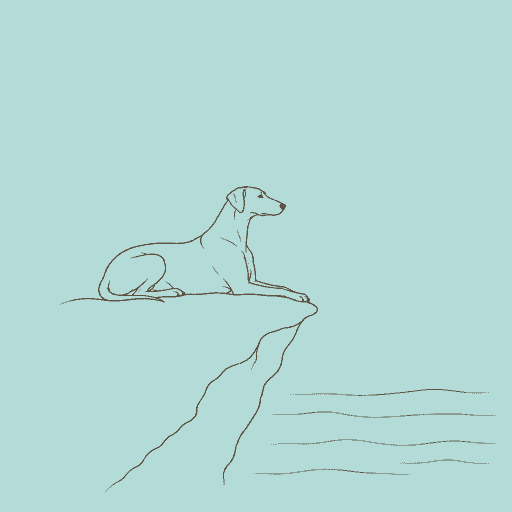
Etna awakens weak, injured, and disoriented on a cliff overlooking the ocean. As he struggles to stand, a voice asks how Etna feels. The voice belongs to an enormous, intelligent bird of an unknown species with “impossible colors” perched in a tree. The bird explains that Etna was found by a man named Achilles, a Greek who now lives in a nearby cottage and scavenges the coast. Communities of people are gathering along the coast, she says, “trying to start over again” (187). There are, however, others who still fight.
Etna asks whether there is a farm nearby, and the bird confirms that a nearby animal sanctuary matching those memories was destroyed by soldiers, though its kind owners stayed with the animals until the end. Etna sees Achilles in the distance, fishing rods in his hands. When the bird asks, Etna reveals his name. The bird notes that, much like the volcanoes she has seen, Etna’s Greek name means “[t]o burn.”
Before she checks on the farm, Etna asks the bird to check on two friends—Semeru and Hong—at the waterfall, uncertain whether they’re still alive. Then, the bird can discover what remains of the farm. Now that he has arrived at a place that feels like home, Etna is unsure of what to do next and unsure how he feels. The bird promises to fulfill his requests and, after listening to Etna’s heart, tells Etna that a long life still lies ahead. The bird then calls out for Etna to look at three “very young” dogs on a distant beach, calling them Etna’s future pack with whom Etna will start anew.
The bird then departs with a powerful gust of wings. Now alone, Etna finds the strength to stand and walks to the shade of a tree “to rest, to recover, and to wait” (201).
Part 4 Analysis
The final section of the novel opens with Etna awakening to a world perceived first through sound and scent, where the protagonist “can sense the deepness of it even before [he] open[s] [his] eyes” (183). This re-entry into consciousness immediately re-establishes the narrative’s grounding in a non-human, sensory experience. The subsequent conversation with an enormous, multi-colored bird shifts the narrative from a mode of gritty realism into a more mythic and allegorical space. This dialogue functions as an examination of Etna’s journey and consciousness, facilitated by a creature who seems to exist outside of ordinary reality. The motif of voices and communication is central here, as the bird’s voice is an elemental force that “levels with the tide and they sound like one” (186), rather than being a simple voice. This blending of voice and landscape suggests that the dialogue is happening on a plane beyond the literal, transforming the conversation into a philosophical inquiry into memory, identity, and the nature of survival in a shattered world. The bird’s presence and cryptic wisdom elevate Etna’s quest from a simple animal’s journey to an archetypal search for meaning after catastrophe.
Etna’s arrival at the coast, the long-sought destination, complicates the idea of return and belonging, showing the theme of The Illusory Nature of Home. Though Etna recognizes the sensory markers of the place—“The wind and the tide. The sand” (190)—the expected feeling of arrival and resolution is absent. He has arrived in a geographic sense, but not in an emotional sense. Instead, Etna feels “like [he] ha[s]n’t yet arrived. Or like [he’s] come here for the first time” (196). This deep disorientation reveals that home is more than a physical location that can be recovered, suggesting instead that it’s an internal state tied to memory and relationships, which have been irrevocably broken by war. The bird’s confirmation that Etna’s birthplace, an animal sanctuary, was destroyed by soldiers finalizes this realization. The kind humans who “didn’t abandon the animals” are gone (191), and with them, the anchor of Etna’s past. This aligns with Yoon’s recurring exploration of displacement, where characters discover that the homelands they seek exist only in memory, their physical counterparts having been erased or altered beyond recognition by conflict.
In a key exchange, the bird asks for Etna’s name, and the dog’s response is an important moment of self-definition. The bird provides the Greek etymology of the name Etna, which means “[t]o burn,” re-contextualizing Etna’s entire journey. As well as being the name assigned to him by Soojin, the name is claimed, seemingly from instinct or a deep well of memory. It encapsulates a history of surviving destruction and carrying the internal fire of trauma and memory. This act of naming signifies a shift from an identity defined by relationships—as a farm dog, a companion to Semeru—to one forged by personal experience. It illustrates the theme of The Lasting Toll of War, suggesting that conflict’s deepest legacy is the way it reshapes identity, burning away the past to create something new and hardened. The name becomes an emblem of survival, transforming the protagonist from a victim of circumstance into a being whose very essence is synonymous with the elemental force of a volcano.
The presences of the Greek man named Achilles and the timeless, ancient bird ground Etna’s modern, postwar experience in a much older, mythological tradition of conflict and endurance. The bird, who has seen countless conflicts and asks, “Which war?,” shows a form of eternal witness. Her dream of being the “last thing left” in a world with “nothing. Not even water” speaks to an ultimate, cosmic loneliness that transcends any single historical event (197). The character of Achilles, a scavenger who has abandoned his past to live a simple, isolated life on the coast, evokes the classical hero but reimagines him as a quiet survivor rather than a warrior. The use of these mythic allusions universalizes Etna’s story, connecting the unspecified war of the novel to a cyclical, unending history of violence and its aftermath. The symbol of birds, embodied by Etna’s interlocutor, shows a perspective that can survey the totality of this destruction from a distance, offering wisdom that is both compassionate and realistic.
The final moments of the novel directly confront the tension between isolation and the need for community. When Etna recounts the losses of Semeru and Hong, the bird affirms the deep necessity of companionship, stating, “We need friends, Etna […] We need a pack. […] Especially because of that” (195). This dialogue validates Etna’s grief while simultaneously pointing toward a path for recovery. It emphasizes the theme of The Shared Vulnerability of Humans and Animals, framing the idea of the pack not as an exclusively canine social structure but as a universal requirement for healing from trauma. The bird’s parting gesture—directing Etna’s attention to three young dogs on the beach, described as “[his] future”—offers a fragile but tangible promise of renewal. This vision is of the formation of a new community built from the remnants of the old world. Instead of concluding with a triumphant arrival or a neat resolution, the novel ends with Etna choosing “to rest, to recover, and to wait” (201), suggesting that healing is a patient, internal process of preparing for a future that is yet to come.

Get in-depth, chapter-by-chapter summaries and analysis from our literary experts.
- Grasp challenging concepts with clear, comprehensive explanations
- Revisit key plot points and ideas without rereading the book
- Share impressive insights in classes and book clubs