Five on a Treasure Island
Five on a Treasure Island
A modern alternative to SparkNotes and CliffsNotes, SuperSummary offers high-quality Study Guides with detailed chapter summaries and analysis of major themes, characters, and more.
Summaries & Analyses
Quizzes
NEWReading Tools
Background
Content Warning: This section of the guide includes discussion of gender discrimination.
Series Context: The Foundational Adventure of the Famous Five Series
Published in 1942, Five on a Treasure Island is the first of 21 books in Enid Blyton’s Famous Five series, which became one of the best-selling children’s series of all time, selling over 100 million copies worldwide. According to UNESCO’s Index Translationum, Blyton remains one of the most translated authors in history, a testament to the series’ enduring global appeal.
Five on a Treasure Island establishes the archetypes and narrative formula that define the subsequent 20 stories published between 1943 and 1963. The group dynamic relies on a balance of distinct personalities: Julian, the responsible older leader; Dick, the practical and good-humored mediator; Anne, the cautious and domestic younger sister; and Georgina, the rebellious and fiercely independent “tomboy” who insists on being called “George.” The inclusion of George’s loyal dog, Timothy, completes the group of five, giving the series its title.
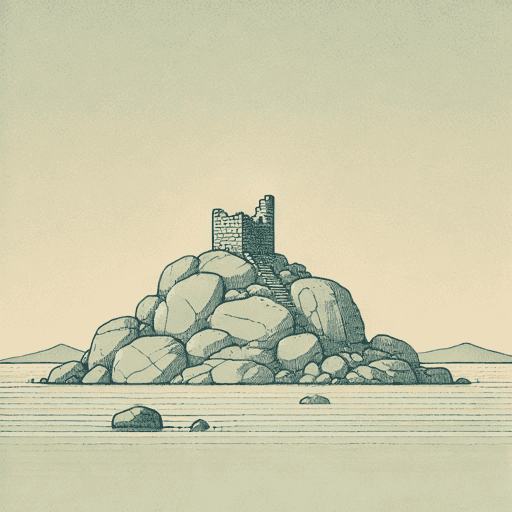
Five on a Treasure Island also sets the blueprint plot for the series: The children, free from parental supervision during school holidays, stumble upon a mystery in an exciting rural location. Titles such as Five Go to Smuggler’s Top (1945) and Five on Kirrin Island Again (1947) continue to center on the Dorset Coast and the fictional Kirrin Island, drawing on legends of smuggling and piracy. In other books, such as Five Go Off in a Caravan (1946) and Five Go to Mystery Moor (1954), the children explore unfamiliar rural territory together. In all the novels, the group faces challenges, encounters suspicious adults, and ultimately solves the puzzle through their own courage and ingenuity. This combination of character archetypes and a repeatable formula of adventure and childhood autonomy proved immensely successful, securing the Famous Five a permanent place in the canon of classic children’s literature and creating a template for countless adventure stories to follow.
Historical Context: Childhood Independence and Escapism in Wartime Britain
Blyton’s Five on a Treasure Island was published in 1942, offering its young readers a powerful form of escapism during the height of World War II. The daily reality for many British children was defined by scarcity and fear. The Ministry of Food had implemented strict rationing on essentials like meat, sugar, and butter since 1940, and the trauma of the Blitz (1940-1941) and the threat of air raids were ever-present. Over a million children had also been evacuated from cities to the countryside through government schemes like Operation Pied Piper, often separated from their families for extended periods.
In contrast to the austerity and fear created by WWII, the world of Kirrin Cottage is an idyllic fantasy of abundance and security. The children are treated to enormous meals such as “[c]old meat and salad, plum-pie and custard, and cheese afterwards” (30), a feast unimaginable under wartime rationing. Their holiday is one of complete freedom, where they explore rugged coastlines and secret islands without parental oversight or any mention of the ongoing war. The dangers they face are thrilling but ultimately conquerable, involving treasure maps, secret passages, and mysterious strangers rather than bombs or invasion. By presenting an idealized vision of the British countryside untouched by conflict, the novel provided an essential psychological retreat for a generation of children, allowing them to escape into a world where adventure, independence, and safety coexisted.
While women’s societal roles were temporarily expanded during WWII with organizations like the Women’s Land Army, the underlying cultural expectations of femininity at this time remained largely unchanged. The character of Georgina, who insists on being called “George,” directly confronts the rigid gender expectations for girls in 1940s Britain. At the time, the ideal for girlhood was heavily oriented toward domesticity and passivity. Girls were generally encouraged to be gentle, nurturing, and interested in feminine pursuits that would prepare them for future roles as wives and mothers. George actively rejects this mold. She keeps her hair “almost as short as a boy’s” (13), wears jeans and jerseys, and expresses open contempt for traditionally feminine interests, exclaiming, “Pooh! Fancy bothering about pretty frocks […] And dolls!” (14). Her actions and abilities define her identity; she is a stronger swimmer and a more capable sailor than her male cousins, and her ownership of Kirrin Island gives her a unique form of authority and independence.
As Liesel Coetzee notes, Blyton’s “portrayal of the tomboy George […] illustrates that girls and women can succeed at traditionally masculine tasks” (Coetzee, Liesel. “Empowering Girls? The Portrayal of George and Anne in the Famous Five Series.” English Academy Review, vol. 28, no. 1, p. 85). By presenting a main character who is assertive, physically capable, and unapologetic in rejecting femininity, Blyton offered her young readers a powerful model of female self-definition. George’s character validated girls who didn’t fit the traditional mold and demonstrated that strength and independence weren’t exclusively male traits. At the same time, Blyton’s depiction of Anne “reassures young readers that a traditionally feminine role […] is also available to them” (Coetzee). Anne’s gentler nature and association with traditionally feminine roles suggest that both she and George express their gender in equally valid ways.

Get in-depth, chapter-by-chapter summaries and analysis from our literary experts.
- Grasp challenging concepts with clear, comprehensive explanations
- Revisit key plot points and ideas without rereading the book
- Share impressive insights in classes and book clubs