Hangsaman
Hangsaman
A modern alternative to SparkNotes and CliffsNotes, SuperSummary offers high-quality Study Guides with detailed chapter summaries and analysis of major themes, characters, and more.
Summaries & Analyses
Quizzes
NEWReading Tools
Background
Content Warning: This section of the guide includes discussion of death, mental illness, gender discrimination, emotional abuse, and addiction.
Historical Context: The Disappearance of Paula Jean Welden
Shirley Jackson’s unsettling depiction of a college girl in Hangsaman was heavily influenced by a real-life local tragedy. On December 1, 1946, Paula Jean Welden, an 18-year-old sophomore at Bennington College, vanished after setting out for a hike on Vermont’s Long Trail near Glastenbury Mountain. At the time, Jackson lived in North Bennington while her husband, Stanley Edgar Hyman, was a professor at the college. The campus and the surrounding community were deeply shaken by the disappearance, mobilizing hundreds of students and residents for extensive searches. The investigation was hampered by a lack of coordination, as Vermont had no state police force at the time; the public outcry over the mishandling of the case was a primary catalyst for the creation of the Vermont State Police in July 1947. Despite a massive search effort and intermittent leads, no trace of Welden was ever found, and her case remains unsolved. Welden’s disappearance evolved to become part of local urban legend, sometimes incorporated into the wider legend of the mysterious Bennington Triangle, a section of Southern Vermont where several people have mysteriously vanished without a trace, akin to the famous Bermuda Triangle.
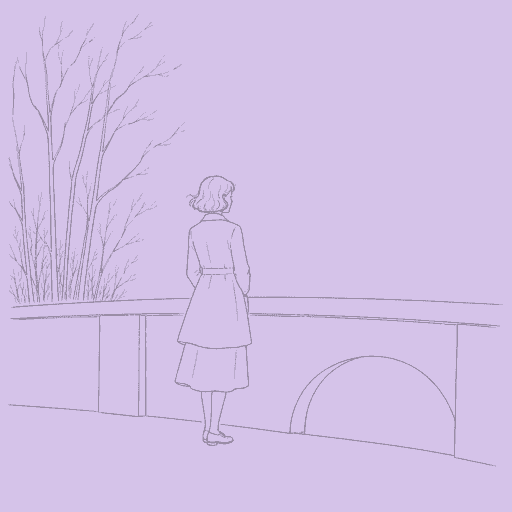
The haunting ambiguity surrounding Welden’s disappearance pervades Hangsaman, which Jackson published five years later in 1951. The novel’s setting at an isolated, progressive liberal arts college mirrors Bennington, and the protagonist Natalie Waite’s mental health crisis and solitary wanderings reflect the real-life anxieties surrounding Welden’s disappearance. The case provided Jackson with a real-world parallel for exploring themes of female vulnerability and uncertain identity.
Literary Context: The Female Gothic and Dark Academia
Hangsaman subverts the traditional campus novel, transforming the setting of higher education from a place of intellectual and social growth into a landscape of psychological horror. In doing so, the novel draws heavily on the traditions of the Female Gothic and is a foundational text for the modern subgenre of dark academia.
The term “Female Gothic” was coined in 1977 by Ellen Moers in her critical work Literary Women, where she discussed the impact of authors such as Ann Radcliffe, Mary Shelley, and Charlotte Brontë in leveraging the emerging Gothic tradition to comment on the social and physiological anxieties of women, who were the typical readers of novels in the late 18th and early 19th centuries. Moers cites Radcliffe’s novel The Mysteries of Udolpho (1794) as one of the preeminent Gothic novels, tracing its influence on Jane Austen’s more satirical take on Gothic literature, Northanger Abbey, completed in 1799 and published shortly after Austen’s death in 1817. Both stories prominently feature female protagonists who grapple with atmospheres of terror and dread in isolated settings that reflect their internal states. Moers also interprets Shelley’s Frankenstein as a woman’s myth on the trauma that follows childbirth, resonating with Shelley’s perspective and experiences with pregnancy. Though Frankenstein’s central characters are male, the allegory of the novel’s horror is designed to be recognizable to female readers who understand Shelley’s anxieties. In this way, the Female Gothic can be broadened beyond the narrative pattern that Radcliffe’s novel establishes, embedding the focus of the Female Gothic subgenre into the roots of the larger tradition to which it belongs. Jackson’s novel replaces the Gothic castle with an exclusive liberal arts college, but the core elements remain: Natalie Waite is a vulnerable heroine trapped by social and familial pressures, and her psychological distress manifests in a blurred reality that includes an ambiguously imaginary companion, Tony. This focus on internalized terror and the ambiguity between psychological crisis and the supernatural is a hallmark of the genre.
Decades later, Hangsaman’s blend of an elite academic setting with Gothic dread would become central to Dark Academia. This subgenre, popularized by works like Donna Tartt’s The Secret History (1992), explores themes of intellectual obsession, classism, and moral ambiguity within cloistered university environments. By depicting Natalie’s college as a place of cruel social hierarchies and existential dread rather than enlightenment, Jackson anticipates Dark Academia’s critique of the institutional pursuit of knowledge, positioning the campus itself as a source of psychological danger.
Cultural Context: Mid-Century Gender Normativity
Published in 1951, Hangsaman is set against the backdrop of post-World War II America, a period characterized by rigid gender roles and the promotion of a domestic ideal for women. After contributing to the war effort in unprecedented numbers, women were strongly encouraged to leave the workforce and embrace their roles as wives and mothers in the new suburban landscape. This cultural pressure created what feminist author Betty Friedan would later term “the problem that has no name” in her 1963 book The Feminine Mystique: a pervasive sense of dissatisfaction and loss of identity among educated women confined to the home.
Jackson masterfully explores this phenomenon through the novel’s secondary female characters. Natalie’s mother, Mrs. Charity Waite, embodies the despair of a woman who feels her life has been a waste. Her drunken monologue, in which she describes feeling “tricked” by the promises of marriage and power, captures the deep disillusionment of her generation. Elizabeth Langdon, the young faculty wife, shows a similar fate for a younger woman. Having married her professor to escape one form of confinement, she finds herself isolated and miserable, experiencing alcohol addiction in a house that offers no fulfillment. Her situation presents a grim vision of the future that Natalie herself fears. Both women serve as cautionary figures, illustrating the intense psychological pressure on women to conform to a narrow definition of femininity and the destructive consequences of a life devoid of personal or intellectual autonomy.

Get in-depth, chapter-by-chapter summaries and analysis from our literary experts.
- Grasp challenging concepts with clear, comprehensive explanations
- Revisit key plot points and ideas without rereading the book
- Share impressive insights in classes and book clubs