Horizon
Horizon
A modern alternative to SparkNotes and CliffsNotes, SuperSummary offers high-quality Study Guides with detailed chapter summaries and analysis of major themes, characters, and more.
Summaries & Analyses
Quizzes
NEWReading Tools
Important Quotes
Content Warning: This section of the guide includes discussion of death.
“FIRST OFFICER: It’s in here with us! It’s in here with—”
(Prologue, Page xi)
This fragmented line from the cockpit transcript establishes the central mystery of the crash, shifting the cause from a mechanical failure to an unexplained, hostile presence. The officer’s terror, cut off mid-sentence, creates immediate suspense and introduces a supernatural or science-fiction element before the narrative begins. The abrupt end of the transmission signifies a catastrophic event beyond the crew’s comprehension or control.
“They call it a ‘rubber jungle.’ Get it? Because everyone goes primal, and there’s all those masks hanging down like vines!”
(Chapter 1, Page 8)
Spoken by Molly, this piece of trivia is an example of foreshadowing. The slang term that she shares for a chaotic oxygen-mask deployment prefigures the coming plane crash when the oxygen masks will be used, the actual jungle they will crash into, and the primal struggle for survival they will face. This moment establishes Molly as a character who uses facts and engineering knowledge to manage fear.
“He found himself hoping that the airplane never made it to Japan.”
(Chapter 2, Page 12)
This line of internal monologue reveals the depth of Yoshi’s despair and his desire to escape a confrontation with his father. It’s also an instance of irony: The plane does, in fact, crash, granting his wish in the most catastrophic way possible. This moment establishes Yoshi’s initial psychological state, grounding his transformation from a sullen runaway into a capable protector.
“You could ship the Killbots a thousand miles in the back of a bouncy UPS truck, and they’d probably work just fine. They were simple. And they kicked butt. That was how good engineers built things.”
(Chapter 3, Page 14)
Molly is proud of the direct simplicity of the team’s soccer robots, which are sturdy and made to withstand the environmental challenges of both the competition field and transportation logistics. These qualities will also be the defining features of what makes the survivors successful in the jungle: They will approach problems with direct, concrete solutions rather than overly complicated plans and will toughen themselves against the hostile landscape.
“[A]n electrical storm shot through the cabin, a hundred-legged spider made of lightning that skittered from seat to seat.”
(Chapter 4, Page 19)
Anna’s internal description of the force moving through the plane uses a vivid and unsettling metaphor to depict the unnatural being. The personification of the energy as a predatory, multi-legged creature conveys its alien intelligence and methodical, terrifying purpose. This imagery reinforces that the crash isn’t an accident but a deliberate, selective process carried out by an unknown entity.
“The jungle was so thick. Cutting through a mile of that dense growth, the plane should have been torn to pieces. Just like it should have tumbled out of control from the sky, instead of coming down in a straight line. But something had protected it.”
(Chapter 5, Page 25)
Javi’s perspective highlights a critical logical inconsistency. The controlled nature of the landing contradicts the catastrophic damage that the plane sustained, suggesting an external, guiding force at work. This observation introduces the idea that their survival, and their presence in this location, might be intentional, setting up one of the book’s central mysteries.
“‘We’ll figure that out later,’ Molly cut in. Oliver wasn’t ready to hear this.
She wasn’t sure if any of them were ready to talk about what had happened to the other passengers, but Oliver was the team mascot, two years younger than the rest of them. His mom hadn't even wanted to sign the permission letter for the trip, until Molly had promised to look out for him.”
(Chapter 6, Pages 27-28)
Oliver’s transformation from a “team mascot” deemed too vulnerable and fragile to face the reality of what’s happened into the group’s emotional core is one of the most significant character arcs in the novel. Here, Molly uses the excuse of Oliver’s youth to avoid her own inability to process the deaths of the other passengers—something that Oliver will later call her out on.
“‘I’ll be back before dark,’ he said. […] ‘To find water. I’ll leave the tree fort and bug spray to you guys.’”
(Chapter 7, Page 39)
This moment marks Yoshi’s emergence as a pragmatic solo adventurer, contrasting with Caleb’s unfocused attempts to establish dominance and the robotics team’s more theoretical arguments. By identifying the most critical survival need—water—and taking decisive, independent action, Yoshi shifts from a disaffected teen to a focused survivor.
“‘There’s a rule about how people die. Two minutes without oxygen. Two days without water. Two weeks without food.’
‘Um, you’re doing that thing,’ Javi said.
Anna frowned. Molly and Javi always said she was too blunt, especially when talking to people who weren’t engineers.”
(Chapter 8, Page 47)
The novel is interested in how different personality traits can be assets as liabilities depending on context. This passage highlights Anna’s unnerving directness even when talking about unpleasant realities like death from suffocation, thirst, or starvation. For Javi, her uncompromising list is discomfiting, which makes sense since he has already been shown to be an anxious, easily frightened young man. However, Anna’s unwillingness to ignore the immediate dangers is also crucial for the group’s survival.
“‘Who died and made you scoutmaster?’ Molly asked. He looked at her, totally serious. ‘About five hundred people.’”
(Chapter 10, Page 59)
This sharp exchange between Molly and Caleb crystallizes their conflicting approaches to leadership. Molly’s sarcastic question challenges Caleb’s authoritarian style, while his blunt, grim response silences the group by forcing them to confront the magnitude of their loss: The “five hundred people” were the plane’s other passengers. Caleb’s retort uses tragedy to justify his attempt to seize control, showing the tension between command-based leadership and the more cooperative model favored by other survivors.
“Leap in, or admit you aren’t up to it. Don’t dither like a coward.”
(Chapter 11, Page 69)
Internal monologue reveals Yoshi’s primary motivation: defying the critical voice of his father. This internal conflict, a manifestation of his struggle with family expectations, compels him to act decisively rather than succumb to fear. This recurring psychological device shows how Yoshi repurposes his inner turmoil into a catalyst for action.
“‘Right,’ Anna said. ‘Remember when Mr. Keating explained the difference between weight and mass?’ Molly looked away, and Anna realized what she had said. […] The numbness closed in again, like she was packed in mud.”
(Chapter 12, Page 74)
This exchange highlights the group’s reliance on their shared education as a problem-solving tool. The casual reference to their deceased teacher, however, triggers Anna’s emotional retreat from her analytical focus. The simile “like she was packed in mud” conveys the suffocating nature of her unprocessed trauma, which threatens to immobilize the survivors despite their intellectual resourcefulness.
“Javi frowned. ‘Since when are they called shredder birds?’
‘Since they tried to shred you,’ Anna said.
‘But I discovered them!’ Javi said.
‘Discovered them?’ Molly asked.
‘Well, I saw them first. I should get to name them.’
(Chapter 13, Page 81)
Even as he ratchets up the novel’s stakes, Westerfeld makes sure to insert moments of levity to break up the tension. Here, a funny exchange between Anna and a faux-miffed Javi about naming rights for the weird flora and fauna they’re encountering highlights the lighter side of discovering a new biome. The moment is also somewhat metafictional, calling attention to the fact that part of Westerfeld’s own role as the author is to imagine and make up names for the various creatures he populates this landscape with.
“‘Engineers?’ he said, then gave a grunt. ‘Then why hasn’t it occurred to you that we might be on a spaceship?’”
(Chapter 14, Page 95)
Yoshi’s question challenges the teens’ fact-based assumptions by introducing a more speculative possibility. His perspective, shaped by cultural products like anime, offers a counterpoint to the team’s methodical but potentially limited reasoning. This moment highlights the difference between applying known scientific principles and imagining a reality that operates on entirely different rules.
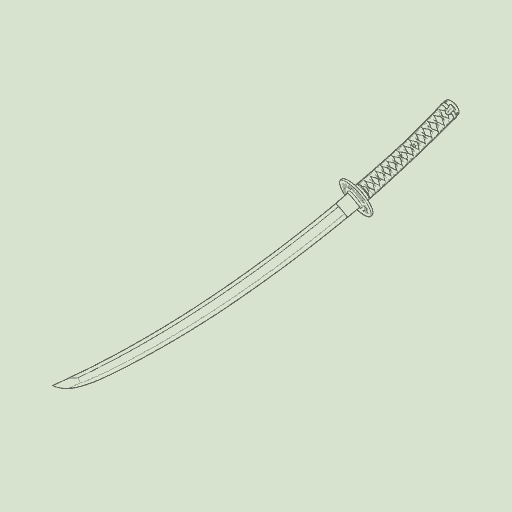
“It was like being a warrior in a fantasy. As if all his years of manga, anime, and movies—and the sword training it had inspired—had been in preparation for this place.”
(Chapter 10, Page 105)
This passage is a significant shift in Yoshi’s self-perception, as he reframes his hobbies from a source of family conflict to a legitimate and essential form of survival training. By connecting his sword skills to the heroic archetypes from his favorite media, Yoshi finds a new sense of purpose in the jungle, transforming from a runaway into a protector.
“But to keep everyone from starving, she had to make it sound simple. Because sometimes lying was okay. ‘If it tastes good, it won’t kill you,’ she said. ‘If in doubt, spit it out.’”
(Chapter 16, Page 114)
There’s a conflict between Anna’s scientific integrity and her pragmatic leadership. She knowingly simplifies a complex biological reality—that taste isn’t a foolproof indicator of toxicity—to prevent the group from being immobilized by fear. Her internal justification that “sometimes lying [i]s okay” demonstrates a leadership calculation that prioritizes morale and decisive action over absolute truth.
“‘Engineers aren’t curious,’ she said. ‘They’re cautious. That’s why bridges don’t fall down. Mostly.’”
(Chapter 18, Page 129)
Kira’s dialogue provides an external perspective on the teens’ collective mindset. She identifies their caution as a core trait, framing it as both a strength that ensures stability and a potential weakness that inhibits exploration. Kira thus compares the team’s methodical approach with Yoshi’s more impulsive nature—a comparison that leads to the eventual conclusion that a balance between the two is necessary for survival.
“‘You do know. You’re just afraid to say it! You think I’ll start crying and freaking out.’ Tears ran down Oliver’s face, but his fists stayed clenched. ‘And that just makes it worse!’”
(Chapter 19, Page 137)
Oliver’s outburst forces the group to confront the emotions that they’ve been suppressing with logic and problem-solving. He points out that their avoidance of grief is more damaging than the truth itself. The contrast between his tears and clenched fists visually represents his assertion of emotional strength despite being much younger than the others, challenging the idea that he’s too fragile to handle the loss and compelling the group toward collective mourning.
“I just want to be myself.”
(Chapter 24, Page 177)
After Kira attempts to define Yoshi’s bicultural heritage, Yoshi rejects her label. This declaration is a key moment in his character arc, signifying his move away from being defined by external pressures like family legacy. The crisis strips away societal expectations and allows Yoshi to exist on his own terms, establishing an identity based on his actions.
“This is how the jungle works, she realized. You stumbled around, having theories and solving problems, until something bigger than you came along. Then you got eaten.”
(Chapter 25, Page 183)
As a shredder bird charges, Molly reflects on the limits of logic and problem-solving in a hostile environment: Intellect alone is insufficient for survival. The detached, factual tone of her realization contrasts with the chaos of the attack, showing a moment where her methodical approach is rendered powerless by external brute force.
“We don’t know yet. But if this machine can mess with the laws of physics, who knows what else it can do?”
(Chapter 27, Page 199)
Molly voices the group’s core methodology of The Engineering Mindset as a Survival Tool. Her statement frames the gravity device as a tool that’s key to understanding the physical laws of their environment. This proactive approach—testing unknown variables to gain knowledge—demonstrates how the survivors attempt to impose order on a chaotic reality.
“Think about it. This whole place is a giant biology experiment. So these robots must be designed not to mess with animals.”
(Chapter 29, Page 217)
While observing the maintenance bots, Anna forms a key hypothesis that re-contextualizes the jungle, identifying it as a controlled, artificial enclosure. Her deduction is a key moment of understanding. By positioning the survivors as “animals” within this system, she emphasizes their status as unwitting subjects in a large-scale experiment.
“‘No, I mean it’s all one big machine.’ He pointed at the display. ‘The jungle is held in by these walls. The waterfalls and mists pour down to keep it wet. Every bit of it is artificial.’”
(Chapter 30, Page 221)
Upon discovering the three-dimensional model of the valley, Yoshi articulates the group’s realization that their environment is completely engineered. This confirms what the circular formations of trees suggest: They’re not on an alien planet but in a massive, artificial terrarium. The discovery prompts the survivors’ future investigation into the purpose of their confinement in subsequent books in the series.
“Ready for heavy!”
(Chapter 31, Page 228)
During a fight with a security robot, Anna’s command weaponizes the gravity device, demonstrating the group’s ability to adapt and master novel technology under pressure. The concise, action-oriented dialogue highlights their familiarity with the tool, as they’ve developed a shorthand jargon to refer to its gravity shifts.
“‘Same as always,’ she said. ‘We gather data. We form conclusions. We figure this out.’”
(Chapter 33, Page 240)
Immediately after recovering from the shredder bird’s poison, Molly reestablishes the group’s strategic focus. Her words act as a mission statement, reaffirming their reliance on the scientific method to navigate their circumstances. This declaration demonstrates her resilience and intellectual resolve to continue a systematic investigation.

Unlock every key quote and its meaning
Get 25 quotes with page numbers and clear analysis to help you reference, write, and discuss with confidence.
- Cite quotes accurately with exact page numbers
- Understand what each quote really means
- Strengthen your analysis in essays or discussions