Horizon
Horizon
A modern alternative to SparkNotes and CliffsNotes, SuperSummary offers high-quality Study Guides with detailed chapter summaries and analysis of major themes, characters, and more.
Summaries & Analyses
Quizzes
NEWReading Tools
Themes
Content Warning: This section of the guide includes discussion of death.
The Engineering Mindset as a Survival Tool
In Scott Westerfeld’s Horizon, a catastrophic plane crash strands a group of young people in an environment governed by futuristic technology and populated by hostile lifeforms. As they learn to adapt, the novel champions an engineering mindset of rational inquiry, systematic experimentation, and the application of scientific principles as the most effective tool for survival. This approach allows the characters to deconstruct the unfamiliar jungle around them, transforming potentially lethal threats into manageable problems and even resources by balancing inquisitiveness with prudence: “Engineers aren't curious. […] They’re cautious. That’s why bridges don’t fall down. Mostly” (129). Westerfeld grounds the narrative in this problem-solving mentality, suggesting that mastering a crisis comes from the ability to observe, test, and innovate.
The narrative establishes the team’s methodical approach as both a worldview and a coping mechanism early on. On the flight to Japan, team leader Molly distracts a nervous Javi from his fear of flying with engineering facts about the airplane. By reframing the massive, intimidating machine as a “technical tour de force” (5), she helps him manage his anxiety. Seeing the world through a lens of intellectual curiosity and analysis proves essential after the crash: Molly insists on logically assessing the wreckage for fire hazards before succumbing to panic, and Anna calmly observes that their “controlled crash landing” defies the laws of physics (25), pushing the group toward inquiry instead of despair.
Faced with immediate, life-threatening dangers, the survivors consistently rely on scientific principles to navigate their hostile new world. When Javi is attacked mid-air by a flock of “shredder birds,” his survival depends on his understanding of physics. Utilizing Newton’s third law of motion, he hurls the heavy emergency door upward to create an equal and opposite reaction, propelling himself downward to safety. Similarly, Anna approaches the critical task of finding food with the rigor of a lab scientist. She devises a system for testing alien berries, leading to the identification of both an edible food source and the emetic “pukeberries”—a useful tool for treating accidental poisoning. In both instances, applying fundamental scientific laws allows the characters to overcome threats that would otherwise be fatal.
Beyond just reacting to dangers, the group’s instinct to experiment with alien technology allows them to actively manipulate their environment. When Anna discovers a strange, donut-shaped device in the wreckage, her first impulse is to test its function. This experimentation reveals its astonishing ability to alter gravity, a discovery that becomes their primary means of travel. Later, the team applies the same method to find a secondary function for the device: the ability to manipulate electricity. Though their attempt to power the airplane’s systems results in a disastrous fire, the underlying process—forming a hypothesis and testing it—showcases the core of the engineering mindset. It is this willingness to engage with the unknown through systematic trial and error that offers the survivors their only real hope of mastering their circumstances.
Collaboration Over Hierarchy
Survival in the jungle of Horizon depends less on a single, decisive leader and more on the collective intelligence of the group. The novel consistently argues that in a crisis, rigid hierarchical structures are ineffective and even dangerous, while a cooperative model based on mutual respect and specialized expertise allows a team to adapt and thrive. The productive survivors dynamically share authority, challenge flawed ideas, and pool their distinct skills. Their approach is contrasted with traditional top-down leadership, which the book portrays as poorly suited to an unpredictable and complex environment.
The novel dismantles the idea of a conventional, command-based leader through the character of Caleb. As the oldest and physically strongest survivor, he initially attempts to take charge, proposing traditional survival solutions: “I found a survival kit, and I’m sure help is on the way. We just need to get organized. Maybe build a signal fire” (36). However, his authority is immediately and correctly challenged by Molly, who uses her technical knowledge to point out the extreme danger of igniting flames near the jet’s leaking fuel tank. When Caleb later insists on building a shelter, his plan is again deconstructed by the group’s logical counterarguments about unknown predators and the lack of need for insulation. Caleb’s inability to impose his will demonstrates that in this new world, authority must be earned through expertise, not asserted through seniority or physical presence.
In direct contrast to Caleb’s failed attempts at command, the members of Team Killbot exemplify a successful collaborative model. Having worked together in their robotics club, they naturally defer to one another based on specific knowledge without ego or conflict. Molly is the de facto strategist, initiating plans and keeping the group focused. Anna is the resident biologist and physicist, leading the food-testing experiments and analyzing the properties of the alien gravity device. Javi, with his mechanical aptitude, understands the practical application of physical laws, a skill that saves his life during the shredder-bird attack. Their teamwork is fluid; authority shifts to whoever has the most relevant expertise for the problem at hand, creating a resilient and adaptive unit.
The theme is further developed as characters who initially act as individuals learn the value of integrating their skills into the group. Yoshi first appears as a lone wolf, striking out on his own with his family’s katana to find water. However, unlike Caleb, Yoshi is driven by a desire to contribute: He single-handedly saves Molly and Javi from the carnivorous tanglevine. Eventually, he sees that his most important achievements occur when he works with others: His successful hunt for food is only possible because Akiko first lures a bird closer by mimicking its call with her flute, and only by working with Kira does he find another gravity device. This evolution from solitary actor to cooperative member reinforces the book’s central argument: Even exceptional individual talent is magnified and made more effective through collaboration.
Crisis as a Revealer of Character
In Horizon, the catastrophic plane crash and the characters’ subsequent fight for survival serve as a crucible, stripping away pre-crash identities and revealing core strengths and vulnerabilities. Westerfeld uses the jungle environment as both a physical obstacle course and a catalyst for psychological transformation. Each survivor confronts their deepest fears, redefines their role within the group, and discovers untapped reserves of courage, leadership, and resilience. The ordeal spurs self-discovery, proving that a person’s true nature is often forged under immense pressure.
For some, the crisis provides an opportunity to overcome debilitating personal fears by demanding immediate, decisive action. Javi begins the story overcome by a fear of flying, viewing himself as a “fraud” of an engineer for being scared of the engineering marvel that is an airplane. In the jungle, however, when he’s attacked by a flock of shredder birds while floating in low gravity, Javi’s abstract terror is replaced by the concrete need to survive. He instinctively applies his knowledge of Newtonian physics (“Every action has an equal and opposite reaction” [54]), an act of bravery and resourcefulness that redefines him. The life-or-death threat reveals a capacity for action that his previous anxieties had masked.
The ordeal also strips away established social roles and age-based expectations, allowing younger or more reserved characters to find their voice and guide the group’s emotional trajectory. Oliver, the youngest member of Team Killbot and the most coddled, rises to the challenge of forcing the others to confront their shared trauma and grief. He grows frustrated with the team’s denial and calls them out for avoiding the truth about Mr. Keating’s death, accusing them of being “too chicken to admit he’s dead” (138). This raw, emotionally honest confrontation, initiated by the team’s “mascot,” becomes an important turning point, compelling the older teens to acknowledge their loss and begin to heal as a group.
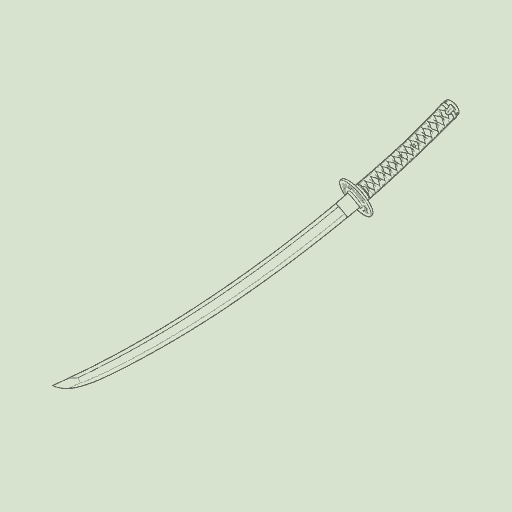
Finally, the unfamiliar environment allows characters to redefine themselves outside the context of their pasts, channeling personal skills toward a new, life-affirming purpose. Yoshi boards the plane as a sullen teen, burdened by a conflict with his father and the guilt of having stolen the family katana. The sword is a symbol of his rebellion and family dysfunction. In the jungle, however, his swordsmanship becomes an essential survival tool. He uses the blade to protect his friends from the tanglevine and hunt for food, transforming from a resentful runaway into a confident and capable protector. In this new world, divorced from its original context, his source of shame becomes his greatest strength, revealing a heroic nature he never knew he possessed.

Unlock every key theme and why it matters
Get in-depth breakdowns of the book’s main ideas and how they connect and evolve.
- Explore how themes develop throughout the text
- Connect themes to characters, events, and symbols
- Support essays and discussions with thematic evidence