Horizon
Horizon
A modern alternative to SparkNotes and CliffsNotes, SuperSummary offers high-quality Study Guides with detailed chapter summaries and analysis of major themes, characters, and more.
Summaries & Analyses
Quizzes
NEWReading Tools
Character Analysis
Content Warning: This section of the guide includes discussion of illness, death, and child death.
Molly Davis
As the de facto leader of Team Killbot, Molly is a central protagonist who steadfastly relies on logic in an environment that defies it. She’s defined by her systematic problem-solving and her belief in The Engineering Mindset as a Survival Tool. Before and after the crash, Molly attempts to impose order on chaos by identifying and solving a series of problems, from distracting Javi from his fear of flying with technical trivia to assessing the risk of a fuel explosion. This coping mechanism gives Molly a productive way to control her surroundings and shield her team from the terrifying randomness of their situation. Her leadership style is directive and rooted in rationality, a perspective that’s both an asset and a liability.
Molly also has strong protective instincts, particularly toward Oliver, the team’s youngest member. She initially tries to shield him from the horrifying truth of the other passengers’ fates, telling him, “We don’t really know what happened” (60), even after witnessing their deaths herself. This avoidance isn’t malicious but stems from a fear that confronting the tragedy will cause the group to collapse, a worry that reveals the vulnerability beneath Molly’s confident exterior. When Oliver forces the group to acknowledge their loss, Molly is compelled to recognize that some problems can’t be solved with logic alone and that emotional truths must be faced.
One of the novel’s climactic fight scenes forces Molly to evolve beyond her role as a logical problem solver. After she’s wounded by the giant flightless bird, its poison leaves a glowing green mark on her shoulder, transforming her to develop a more intuitive understanding of the jungle. By the end of the narrative, she vows to get to bottom of the inexplicable nature of their world, concluding that “[they]’re here for a reason” (240). She transitions from a leader who manages logistics to one who grasps that there are larger, unknown forces at play.
Javier “Javi” Perez
Javi is a protagonist whose primary character arc takes him from fear to courage. He’s introduced as a talented but insecure young engineer whose fear of flying symbolizes a broader self-doubt; he feels like a “fraud” for being afraid of the very technology he’s meant to master. Javi also often acts as the group’s emotional barometer, grounding the abstract intellectualism of Molly and Anna with his more direct expressions of fear and wonder. His journey is marked by his active confrontation with his anxieties, most notably when he overcomes his fear of flight during the first test of the gravity device, purposefully launching himself high above the trees to scout the area.
Javi’s key trait is his practical, hands-on ingenuity, which makes him a natural member of a team that prizes Collaboration Over Hierarchy. While Molly strategizes and Anna analyzes, Javi considers tangible mechanics. He instinctively wants to strip things down “to see those wires, motors, and gears out in the open” (5). This practical mindset proves important in moments of acute danger. During the shredder-bird attack, it’s Javi who, prompted by Anna, correctly applies his understanding of Newtonian physics before throwing the emergency door to propel himself to safety. His problem-solving is often impulsive and instinctual, as when he recklessly eats the green berries to settle the debate over who should test them. While dangerous, this act leads to the discovery of the “pukeberries,” an essential resource for the group’s future foraging experiments.
Through these trials, Javi becomes a confident and resourceful member of the team, with the courage to apply his knowledge under pressure. His initial reliance on Molly’s distractions gives way to a self-possessed bravery. He’s instrumental in fighting the tanglevine and defending the group during the giant bird attack. He never loses his capacity for humor, as evidenced by his faux indignation that he hasn’t gotten to name any of the animals and plants that the group has discovered in the jungle, but he also proves to himself that he’s the capable engineer his family always believed him to be.
Yoshi Kimura
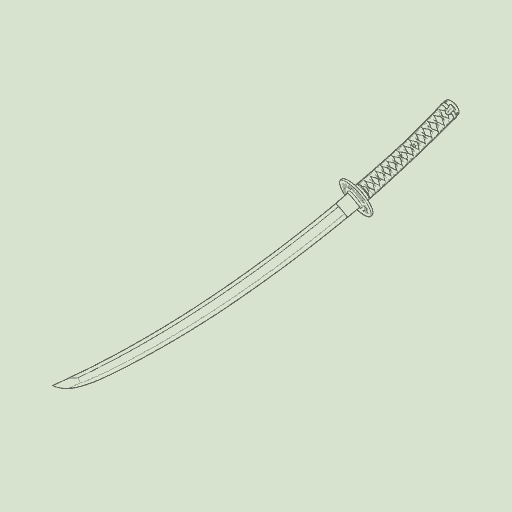
Yoshi enters the story as an outsider and acts as a foil to the engineering-focused members of Team Killbot. His journey is one of moving from isolation to integration, demonstrating how cooperation between different skill sets is essential for survival. Initially, he’s a sullen, solitary figure, burdened by family conflict and his bicultural identity. His most significant possession, the family katana, symbolizes both his connection to and his struggle with his heritage. At first, he operates as a lone wolf, venturing into the jungle by himself to find water, confident in his own abilities and dismissive of the group’s disorganized arguments. This individualism contrasts sharply with the robotics team’s ingrained habit of working together, setting up an initial conflict between two different approaches to survival.
Yoshi’s strengths are cultural and literary knowledge, athletic discipline, and intuition, rather than scientific reasoning. Without Yoshi’s bilingual skills, the group wouldn’t be able to work with Akiko and Kira, who don’t speak English. While the engineers analyze the jungle through data and logic, Yoshi interprets it through the lens of stories and experience. He compares the jungle to the “lost world” (See: Background) anime Jura Tripper and proposes a science-fiction explanation for their predicament, suggesting that they might be on a spaceship—a creative leap that forces the others to consider the possibilities. Yoshi’s sword skills, honed through years of dedicated practice, also prove indispensable against threats like the tanglevine, where modern tools are useless.
As the narrative progresses, Yoshi’s role evolves from that of a lone wolf to a protector. He saves Javi and Molly from the tanglevine and confronts the giant bird, finding a new sense of purpose in defending the group as he learns to value Collaboration Over Hierarchy. He grows to value the contributions of others, while the team learns to respect his unique skills. By the end, Yoshi is no longer defined by his internal conflicts but by his actions as a brave and essential member of the survivor group, having found a place where his heritage and skills are an essential asset.
Anna Klimek
Anna is a protagonist who personifies the purest form of scientific rationalism, a key component of The Engineering Mindset as a Survival Tool. She processes the world through observation, analysis, and experimentation. During the chaos of the plane crash, her fear is “replaced by questions” as a cold, detached part of her mind takes over (18). This ability to emotionally distance herself allows her to function with remarkable clarity in high-stress situations, making her the group’s primary scientific investigator. It’s Anna who first experiments with the mysterious gravity device, logically deducing its function through trial and error. Her scientific curiosity drives much of the group’s discovery, from her systematic testing of alien berries to her theories about the jungle’s artificial nature.
Anna’s greatest strength, her emotional detachment, is also the source of her primary internal conflict. Her direct, fact-based communication style often clashes with the emotional needs of the group. Javi frequently calls her out for being too clinical, such as when she calmly lists the ways they could die. This creates a tension between her bluntness and the need for empathy and reassurance within the group. Her development involves learning to navigate this tension. While she remains fundamentally logical, she begins to demonstrate a deeper awareness of her friends’ feelings, particularly in her determination to find a cure for Molly’s mysterious illness. This quest becomes a focal point for her, channeling her scientific drive toward a goal rooted in personal loyalty and care in a transition that illustrates Crisis as a Revealer of Character.
Anna’s journey is also one of intellectual discovery, as she’s the first to theorize the symbiotic connection between the jungle’s biome and the gravity device: She astutely observes that the animals, like the shredder birds, seem to have “evolved alongside this technology” (180). This insight is important, shifting the group’s understanding that their environment isn’t a natural wilderness but a controlled, artificial system. Anna’s memorial for Mr. Keating, where she praises him for valuing her strength as “a puzzle to be solved, instead of something wrong with [her]” (139), provides a rare glimpse into her inner world, revealing that her demeanor may be a source of self-doubt. Through the crisis, she slowly learns to integrate her powerful intellect with a growing capacity for connection.
Caleb
Caleb is an antagonist and a foil to the core group’s methods, developing the ideal of Collaboration Over Hierarchy. Upon joining the other survivors, his immediate instinct is to establish a traditional, top-down leadership structure with him at the top, based solely on the fact that he’s slightly older than the other teenagers. Caleb dismisses the expertise of the younger robotics team members, proposing conventional but inappropriate survival strategies like building a large signal fire near flammable jet fuel.
Caleb’s refusal to accept the reality of their situation emphasizes his rigid mindset. He scoffs at the existence of the gravity device, calling it a “toy that let [Javi] fly” because it doesn’t fit into his preexisting understanding of the world (58). This closed-mindedness stands in stark contrast to the experimental and inquisitive approach of Team Killbot. Caleb’s death is a direct consequence of his arrogance; he uses the gravity device without understanding its properties or the environment’s dangers, leading him to fall into a high-gravity zone that he decides to investigate on his own. His fate is a cautionary tale about the failure of rigid, authoritarian leadership in a crisis that demands adaptability and shared knowledge.
However, the novel also complicates Caleb’s function in the plot by giving him crucial knowledge and skills that the other characters don’t have. While Javi jumps above the mist cover to see stars and two moons, only Caleb’s astronomy background allows him to realize that since the moons are out of phase with each other, they must be fake, and that the group is actually on Earth, not on another planet. Caleb dies as he passes on his discovery, showing that he has learned the importance of cooperation from his ordeal—only too late.
Oliver
As the youngest survivor, Oliver functions as the group’s emotional heart. Initially, he’s presented as the group’s most vulnerable member, frightened and in need of protection. However, his grief over the loss of their teacher, Mr. Keating, becomes a catalyst for the entire group’s emotional processing of the plane crash, the deaths of 500 other passengers, and the horrible reality of being stranded with no help coming. Oliver bravely confronts the others for their avoidance of the topic: “We should say something about Mr. Keating at least. I mean, he was our friend. […] But you guys are too chicken to admit he’s dead” (137). This powerful moment forces the team to stop repressing their trauma and begin to grieve properly. Through this act, Oliver reveals an emotional strength that transcends his age, demonstrating that his vulnerability is also a source of deep insight and courage.
Kira and Akiko
The young sisters Kira and Akiko are minor but distinct characters who contribute unique skills to the group. Though they don’t speak English, they communicate through Yoshi and find nonverbal ways to become essential to the team’s survival.
Kira, who is older, is a keen and pragmatic observer. Her artistic talent is a form of data collection; she meticulously draws everything from the survival kit’s logo to the symbols on the gravity device, preserving important information. She also possesses a sharp intellect and strong spatial reasoning, which allow her to pinpoint the location of the second gravity device in the high-gravity zone. She’s fierce and brave and refuses to be sidelined, as shown when she insists on participating in the berry-tasting experiment.
Akiko is initially more timid and withdrawn, deeply affected by the trauma of the crash. She finds her voice and her role through music. Her flute becomes a tool for interacting with the jungle ecosystem, as she discovers that she can mimic the calls of the local birds. This ability proves essential for hunting, turning her artistic sensitivity into a practical survival skill. Together, the sisters illustrate how diverse talents, beyond engineering or combat, are necessary for the group to adapt and endure.

Unlock analysis of every major character
Get a detailed breakdown of each character’s role, motivations, and development.
- Explore in-depth profiles for every important character
- Trace character arcs, turning points, and relationships
- Connect characters to key themes and plot points