Kiss of the Basilisk
Kiss of the Basilisk
A modern alternative to SparkNotes and CliffsNotes, SuperSummary offers high-quality Study Guides with detailed chapter summaries and analysis of major themes, characters, and more.
Summaries & Analyses
Author Insights
Quizzes
NEWReading Tools
Important Quotes
Content Warning: This section of the guide discusses sexual content, violence, death and illness, cursing, and bullying.
“Or maybe you won’t. After all, who would want a girl who tastes like chicken shit?”
(Part 1, Chapter 1, Page 4)
In this exchange at the bakery, Vera’s insult establishes Tem’s primary internal conflict: a deep-seated insecurity rooted in her low social status as a chicken farmer’s daughter. The taunt is a distillation of the village hierarchy, directly linking her identity and perceived sexual desirability to her family’s humble occupation. This line serves as a psychological wound that drives much of Tem’s early motivation, framing her journey as a search for self-worth in a society that has deemed her unlovable.
“The princes have chosen my students for generations. Rest assured, I will not allow you to fail.”
(Part 1, Chapter 2, Page 17)
Upon their first meeting, Caspen’s statement establishes his authoritative role and track record of success, immediately heightening the stakes of Tem’s training. The line functions as both a reassurance and a threat, placing immense pressure on Tem to succeed. It also offers an early example of Tem being left unsure about the meaning or emotional intent behind Caspen’s often cryptic comments to her.
“Just as her fingers were about to touch the bone, a jolt shot through the claw, up her spine and down her arm, forcing her to yank her hand back immediately. Caspen’s voice thundered through her head […] Do not touch that.”
(Part 1, Chapter 4, Page 54)
This moment occurs when Tem becomes entranced by a basilisk skull displayed at Leo’s palace in a manner akin to a hunting trophy. The skull reveals how the human royals have no respect or regard for the basilisks, foreshadowing the reveal about the cruel practices of bloodletting. Caspen’s visceral reaction (conveyed telepathically) contrasts with his typically cool and composed demeanor. It sets the stage for the deep and emotionally fraught conflict between the humans and basilisks to unfold in the remainder of the novel.
“You do not follow instructions. You are stubborn. And impatient. Those are not qualities the prince will appreciate.”
(Part 1, Chapter 6, Page 68)
Caspen criticizes Tem, positioning him as a teacher responsible for molding her into a demure royal consort, a role that clashes with her defiant nature. Caspen’s comments hint that Tem is not the docile pupil he expected, laying the groundwork for the two of them to develop a genuine relationship as equals. His comments reflect exasperation but also highlight qualities that ultimately both he and Leo find alluring, subverting the notion that masculine desire requires female obedience.
“Smoke filled the cave as his body thrashed with otherworldly strength. Somewhere in the fog of her shock, Tem remembered that if he looked her in the eye while wearing his true form, she would die. His next command clapped like thunder in her mind. LEAVE ME, TEM.”
(Part 1, Chapter 9, Pages 107-108)
Caspen’s physical transformation into his dangerous serpent form is spurred by intense arousal. He orders Tem to leave for her own safety, since he could accidentally kill her while he is in his serpent form. This incident reveals the complex power dynamic between them and the constant tension that Caspen undergoes while trying to restrain himself and keep her safe.
“Tem had never seen herself like that: beautiful, fierce, a sexual being—a woman. It was incredible to see what he saw, to view herself through the lens of his desire.”
(Part 1, Chapter 10, Page 116)
In this passage, Caspen sends Tem a telepathic vision of herself from his perspective during a moment of intimacy. This shift in point of view allows both Tem and the reader to experience herself through his eyes, adding narrative complexity. This external validation is a crucial step in her character development by allowing her to bypass her own insecurities and see herself as a powerful, desirable individual for the first time.
“He looked her in the eye, and she saw all the anger in the world there. ‘I intend to.’”
(Part 1, Chapter 12, Page 141)
After Tem confides that she was assaulted, Caspen’s concise, declarative statement reveals the depth of his possessive and dangerous nature, foreshadowing the murders of Jonathan and Christopher. The understated fury in his response is an example of characterization through concise dialogue, demonstrating a capacity for ruthlessness when he feels Tem is threatened. This moment directly sets in motion a major plot point that escalates the conflict between humans and basilisks.
“Smoke rose from his shoulders, filling the air and skimming up Tem’s body in soft, shadowy streams. Tendrils curved around the sides of her breasts before flowing up her arms and pinning her wrists to the mattress.”
(Part 1, Chapter 13, Page 156)
During their first intimate encounter, Caspen begins to lose control of his human form. The personification of the smoke as “tendrils” that physically restrain Tem hint at Caspen’s non-human nature, and the intense primal power that lies just beneath his civilized exterior. Anytime Tem and Caspen are together, their emotional and sexual connection exceeds typical human bonds, explaining why she is so overcome with desire for him.
“He means something to you.”
(Part 1, Chapter 16, Page 188)
Leo confronts Tem after witnessing her interaction with Caspen, marking a critical turning point in the central love triangle. The dialogue’s simplicity underscores Leo’s pained discovery, shifting their dynamic from a political game of seduction to one with genuine emotional stakes. It forces both characters to acknowledge the vulnerability and jealousy that their courtship has now exposed.
“The crest is a way to extract power from a human. When you climax, the basilisk who crested you becomes stronger. Rowe wishes to draw power from you.”
(Part 1, Chapter 17, Page 204)
Caspen explains the magical concept of the “crest” to warn Tem about his rival, Rowe. This piece of world-building provides key exposition that will be crucial to subsequent plot events. The connection between cresting and sexuality reflects the ambivalent and complex interplay between sex and power in the basilisk world. While Caspen and Tem’s sexual encounters are loving and mutually pleasurable, sex can also be manipulative and extractive.
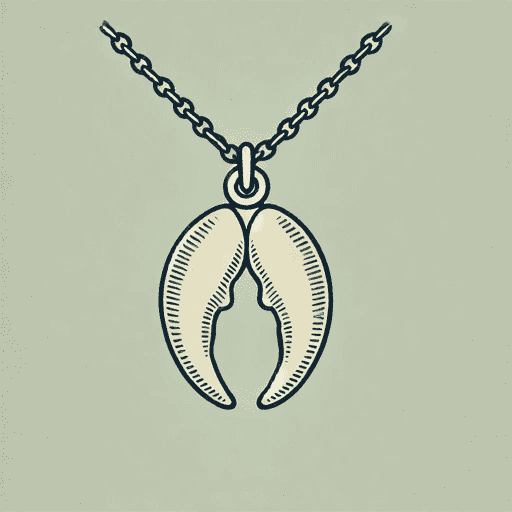
“‘The royals use basilisks for bloodletting.’ […] ‘It is a process where our blood is alchemized into gold. This’—Caspen touched the golden claw around her neck—‘is a piece of me.’”
(Part 1, Chapter 21, Page 255)
This revelation reframes the established political and economic structures of the novel, exposing the source of royal wealth as a violent, parasitic act. To explain that basilisk blood can turn into gold, Caspen references the pendant (a symbol of love and devotion). This explanation heightens the novel’s exploration of consent versus violation: Caspen willingly transformed his blood into gold as an act of love, but that same act of transformation can be torturous when it is imposed on the non-consenting bodies of the imprisoned basilisks.
“‘Mother,’ Tem said quietly. ‘How do you know if someone loves you?’ Her mother met her eye. ‘When they would sacrifice their happiness for yours.’”
(Part 1, Chapter 22, Page 263)
When Tem is debating whether to undergo the ritual to prove herself worthy of Caspen, she asks her mother for insights into romantic relationships. Her mother’s response foreshadows the reveal of the painful past between Tem’s parents, and reflects the many difficult choices Tem will have to make in the future. The comment also hints at a deviation from romance genre norms (when a couple would typically end up happy together).
“*Keep her safe.*
The words were quiet—strained. It was becoming more difficult to follow them.
Tem realized she had some power here—she could help him resist his instincts.”
(Part 1, Chapter 23, Page 279)
While Tem and Caspen are having sex in the lead-up to the ritual, she uses the force of their bond to enter his mind (gaining access to his inner thoughts and deepest emotions). Tem is startled to realize that Caspen is constantly preoccupied with protecting and safeguarding her. This information strengthens their bond and encourages her to fully trust in him despite the many obstacles they face.
“Before Tem could begin to panic, she felt a sudden presence overtake her mind. For a moment, she thought it might be Caspen. Then she realized it was Bastian. […] He spoke just two words before retreating: You first.”
(Part 1, Chapter 24, Page 290)
While Tem is having sex with Bastian during the ritual, he enters her mind and communicates with her telepathically. This moment implies that while she is wary of him, Tem does share a connection with the king that resembles the one between her and Caspen. Although Tem only loves Caspen and Leo, she is not immune to sexual attraction to others, even those she is somewhat afraid of. Bastian’s comment (urging her to achieve orgasm before he does) highlights the complex nature of their encounter in which danger and heightened power dynamics add a frisson of arousal for Tem.
“‘This is a distinct feature,’ he whispered. ‘Even among basilisks. […] Your father has the same ones. That is when I suspected you were a hybreed.’ Hybreed. Half human, half basilisk.”
(Part 1, Chapter 26, Page 312)
Caspen speaks this quotation while explaining to Tem how he first began to suspect that she was a hybreed. A subtle, unassuming physical feature (freckles on her hand) provided a crucial clue, showing his intense awareness of every detail of her body. The comment reveals that Caspen concealed this knowledge from Tem for a considerable time, nuancing both his character and their relationship. While Caspen loves Tem, he sometimes makes unilateral decisions, leaving her feel violated and disempowered.
“His grip tightened. ‘I mean it. I know my time with you is somewhat…borrowed. But any moment with you—no matter how brief—is glorious.’”
(Part 2, Chapter 27, Page 328)
In the carriage, Leo articulates his awareness of Tem’s enduring bond with Caspen, framing his own relationship with her as temporary. Leo accepts his own vulnerability as a human who will live a far shorter life than a basilisk or a hybreed. He gracefully transitions to a new idea of what a relationship with Tem could look like because he values any time he can spend with her.
“‘Actually,’ Tem said quietly, ‘I decide what happens to me.’”
(Part 2, Chapter 28, Page 339)
During a tense council meeting, Tem asserts her agency in a room of powerful basilisks who view her as a political tool. This statement directly challenges the plans of both King Bastian and Caspen, establishing Tem’s refusal to be a pawn and embodying the development of her agency and self-esteem.
“She was unstoppable. Her power finally matched his.”
(Part 2, Chapter 30, Page 363)
This quote describes the moment Tem successfully transitions into her basilisk form for the first time while being intimate with Caspen. This transformation literalizes her internal journey of integrating her human and basilisk sides, symbolizing her self-acceptance and rejection of shame. When she embraces her basilisk side, Tem is able to fully integrate her capacity for pleasure and her inner strength.
“Do not force me to be something I am not, Tem!”
(Part 2, Chapter 31, Page 377)
Caspen directs this statement at Tem after she begs him to spare Rowe’s life, exposing the fundamental conflict between his predatory basilisk nature and her human morality. This dialogue crystallizes the cultural and ethical chasm between the two species, a central tension in the novel. It hints at the inevitable conflict that will occur if Caspen and Tem try to pursue a life together.
“‘I want all of you,’ he said deliberately. ‘Or I don’t want you at all.’”
(Part 2, Chapter 32, Page 389)
After discovering Caspen’s magical claw (revealing that Caspen is often interacting with Tem through magic), Leo delivers this ultimatum. This statement marks a significant shift in his character, as he moves from accepting ‘borrowed time’ to demanding her complete emotional allegiance. Leo’s demand shows the emotional stakes of the love triangle and reveals that Tem’s decisions have the potential to be devastating.
“‘These,’ she whispered, brushing her finger over his lips, right where his incisors were. Her fingers fell to the golden cuff on his wrist. ‘This.’”
(Part 2, Chapter 35, Page 425)
After revealing the imprisoned basilisks in the dungeon, Tem shows Prince Leo the direct connection between his family’s wealth and their suffering. The quote uses symbolic imagery, physically linking Leo’s golden adornments—his fangs and cuff—to the creature whose blood is alchemized into that gold. This act shows the liberating power of truth: Tem stops protecting Leo and gives him full knowledge of the atrocities his family has committed.
“I’d rather have half of you than all of Vera. Even if it means sharing you for the rest of my life.”
(Part 2, Chapter 37, Page 442)
In the basilisk caves before his tense meeting with Caspen, Leo declares the depth of his feelings for Tem. Leo’s statement subverts the traditional expectations of monarchy and monogamy, demonstrating a significant character shift from his initial possessiveness. The dialogue prioritizes authentic personal desire over societal norms, directly validating Tem’s dual nature by accepting her love for both him and Caspen. This moment serves as a clear expression of his personal evolution and rejection of his father’s rigid worldview.
“‘My son,’ he hissed […] ‘makes irrational decisions. My son is ruled by his emotions. My son’—he leaned in, and the temperature between them rose—‘is clearly not ready to be king. And you, Temperance, are certainly no queen.’”
(Part 2, Chapter 39, Page 465)
At the wedding, King Bastian reveals his treacherous plan to Tem while expressing contempt for his son, Caspen. Bastian’s dialogue establishes a direct parallel between himself and King Maximus, as both fathers see their sons’ capacity for love as a disqualifying weakness. This moment clarifies that the story’s central conflict is not just between species, but between ideologies of leadership. Whether human or basilisk, absolute monarchs are inevitably corrupted by power.
“All the broken pieces of her identity came together in one perfect, limitless point. Her power was cosmic—as vast as the stars. She was bound to no one. She was free.”
(Part 2, Chapter 40, Page 478)
During the climactic battle at her wedding, Tem chooses to crest herself to heal her dying basilisk side and gain power. By creating a new source of strength from within, she rejects the external pressures and binaries forced upon her, symbolizing the embrace of her hybreed identity. This solution also challenges the pressures she faces to choose one partner or the other: Tem is able to save herself when she doesn’t choose and focuses on being united rather than fractured.
“‘Leo,’ Tem whispered, knowing that her words would bind him, that he would have no choice but to obey. ‘I want you to find Evelyn. I want you to choose your future.’”
(Part 2, Chapter 40, Page 486)
In the immediate aftermath of the battle, Tem makes use of the new bond she gained with Leo after cresting him. She instructs him to find his first love, believing he and Evelyn can rekindle their relationship. This act subverts the predatory nature of the crest, a power used by others for domination and control. Tem instead wields its binding force not to enslave Leo but to liberate him, prioritizing his happiness over her own desire. This use of basilisk magic redefines power, suggesting that true authority lies in bestowing agency rather than revoking it.

Unlock every key quote and its meaning
Get 25 quotes with page numbers and clear analysis to help you reference, write, and discuss with confidence.
- Cite quotes accurately with exact page numbers
- Understand what each quote really means
- Strengthen your analysis in essays or discussions