Kiss of the Basilisk
Kiss of the Basilisk
A modern alternative to SparkNotes and CliffsNotes, SuperSummary offers high-quality Study Guides with detailed chapter summaries and analysis of major themes, characters, and more.
Summaries & Analyses
Author Insights
Quizzes
NEWReading Tools
Part 2, Chapter 35-EpilogueChapter Summaries & Analyses
Content Warning: This section of the guide discusses violence, death, and sexual content.
Part 2, Chapter 35 Summary
Tem reunites with Caspen and decides not to tell him that her basilisk nature is dying. She resolves to find a way to heal the basilisk side of her nature in time to perform the crest at the wedding. She hurries back to the castle but does not have time to clean up before she runs into Leo. He guesses she has been visiting Caspen. Leo becomes angry and jealous, complaining that while all other women are anxious to please him, Tem seems to do whatever she wants. Leo gives her an ultimatum: End things with Caspen or he will marry Vera.
After Leo leaves, Tem realizes she has concealed the truth because she fears he would be repulsed by her hybreed nature. She decides he deserves the truth. When she can’t find Leo anywhere in the palace, she goes to the village graveyard and finds him there. She tells him she cannot end things with Caspen but that he deserves to know why. Tem leads Leo back to the castle and to the dungeons, where she shows him the imprisoned basilisks and reveals the truth about bloodletting: Basilisk blood is alchemized into gold, the source of his family’s wealth.
Tem urges Leo to outlaw bloodletting as soon as he becomes king, but he seems hesitant. She shows him Kronos and reveals that the basilisk is her father. She explains she is a hybreed, and also reveals that Leo’s father sabotaged Leo’s relationship with Evelyn. Leo kisses Tem, accepting her, and confesses he has been in love with her since the start of the competition. He reluctantly agrees to meet with Caspen so that three of them can discuss how to achieve peace. Tem asks if she can spend the night with him and Leo leads her into his bedroom.
Part 2, Chapter 36 Summary
Tem and Leo have sex, cementing their newfound intimacy. Afterward, Tem discovers four scars on Leo’s back. He admits his father gave them to him as part of a traditional ceremony called the Cutting. Tem realizes Leo hates his father, and he confirms the feeling is mutual. Leo acknowledges Caspen is her version of Evelyn, accepting that he cannot have all of her. They make love again. As night falls, Tem tells Leo they should visit Caspen that evening.
Part 2, Chapter 37 Summary
Tem and Leo go to the caves together. Tem asks Leo not to tell Caspen that the two of them have had sex. He agrees, adding that he would rather have half of her than all of Vera, even if it means sharing her for life. Tem tells Leo to wait while she speaks to Caspen alone.
Caspen is shocked and angry to learn that Tem has brought Leo to the caves. He is unwilling to meet with Leo since he doesn’t believe the human prince is willing to change anything. Tem reveals she told Leo she is a hybreed. Caspen feels betrayed and threatens to tell Leo about the plan to crest the royals; Tem feels doubt, wondering if Leo would try to protect his father. She insists Leo is on their side and begs Caspen to talk to him. He reluctantly agrees.
The three meet. Leo states his intention to end the bloodletting. Caspen asks what he wants in return. Leo explains he only wants Tem for the duration of his human life, agreeing to share her with Caspen. Both men agree the decision is up to Tem. Tem declares she loves them both. Leo states that when he is crowned king at the wedding, he will announce the end of bloodletting and if he fails to do so, Caspen can kill him. Caspen accepts.
Tem and Leo return to the castle, where they run into Vera. Leo formally ends their courtship and dismisses Vera from the castle. Then he takes Tem to his room, pulls out a velvet box, and kneels.
Part 2, Chapter 38 Summary
Leo proposes, acknowledging he will share Tem with Caspen. Tem accepts. He gives her his mother’s silver ring. To Tem’s relief, Leo suggests they get married the next night. He does not want her father and the other basilisks to continue enduring bloodletting longer than necessary. Tem agrees. Leo goes to inform Maximus while Tem rushes to tell her mother. Tem explains the upcoming wedding to her mother and confesses she also loves Caspen. Tem shares that Kronos has been imprisoned in the castle but will soon be free. Her mother is overcome with joy and relief. They return to the castle, which is bustling with wedding preparations.
Tem thinks about the dangerous sequence of events that will unfold at the wedding. She realizes she only stipulated that Leo not be killed, and that basilisks could therefore still try to crest him. Wanting to protect him, she produces venom and convinces Leo to drink it. Before long, it is time for the wedding festivities to begin. Tem joins Leo in the maze, where guests are beginning to assemble for the party that will precede the ceremony. Tem watches nervously as the basilisks arrive for the wedding.
Part 2, Chapter 39 Summary
Tem notices that Caspen looks sickly and feels anxious that her waning basilisk powers are hurting him as well. When Bastian approaches her, Tem fears a confrontation between him and Leo and sends the latter away. Out of earshot, Bastian and Tem discuss the upcoming crest she will perform. Abruptly, Tem realizes that if she succeeds in the crest, she will be visibly more powerful than Bastian and the basilisks will likely rally to her, and not to him. She deduces Bastian plans to crest her immediately after she crests the royals, reabsorbing her newfound power. Although Tem is protected by Caspen’s venom, Bastian’s power as king overrules it.
Tem argues that if she is crested, her basilisk side will die, and Caspen will die as well (due to their blood bond). Bastian is unmoved since he does not value his son anyway. When Tem threatens to refuse to perform the crest, Bastian gives her an ultimatum: Perform the crest or he will kill Leo and his sister, Lilly. Tem faces a terrible choice, fearing she must condemn either Caspen or Leo to death. When Caspen and Leo approach. Tem tells them about Bastian’s plan.
Caspen struggles to accept that his father would crest Tem, knowing that he, Caspen, will die as a result. He proposes that she not perform the crest. Tem admits to Caspen that her basilisk side has been dying since he crested her. She needs the influx of power from a cresting, or else she will soon lose her basilisk side and become fully human (triggering his death as well). Tem clings to the hope that after she crests the royals, she will have the strength to resist Bastian’s effort to crest her. Leo and Caspen both agree to support her and sacrifice their fathers if necessary.
King Maximus conducts the wedding service, marrying Leo and Tem. Then he immediately crowns Leo, who is now considered ready to assume his role as king. As Leo addresses the crowd, announcing a new era of peace between basilisks and humans, Bastian enters Tem’s mind, ordering her to perform the crest. Maximus grabs Leo’s arm, trying to stop him, but Leo ignores him. Tem has an epiphany: She can crest herself, using her healthy human side to heal her dying basilisk side. Tem refuses Bastian’s command again when a scream rings out.
Part 2, Chapter 40 Summary
The wedding erupts into chaos as basilisks transition and attack guests, petrifying and cresting them. Maximus flees. In the chaos, Caspen finds Leo and Tem. Tem reveals she has already claimed Leo with her venom, so he cannot be crested. Caspen convinces Leo to flee, promising to protect Tem, and Leo runs out of the maze.
An attacking basilisk wounds Caspen, who reveals he is too weak to transition. Tem crests herself, healing her basilisk side and restoring her power and mental connection to Caspen. Her solution also restores power to Caspen, who immediately transitions and kills the attacking basilisks. While Caspen is distracted by fighting, Bastian tries to crest Tem. She is able to resist but he transitions into serpent form and viciously bites her. The injuries to her human body will weaken her basilisk side, making it inevitable that she will succumb to the cresting.
Caspen attacks Bastian, forcing him to release Tem. They fight until Bastian weakens and returns to human form. Caspen kills Bastian by eating him alive. Tem blacks out. When she awakens, she is bleeding out and too weak to heal herself. Caspen tells her she must crest someone to receive the influx of energy she needs and proposes she crest Leo. Caspen reasons Leo would happily make this sacrifice to save her life. Tem refuses at first, not wanting to take Leo’s agency. Caspen fetches Leo, who is horrified by Tem’s injuries and begs her to do whatever is necessary. Knowing it is the only way to survive, Tem crests Leo.
Moments later, Tem is healed. The battle ends. Caspen lifts Bastian’s corpse and roars, establishing himself as the new Serpent King. The remaining basilisks flee. Alone with Leo, Tem decides to use the power of the crest to ensure he does not spend his lifetime bound to her. She tells him to find Evelyn, knowing that her words will bind him to obey (although Leo, who does not understand cresting, does not know this). Tem feels both happiness and grief at the prospect of Leo beginning a new life without her and promises they will see one another again. They kiss gently, and Leo leaves.
Part 2, Chapter 41 Summary
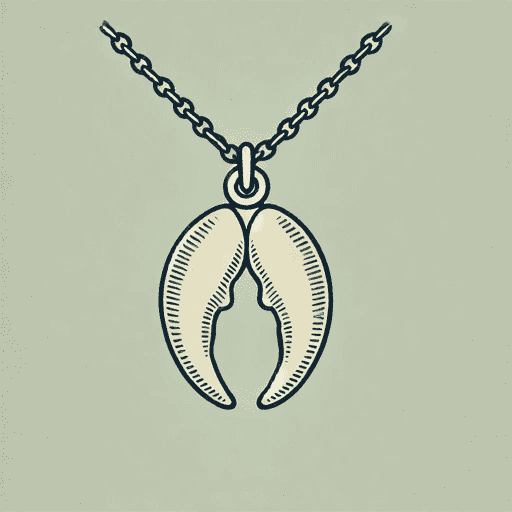
Tem and Caspen immediately assume power as queen and king and take over Bastian’s lavish chambers. They retreat to heal together and cement their bond. When Caspen asks, Tem explains that she told Leo to find Evelyn. He agrees that she made a loving choice. Caspen explains that for them to cement their marriage, Tem must fashion a token out of her own blood (as he did when he gave her the golden claw pendant). Following her instincts, Tem concentrates and painlessly forms a golden claw necklace, which she places around Caspen’s neck to complete their bond.
Epilogue Summary: Leo
Leo reflects on the wedding’s violent end and his father’s cowardice. He thinks with confusion about the intense bond he still shares with Tem and what will happen if he does find Evelyn. When guards find Maximus, Leo orders his father taken to the dungeon. He finds Tem’s mother, Daphne, and escorts her to see Kronos. They have a tearful and happy reunion.
Maximus is brought in and insults Daphne, Kronos, and Tem. Leo asserts his authority as king, silencing his father and ordering the guards to free all the basilisk prisoners, starting with Kronos. He has Maximus locked in Kronos’s former cell. Daphne thanks Leo and tells him he and Tem will find their way back to each other.
Leo confronts Maximus, who confirms he paid Evelyn to abandon Leo and reveals that she lives nearby. Leo takes a carriage and travels through the night to find Evelyn. He arrives at her village at sunrise and sees Evelyn by the riverbank. He calls her name, and she turns, recognizing him.
Part 2, Chapter 35-Epilogue Analysis
Tem moves toward Self-Acceptance Resulting from the Embrace of Duality when she decides to trust Leo and shares her hybreed identity with him. When Leo unquestioningly accepts her whole self, he distinguishes himself as worthy of being her partner. He continues this pattern by readily agreeing to free the imprisoned basilisks and even consenting to share Tem with Caspen. Leo’s character arc completes as he emerges as a man who is capable as both a ruler and a husband. While Tem had to prove herself through feats of sexual prowess, Leo’s worthiness is established through empathy, kindness and a willingness to sacrifice for those he loves. Tem finally has sex with Leo once she can feel truly safe with him, creating a parallel to how she had intercourse with Caspen for the first time after he proved himself trustworthy in the wake of her assault.
Nonetheless, Leo and Tem’s wedding dissolves into violent chaos reminiscent of the Red Wedding scene featured in A Storm of Swords (2000) by George R. Martin (itself akin to the notorious 16th century St. Bartholomew's Day Massacre, in which French Protestants were brutally killed after assembling for a wedding between a Protestant king and Catholic princess). The juxtaposition between the anticipated joy and unity of a wedding and the brutal violence heightens the sense of vulnerability being exploited. The violent events serve as the impetus to resolve the novel’s central conflicts by dismantling established systems of patriarchal power.
The parallel depositions of King Maximus and Serpent King Bastian serve as a climactic resolution for the theme of The Corrupting Influence of Absolute Power. Both rulers demonstrate a willingness to sacrifice their sons to maintain control, a choice that directly precipitates their downfall. Maximus’s cowardice (he flees as soon as the fighting begins) reveals the hollowness of his authority, while Bastian’s plot culminates in his own cannibalization—a literal manifestation of a reign that consumed its own people. Their parallel fates suggest this form of tyranny is not specific to one species but is a destructive force common to both.
In contrast, the ascensions of Leo and Tem are predicated on sacrifice and shared authority, establishing a new paradigm of leadership. The parallel character arcs of the two kings are mirrored in the arcs of their sons, who serve as foils to their fathers. Both Leo and Caspen are forced to navigate the conflict between inherited roles and personal morality. Their alliance, forged through their shared love for Tem, represents a definitive break from the generations of hatred that defined their peoples. Tem recognizes the common wound that unites them, observing that they are products of “[t]wo fathers. Two kings. Both with no faith in their sons” (465). This shared experience of paternal betrayal allows them to find common ground and reject the legacies of cruelty they were meant to inherit. In the Epilogue, Leo’s first acts as king—freeing the basilisk prisoners and imprisoning his father—are a direct repudiation of the old order.
Tem’s experience of self-acceptance resulting from the embrace of duality manifests in her decision to crest herself. This act represents the synthesis of her human and basilisk halves; rather than choosing one side, she uses the strength of her human nature to heal her dying basilisk side. This moment of self-integration transforms her internal conflict from a source of vulnerability into her greatest strength. This integration is emphasized when Tem feels that “[a]ll the broken pieces of her identity came together,” realizing that “[s]he was bound to no one. She was free” (478). By becoming whole, she transcends the limitations and prejudices of both worlds, positioning herself as a leader capable of bridging the divide between them.
The crest, first introduced as a tool for stealing power, is redefined multiple times: first as a source of self-healing for Tem, then as a consensual, life-saving act between her and Leo, and finally as an instrument of liberation. Her final command to Leo—to “choose your future” (486)—repurposes dominance into an act of bestowing agency. This establishes a new moral framework where strength lies in empowering others rather than subjugating them. Leo, in turn, uses his royal authority to grant freedom to the oppressed basilisks, breaking the cycle of exploitation on which his family’s wealth was built. The conclusion proposes that personal and political liberation are intertwined; by resolving her internal duality, Tem gains the power to dismantle the external systems of oppression, creating a world where freedom is a gift to be given, not a privilege to be hoarded.
While reflecting thematic considerations of agency, consent, and love not being limited to a single partner, Tem’s actions also set the stage for ongoing plot developments. Since Kiss of the Basilisk is the first novel in a series, the novel does not have to provide a traditional romance conclusion in which the primary couple lives happily ever after. The conclusion is in fact bittersweet, since Tem gives up a man she loves. Although she chooses Caspen, lingering desires for Leo (as well as the tantalizing encounter between Leo and Evelyn) hint that there may be more to the story.

Get in-depth, chapter-by-chapter summaries and analysis from our literary experts.
- Grasp challenging concepts with clear, comprehensive explanations
- Revisit key plot points and ideas without rereading the book
- Share impressive insights in classes and book clubs