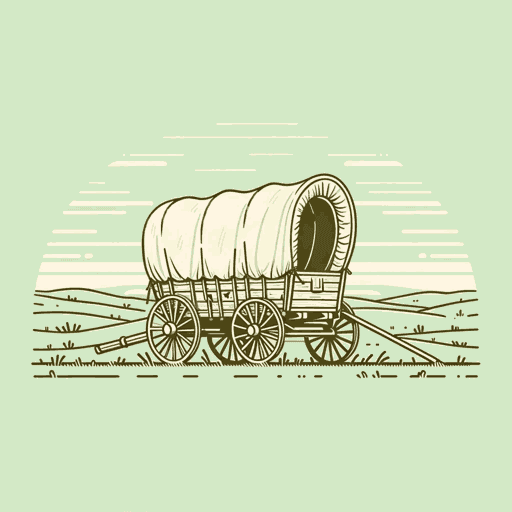
Little House on the Prairie
A modern alternative to SparkNotes and CliffsNotes, SuperSummary offers high-quality Study Guides with detailed chapter summaries and analysis of major themes, characters, and more. For select classroom titles, we also provide Teaching Guides with discussion and quiz questions to prompt student engagement.
Summaries & Analyses
Quizzes
NEWReading Tools
Games
Chapters 15-20Chapter Summaries & Analyses
Content Warning: This section of the guide features depictions of racism.
Chapter 15 Summary: “Fever ’N’ Ague”
In late summer, Ma, Laura, and Mary spend time in the creek bottoms so Ma can pick blackberries to dry for the winter. Laura and Mary begin to feel feverish and lethargic, and Pa and Ma quickly fall ill too. Before long, the entire family is sick in bed, and Laura passes in and out of a feverish delirium. She wakes up once to find Mary begging for a drink of water, and Pa and Ma so sick that they can’t get up. Laura struggles across the room to get Mary a ladleful of water, then falls back into bed. Eventually, she sees a Black man standing over her, giving her a medicinal powder, and she is able to rest after that. She wakes up, weak but not as feverish, to find a neighbor woman, Mrs. Scott, in the house taking care of the family. She takes care of them until they’re healthy enough to get out of bed. She says that the Black man’s name is Dr. Tan and that he takes care of the local Indigenous people. He was passing by when Jack waylaid him, dragging him into the house to reveal the sick family. Dr. Tan comes back and gives the family more medicine, which they continue to take.
The family improves, but everyone remains weak for a while. Pa builds Ma a rocking chair while he recovers. Mrs. Scott had said that all the settlers were sick with the fever, and that it came from eating the watermelons someone had grown in the creek bottoms. When he’s feeling better, Pa goes and picks a watermelon, despite Mrs. Scott’s warning, saying that he thinks the fever comes from “breathing the night air” (197) and that he craves a cold watermelon so much that he’d eat it even if he “knew it would give me chills and fever” (198). He does have a mild relapse, but so does Ma, even though she refuses to eat the watermelon herself or allow Laura or Mary to have any. At the end of the chapter, Wilder comments that in those days, no one knew that the illness was malaria and was caused by mosquitos.
Chapter 16 Summary: “Fire in the Chimney”
Summer begins to turn to fall, and Pa prepares to go to Independence for supplies, now that the weather is cool enough not to stress the horses on the long trip. While he’s out hunting one day before he goes, a fire starts in the top of the house’s homemade chimney, the top of which is made out of wood. Ma leaves Carrie with Mary in the rocking chair and runs outside to fight the fire. Laura runs out after her and sees Ma beating the fire with a stick. She tries to help Ma, but is told to go back inside, since burning wood is falling down around the chimney.
Laura goes back inside and sees that Ma’s firefighting efforts are knocking burning sticks from the chimney down onto the hearth and into the room. A burning log rolls near Mary’s skirts, and Mary is characteristically paralyzed with fear. Laura pulls the rocking chair away from the log, saving Mary and Carrie from being burned. Ma eventually beats down the fire and comes back inside, praising Laura’s bravery and presence of mind to drag her sisters out of harm’s way. When he comes home, Pa repairs the chimney with less flammable material and gets ready for his trip to town the next day.
Chapter 17 Summary: “Pa Goes to Town”
Pa goes to town and is gone for four days. It’s cold and windy on the prairie, so Laura and Mary stay inside with Ma and Carrie. Everyone feels forlorn without Pa, including Jack, who patrols the house and stable. Mr. Edwards comes by every day to do the outside chores—Pa stopped on his way to town and asked him to do so. Jack repeatedly corners Mr. Edwards on the family’s woodpile, which makes Mr. Edwards in awe of Jack’s guard-dog abilities.
Mrs. Scott comes to visit one day while Pa’s gone and visits with Ma. She tries to talk about a conflict between white settlers and Indigenous people referring to the incident as “the Minnesota massacre” (211). However,, Ma quickly stops Mrs. Scott from talking about it in front of the girls.
One day during Pa’s absence, Mr. Edwards says that Indigenous people are camping in sheltered spots on the prairie and asks if Ma is carrying a gun as a precaution against any conflict with them. Ma says that she has Pa’s pistol, but both she and Mr. Edwards do not think the Indigenous people will bother the house.
The night Pa is supposed to come home, he is later than expected, and Ma finally tells Laura and Mary to go to bed. In the middle of the night, Pa finally makes it home, and he tells them all how he had to keep getting down off the wagon to knock frozen mud from its wheels. He has bought sugar, cornmeal, nails, and panels of window glass for the house’s windows. Everyone is overjoyed with the supplies, and to have Pa home again.
Chapter 18 Summary: “The Tall Indian”
The family soon realizes that their house is built alongside a pathway that is heavily used by the local Indigenous people, and they see riders on horseback going by frequently. One day, an Indigenous man comes into the house while the whole family is there, and Ma feeds both him and Pa. Then, the two men smoke together. The man tries to talk to Pa, but Pa thinks the other speaks French, which he doesn’t understand. The man eventually gets up and leaves, and the family later learns that his name is Soldat Du Chêne. Another day, Laura sees Du Chêne point a gun at Jack, who is guarding the trail and won’t back down, to try and get the dog to move. Pa always chains Jack to the house or the stable after that. In addition to the settlers’ anxiety over the presence of Indigenous people, they also worry about the nearby horse thieves who steal Mr. Edwards’s horses.
On another day, two unfriendly Indigenous men come into the house and take cornmeal and tobacco. They almost steal the furs that Pa has been collecting but decide to leave them at the last minute. Ma is relieved that the men didn’t take the furs, because the family needs to sell them next spring in order to buy a plow and seeds for their farm.
Chapter 19 Summary: “Mr. Edwards Meets Santa Claus”
It’s nearing Christmas Day, and Laura and Mary are anxious because it hasn’t snowed yet; they think that Santa will only be able to visit them if there’s snow. The weather has been rainy, and the creek near the house is almost overflowing. They invited Mr. Edwards to Christmas dinner with the family, but everyone knows that he won’t be able to cross the creek to their house. Everyone is discouraged, though Pa has gotten them a big wild turkey to eat. Ma hangs Laura and Mary’s stockings on the mantel on Christmas Eve, although they don’t expect to have any presents in them.
The whole family is surprised when Mr. Edwards shows up at their house early on Christmas morning with gifts from “Santa” for Laura and Mary. He tells them that he met Santa in Independence, and Santa asked Mr. Edwards to deliver the presents since he knew he wouldn’t be able to get over the creek himself. Mr. Edwards carried everything in a bundle on his head and waded through the creek, which was so high the water reached to his neck. The family is delighted, and Laura and Mary are ecstatic with their gifts—each gets a new tin drinking cup, a peppermint candy stick, a heart-shaped cake with white sugar on top “like tiny drifts of snow” (249), and a new penny. Ma and Pa are grateful to Mr. Edwards for his kind ruse of the Santa story, though the child Laura only notes that “Pa and Ma and Mr. Edwards acted as if they were almost crying, Laura didn’t know why” (251). The family and their guest enjoy turkey, roasted sweet potatoes that Mr. Edwards brought, preserved berries and little cakes, and everyone is cheered.
Chapter 20 Summary: “A Scream in the Night”
What sounds like a woman’s scream outside in the night awakens the family. Pa gets dressed and goes over to the Scotts’ house, thinking that it came from there, but he finds the house quiet and dark. Embarrassed by his mistake, he starts back for home and discovers that the scream came from a panther up in a tree by the creek. He hurries home and vows not to rest until he kills the panther. He hunts it for a few days straight and finally meets with an Indigenous man who pantomimes the news that he has shot the panther. Pa comes home relieved.
Chapters 15-20 Analysis
In these chapters, Dr. Tan, the Black doctor who treats the Ingalls family for their malaria, is portrayed in a more positive manner, unlike Wilder’s derisive and dehumanizing descriptions of the many nameless Indigenous people featured in the book. This shift is due to the fact that Dr. Tan saves the family’s lives, but even so, the young Laura’s ostensibly lighthearted descriptions also betray the racism and sense of “othering” that influence her learned prejudices. As the narrative states, “Laura would have been afraid of him if she had not liked him so very much” (191). In this passage, the reason for her would-be fear is never stated, implying that Dr. Tan’s race would be more than reason enough for Laura to feel fear. Thus, although Laura takes pleasure in his “rolling, jolly laugh” and the family urges Dr. Tan “to stay longer,” this more positive portrayal of a minoritized character is fraught with unspoken and unexamined biases (192). Similarly, later in the book, Pa grows to respect the Osage leader Soldat Du Chêne because of his service to the white settlers in preventing a massacre, but his respect is clearly contingent upon the man’s willingness to protect white settlers from the reported hostilities of Indigenous people—a fraught topic that the narrative declines to critique or examine. Thus, only minoritized characters like Dr. Tan and Soldat Du Chêne, who actively help the white settlers, are praised in Wilder’s narrative, while all those who do not help white people are derided.
While these misconceptions remain persistent throughout the novel, Wilder’s vivid descriptions of the challenges and conflicts that the family experiences nonetheless provide a realistic understanding of the many practical issues that awaited white settlers during this era. The fever, which brings them all near death, reveals how vulnerable they are, and even Mrs. Scott remarks that “It’s a wonder you lived through” and “What might have happened if Dr. Tan hadn’t found them, she didn’t know” (192). The panther also symbolizes the unknown, lurking dangers of the prairie—as this is a predator that both Indigenous Americans and the white settlers fear. Even something as seemingly trivial as the scene in which Santa Claus is not able to visit reveals that the harsh landscape itself threatens to disrupt the Ingalls family’s cultural traditions, as well as the accompanying sense of identity that such traditions can bestow.

Get in-depth, chapter-by-chapter summaries and analysis from our literary experts.
- Grasp challenging concepts with clear, comprehensive explanations
- Revisit key plot points and ideas without rereading the book
- Share impressive insights in classes and book clubs