Naming and Necessity
Naming and Necessity
A modern alternative to SparkNotes and CliffsNotes, SuperSummary offers high-quality Study Guides with detailed chapter summaries and analysis of major themes, characters, and more.
Summaries & Analyses
Quizzes
NEWReading Tools
Themes
Rigid Designation as an Alternative to Descriptivism
In Naming and Necessity, Saul Kripke fundamentally challenges the long-dominant descriptivist theory of names, a view advanced by Gottlob Frege and Bertrand Russell that holds that a proper name is synonymous with a definite description or a cluster of descriptions. Kripke argues against this by introducing the concept of “rigid designators” that refer to the same object in every possible world. He posits that proper names function as rigid designators and that this model better explains how language works, especially in contexts involving counterfactuals and modal statements. By demonstrating that a name’s connection to its referent is more direct and stable than any associated description, Kripke dismantles the descriptivist framework and asserts a causal-historical chain of reference.
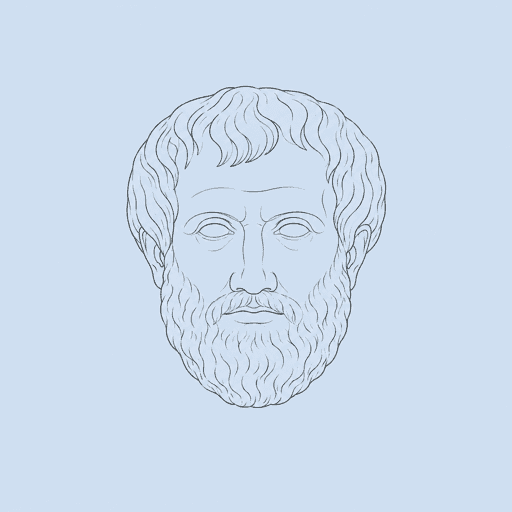
The core of Kripke’s argument lies in the intuitive way we evaluate statements about counterfactual situations. He uses the example “Aristotle was fond of dogs” (6). According to the rigidity thesis, this statement is true of a counterfactual world if and only if the specific man, Aristotle, would have been fond of dogs in that world. A descriptivist theory, by contrast, might analyze “Aristotle” as synonymous with a description like “the last great philosopher of antiquity” (6). In a possible world where Plato had a different, more brilliant student who overshadowed Aristotle, that other person would be the last great philosopher. The descriptivist analysis would then incorrectly make that other person’s fondness for dogs the relevant issue for the truth of the statement about Aristotle. This thought experiment reveals that the name “Aristotle” sticks to one individual across all possible scenarios, whereas the referent of the description can change. This stability is the hallmark of a rigid designator, and it reflects a fundamental aspect of how proper names are used.
Kripke further shows that descriptivism struggles to account for modal statements, such as “It might have been the case that Aristotle was not a philosopher” (13). On a descriptivist account, this statement might translate to the seemingly contradictory claim, “It might have been the case that the greatest philosopher of antiquity was not a philosopher” (13). By identifying “Aristotle” as a rigid designator, the statement instead considers a possible world where that particular man, Aristotle, chose a different path in life. Our ability to speak meaningfully about what historical figures might have done demonstrates that their names refer to them independently of the achievements we associate with them. The properties commonly used to identify a person are often contingent, not essential, and a theory of reference must be able to accommodate this fact.
Finally, Kripke rejects attempts to save descriptivism by arguing that the phenomena he describes can be explained by scope distinctions by treating names as nonrigid designators that are always given wide scope over modal operators. Kripke points out that the issue of rigidity applies even to simple, non-modal sentences where no scope distinctions are possible. The central question concerns a sentence’s truth conditions with respect to counterfactual situations, a matter that exists independently of whether modal operators appear in the sentence. He asserts that “we have a direct intuition of the rigidity of names” (14), which cannot be reduced to a linguistic convention about scope.
Identity Truths as Necessary A Posteriori
Kripke’s Naming and Necessity challenges the traditional philosophical alignment of necessary truths with a priori knowledge and contingent truths with a posteriori knowledge. He establishes a new category of statements: the necessary a posteriori. These are truths that hold in all possible worlds but can only be discovered through empirical investigation. Kripke argues that identity statements involving two rigid designators fall into this category, transforming our understanding of what it means to discover a scientific or factual identity. By separating metaphysical possibility from what is knowable through reason alone, he demonstrates that empirical inquiry can unveil the essential, unchangeable structure of reality.
The classic illustration of a necessary a posteriori truth is the identity statement “Hesperus is Phosphorus” (20). Ancient astronomers empirically discovered that the heavenly body seen in the evening (Hesperus) and the one seen in the morning (Phosphorus) were, in fact, the same planet, Venus. Kripke argues that since “Hesperus” and “Phosphorus” are proper names, they function as rigid designators, referring to the planet Venus in every possible world. The statement “Hesperus is Phosphorus” therefore asserts that Venus is identical to itself, which is a necessary truth. Yet knowledge of this identity is not a priori since it was an astronomical discovery. Kripke explains the illusion of contingency by distinguishing the metaphysical facts from our epistemic situation. We can imagine being in a qualitatively identical epistemic situation and discovering that two different celestial bodies occupied those positions. However, it would be a different scenario involving different objects or different names since the rigid designators must always refer to Venus.
Kripke extends this logic from proper names to terms for natural kinds and phenomena, arguing that scientific discoveries express necessary identities. Statements like “Water is H₂O” or “Heat is the motion of molecules” are not contingent truths (99). The terms “water” and “heat” are rigid designators for a particular substance and a physical phenomenon. While we might initially fix their reference through contingent properties (e.g., water as the tasteless, odorless liquid in rivers; heat as the phenomenon causing a certain sensation), science discovers their essential nature. Once it is discovered that the essence of water is its molecular structure, H₂O, this identity holds in all possible worlds. A substance with the appearance of water but a different chemical makeup would be a different substance, or “fool’s water.” Thus, the scientific identification is a necessary truth discovered a posteriori. By establishing the category of the necessary a posteriori, Kripke provides a philosophical framework that accords metaphysical weight to empirical science.
Essence and the Necessity of Origin
In Naming and Necessity, Kripke revives the classical philosophical concept of essence, arguing against the modern tendency to view all of an object’s properties as contingent. He posits that certain properties are essential to an object’s identity, meaning the object could not exist without them. This claim, known as de re modality (modality of the thing), asserts that necessity is a feature of objects themselves, rather than of our statements about them. Kripke identifies an object’s origin and its fundamental substance as examples of essential properties. These properties are metaphysically fixed, constraining what an object could have been across all possible worlds and making substantive modal claims intelligible.
Kripke’s argument for essence centers on the necessity of origin. He asks whether a particular person, Queen Elizabeth II, could have been born to different parents, such as the Trumans. While we can imagine a world where the Trumans had a daughter who became the Queen of England and resembled Elizabeth, Kripke insists that this child would not be the same person. He argues that originating from a particular sperm and egg is an essential property of an individual’s identity. Anything with a different biological origin would be a different person, regardless of superficial similarities. He extends this principle to inanimate objects, using the example of a table made from a specific block of wood. He contends that “anything coming from a different origin would not be this object” (113). An identical-looking table made from another piece of wood, or from ice, would be a different object altogether. For Kripke, origin is a necessary condition of an object’s identity across all possible worlds.
To defend these claims, Kripke distinguishes between metaphysical possibility and epistemic possibility. The common objection to essentialism is that we can easily imagine discovering that our beliefs about an object’s origin or substance are wrong. For instance, we could discover that the Queen was secretly adopted or that the table is a clever imitation made of ice. Kripke agrees that such discoveries are epistemically possible, meaning they are compatible with our prior evidence. However, this does not mean it is metaphysically possible for the Queen to have had different parents or for this table to have been made of ice. An empirical discovery would reveal that our original beliefs were mistaken. This distinction allows Kripke to maintain that science uncovers necessary truths about the world without denying the open-ended nature of empirical inquiry.

Unlock every key theme and why it matters
Get in-depth breakdowns of the book’s main ideas and how they connect and evolve.
- Explore how themes develop throughout the text
- Connect themes to characters, events, and symbols
- Support essays and discussions with thematic evidence