Nightmares!
A modern alternative to SparkNotes and CliffsNotes, SuperSummary offers high-quality Study Guides with detailed chapter summaries and analysis of major themes, characters, and more.
Summaries & Analyses
Quizzes
NEWReading Tools
Themes
Content Warning: This section of the guide includes discussion of bullying, mental illness, illness, and death.
Finding the Courage to Face One’s Fears
In the world of Jason Segel and Kirsten Miller’s Nightmares!, fear is a tangible force that can bleed from dreams into reality, giving anxieties monstrous form. The novel argues that fear derives its power from avoidance and concealment, portraying inner turmoil as literal monsters that weaken when confronted directly. Through Charlie’s journey into the Netherworld, the narrative demonstrates that courage is not the absence of fear but the active process of facing one’s vulnerabilities. This confrontation, the book suggests, is the only way to reclaim control over one’s life and dissolve the power that nightmares hold.
The initial futility of Charlie’s attempts to combat his nightmares highlights the internal nature of fear. Believing the witch who haunts his sleep is an external threat, he erects physical barriers, blocking his doors with dozens of cardboard boxes every night. The barricades are a manifestation of his avoidance, an attempt to literally wall off his anxiety. However, his true battle is psychological, and by focusing on external defenses, Charlie fails to address the root of the problem, allowing his fear to grow more powerful with each passing night.
The novel expands upon this idea by revealing that all nightmares are merely disguises for deeper, more personal insecurities. This concept is articulated by the gorgon Meduso, whose mother Medusa explains that a nightmare’s power is tied directly to the dreamer’s fear. As Charlie’s friends begin experiencing their own nightmares, this pattern becomes clear. Alfie’s recurring dream of a physical fitness exam is not about athletics but his terror of being laughed at and made to feel small. Rocco’s nightmare of failing tests masks his anxiety that he isn’t smart enough to aid the people he cares about. Paige’s intense fear of the dark is a manifestation of a deeper fear of inheriting her mother’s mental illness. In each case, the monstrous or stressful scenario is a symbolic representation of a core vulnerability. The nightmares lose their power only when the characters identify and confront the true fear behind the mask.
Ultimately, Charlie’s victory is achieved not by defeating the witch, but by confronting the true source of his terror, his unresolved grief over his mother’s death. The witch herself is a secondary threat, a stand-in for a much greater pain. She even admits that she is not his “worst nightmare.” The climactic moment of the story is not a physical battle but a painful and necessary emotional release in which Charlie must finally say goodbye to his mother. By facing this profound loss, he drains the Netherworld of its power over him and causes the portal to close, a courageous act that protects his town and promotes his own psychological healing. Segel and Miller argue that true strength is found not in fighting monsters, but in the courage to face the sorrows and insecurities that create them.
Redefining Family After Loss
Following the death of his mother, 12-year-old Charlie Laird finds his world upended by loss and the arrival of a new stepmother. Nightmares! uses this classic blended-family tension to explore how unprocessed grief can poison relationships and prevent healing. The novel portrays Charlie’s anger and suspicion as direct symptoms of his refusal to accept his mother’s death, illustrating that a new family cannot be built until the loss of the old one is properly mourned. Through the contrasting experiences of Charlie and his younger brother, the narrative demonstrates that creating a new sense of “home” requires confronting grief and accepting love, even when it appears in an unfamiliar form.
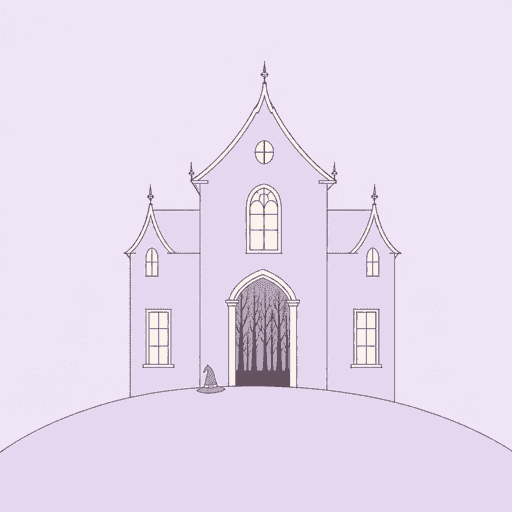
Charlie’s unresolved grief leads him to resent Charlotte. Although the boy is angry at his deceased mother and his grieving father, he channels these negative feelings toward Charlotte instead because she’s the most visible proof of his changed life and seems like a safer target. He labels Charlotte a “stepmonster” and interprets her eccentricities, such as her herbal remedies, her purple mansion, her unusual laugh, as proof of sinister intent. This perception is a defense mechanism; by casting Charlotte as a villain, Charlie can justify his resistance to her presence and protect his mother’s memory from what he feels is replacement. During a confrontation with his father, he declares, “Charlotte isn’t my family” (51), revealing his core belief that this new unit is illegitimate. His hostility is not a reaction to any genuine malice from Charlotte but a projection of his own inner pain, a clear sign that his unresolved grief isolates him from his remaining family.
The novel emphasizes this point by contrasting Charlie’s struggle with his brother’s more straightforward acceptance of Charlotte. Eight-year-old Jack, who has fewer memories of his mother, is more open to Charlotte’s affection. He gives her a mug that says, “World’s Best Stepmom,” proudly shows her drawings to his classmates, and seeks comfort from her. While his acceptance is simpler, it’s not without complexity: He accidentally calls Charlotte “mom” before correcting himself, showing he is actively navigating the new family structure. The difference between the brothers’ relationships with their stepmother highlights that Charlie’s intense opposition is a personal battle with loss, not an objective response to Charlotte. On the other hand, Jack’s ability to form a bond with her demonstrates that a new family is possible, but only for those emotionally open to it.
Charlie’s transformation from a resentful outsider to an integrated family member only occurs after he confronts his loss. The resolution of his conflict is a heartbreaking conversation with the nightmare version of his mother in which he finally says goodbye. This emotional catharsis is the key that unlocks his healing. Afterward, his perception of his home and family shifts dramatically. He willingly spends time with Charlotte in her tower studio, collaborates with her on her book, and, in a moment of profound change, acknowledges that the purple mansion is his home. This final acceptance shows that redefining family is not about replacing what was lost, but about making room for new relationships to grow alongside memories of what was lost.
Appearances Can Be Deceiving
In Nightmares!, the line between appearance and reality is constantly blurred, creating a world where monstrous-looking figures can be benevolent and everyday authority figures can be tyrannical. The novel consistently challenges the reliability of first impressions, arguing that true understanding requires looking beyond superficial traits. From a “stepmonster” who is actually a guardian to terrifying nightmares that are merely symbolic disguises for common insecurities, the narrative insists on the importance of discovering the inner truth hidden behind misleading exteriors. This theme suggests that the greatest dangers—and the greatest allies—are often not what they seem.
The most prominent example of this theme is Charlie’s misjudgment of his stepmother, Charlotte. Based on a collection of superficial clues, including her orange hair, her black clothes, and the “dreadful shade of purple” of her home (1), Charlie concludes that she is a wicked witch. He spends the first half of the book gathering evidence to support this conclusion, viewing every quirky action as proof of her alleged evil nature. However, the narrative dismantles his perception, revealing that her supposed “lair” is an artist’s studio, her “potions” are medicinal herbs, and her connection to the Netherworld is that of a guardian, not a villain. By the end, Charlie learns that the woman he saw as a threat was secretly trying to protect him all along. This thematic arc teaches the importance of looking past appearances to judge a person’s true character.
The book extends this idea to the very nature of nightmares themselves, defining them as symbolic disguises for deeper fears. In a poem Charlotte wrote, she explains, “Those creatures are just your worst fears in disguise. / What truly scares you might be a surprise” (123). This concept is proven repeatedly as Charlie’s friends confront their own bad dreams. The monstrous forms these fears take, such as a stressful exam or a public failure, are merely the surface-level appearance of the problem. To overcome the nightmare, each character must ignore the frightening disguise and address the vulnerable, hidden truth beneath it.
In addition, the novel shows that evil can also adopt a deceptive appearance, hiding its monstrous nature behind a mask of normalcy. President Fear, the tyrannical ruler of the Netherworld, appears in the Waking World as Principal Stearns, a bureaucratic authority figure. His disguise is not a fantastical monster but a familiar type of disciplinarian, which makes his evil more insidious. He uses the ordinary power of a school principal to torment students, feeding on their fear in a way that goes undetected by other adults. This duality demonstrates that the most dangerous threats may not announce themselves with fangs and claws but can operate from within familiar systems, using a respectable facade to conceal a truly monstrous agenda. Ultimately, the novel cautions that one must be willing to question every surface, as both goodness and evil often wear convincing disguises.

Unlock every key theme and why it matters
Get in-depth breakdowns of the book’s main ideas and how they connect and evolve.
- Explore how themes develop throughout the text
- Connect themes to characters, events, and symbols
- Support essays and discussions with thematic evidence