Nightmares!
A modern alternative to SparkNotes and CliffsNotes, SuperSummary offers high-quality Study Guides with detailed chapter summaries and analysis of major themes, characters, and more.
Summaries & Analyses
Quizzes
NEWReading Tools
Chapters 8-14Chapter Summaries & Analyses
Content Warning: This section of the guide includes discussion of bullying, mental illness, illness, and death.
Chapter 8 Summary: “Midnight Snack”
At dinner, the school librarian, Mrs. Russell, calls to praise Charlotte’s writing after Jack shared a page of her story with his classmates. Mrs. Russell offers to help Charlotte find a publisher, but Charlotte is unsettled by the suggestion. When Jack slips up and calls her “mom,” Charlie is irritated while Charlotte softens. She whispers a cryptic warning to Jack that knowing a little can be a dangerous thing. Andrew then delivers the news that Principal Stearns called about Charlie sleeping in class and wants him evaluated by the school psychologist for ADD. Charlie explodes, directing his anger at Charlotte. When he shouts that she isn’t his mother, Andrew orders him to his room. On the way out, Charlie notices Charlotte staring up toward her tower.
That night, Jack visits Charlie’s room and leaves him a page from Charlotte’s binder with a poem about standing up to monsters and witches. After Jack leaves, Charlie climbs into an empty cardboard box, having lost the will to fight. He can’t sleep until he hears voices and footsteps in the hallway. As he watches the witch and her cat enter his room, he realizes the witch’s cat and Charlotte’s cat are both named Agatha. When they can’t find him, the witch announces that they’ll take Jack instead. Charlie bargains with the witch, offering himself in his brother’s place. She agrees on the condition that Agatha gets a few of his toes, and Charlie leads them toward the bathroom, intending to lock them inside using a skeleton key kept on the outside of the door. The key is gone, however. The witch produces it dramatically and breaks the deal, declaring she’ll take Jack after all. Charlie throws himself at the witch and pulls off her hat, revealing bright red curls. She shoves him into the bathroom and locks him in.
The door swings open moments later, revealing Charlotte. As Charlie takes in her red hair, he connects details like the potions, Charlotte’s drawings, and the witch’s knowledge of the bathroom key, and he concludes Charlotte is the witch. He pushes past her, barricades himself in Jack’s room, and spends the rest of the night there.
Chapter 9 Summary: “Carried Away”
The next morning, Charlie notes Charlotte looks pale and tired. She tries to speak with him privately, but he refuses. Having already tried to call the police only to be dismissed when he mentioned a witch, he resolves to guard Jack personally. In the car, Charlie crowds his brother so aggressively that Andrew tells him to stop. When their father announces that Charlotte will pick Jack up after school that afternoon, Charlie tries to claim Jack has plans with him, but Andrew insists.
At school, Charlie spots Principal Stearns questioning Jack in the hallway about Charlotte’s stories. Charlie interrupts and invents a plot about a foul-smelling princess to make Charlotte’s writing sound unappealing, and the principal loses interest and leaves. Furious, Jack kicks Charlie in the shin and says he no longer wants him as a brother. Teachers and the principal hover near Charlie for the rest of the day whenever he tries to speak with his friends. Just before the final bell, he manages to tell Paige to gather the others outside after school.
Charlotte arrives looking ordinary and cheerful and invites Charlie and his friends to join her and Jack for ice cream. Charlie fabricates a prior obligation and tries to take Jack with him, but Jack refuses and goes with Charlotte. When Charlie snaps at Charlotte and calls her a witch in front of everyone, she deflects by swinging a laughing Jack over her shoulder and heading off. Charlie’s friends pull him away and insist he explain everything at their secret gathering spot, the bunker.
Chapter 10 Summary: “The Bunker”
The bunker is a hollow space beneath a giant pine near the town’s library. The four friends have two rules about their secret hideout: Only the truth may be spoken inside, and nothing said there can be repeated. Charlie tells his friends he believes Charlotte is a witch cooperating with the nightmare witch, who plans to eat Jack. Rocco admits he’s been having his own nightmares featuring a figure he suspects is Principal Stearns keeping him trapped in seventh grade forever. Alfie adds that he has bad dreams of Stearns forcing him through a fitness exam he can never pass. Charlie explains that sleeping spirits can travel to the Netherworld and describes the previous night’s waking confrontation with the witch. Alfie remains skeptical but is unsettled.
The group decides on a surveillance mission to the ice cream parlor and Hazel’s Herbarium, which sit side by side two blocks away from the library. Rocco scouts both windows and signals urgently from the herbarium. Inside, the group watches Jack and Charlotte sharing ice cream and laughing. Paige tells Charlie gently that Charlotte doesn’t look like a witch. His friends, satisfied that Jack is safe, ask to go get ice cream. Feeling defeated, Charlie tells them to do whatever they want and walks home alone.
Chapter 11 Summary: “The Intruder”
Charlie arrives at the empty house, intending to search Charlotte’s tower studio for proof she’s dangerous. He hears a crash from above followed by heavy footsteps, then silence. He goes up and finds the room ransacked. A desk drawer has been broken open, and Charlotte’s drawings are scattered across the floor. Among them is a picture of the family’s house rendered entirely in black, captioned “The Netherworld Mansion,” which he pockets as evidence the Netherworld is real. He also finds a drawing of his mother as a small girl standing her ground against a clown. A poem on the back instructs the reader to recognize they’re dreaming and understand that nightmares are fears in disguise. Before Charlie can think further, Jack and Charlotte return. He stuffs the drawings back into the binder, shoves it in the drawer, and ducks under the desk just as Jack enters. Hidden in the warmth beneath it, Charlie drifts off.
In the nightmare, he’s in the witch’s dungeon. He overturns the cauldron onto her, but she survives and mocks him for thinking that she would melt. Agatha blurts out that they plan to eat Jack. The witch and cat tie Charlie to the cot and leave. He forces himself awake to find it is now night. Slipping downstairs, he overhears his father reporting him missing to the police. Then he hears the tower door creak shut and footsteps climbing the stairs. Rushing back up, Charlie finds one wall of the tower has dissolved, replaced by the dark forest from his nightmares. In the distance, the witch is running through the trees with a small, bound figure over her shoulder. Charlie follows her.
Chapter 12 Summary: “Clown Down”
Charlie chases the witch into the Netherworld forest but quickly loses her in the darkness. He wades through foul-smelling mud, losing his shoes to brambles and mire. He stops, bleeding, lost, and sensing something watching him. Knowing he can’t leave without Jack, he presses on.
A swarm of giant carrion beetles seems to guide him through the forest until he reaches a cottage perched high in the treetops. Agatha appears on the porch and tells him that Jack needs to be fattened before she and the witch eat him. She also reveals that, unlike Charlie’s previous dream visits, his body has physically crossed through the portal this time, which means he’s trapped in the Netherworld. She adds that a “very important gentleman” has been waiting to meet him. Charlie recognizes the cottage as the walking, chicken-legged hut from a folk tale that frightened him when he was little. The house begins chasing him.
Before the hut can crush him, an enormous clown driving a rusted yellow convertible careens through the trees and lassoes the cottage’s legs. Agatha screams at the clown, who’s named Dabney, and Charlie recognizes him from Charlotte’s illustrations. Dabney urges Charlie to take the car and escape. The cottage seizes the clown, but Dabney shouts that nightmares like him never die, and Charlie speeds away.
Chapter 13 Summary: “Meduso”
Driving Dabney’s car, Charlie passes through other people’s nightmares. He sees gargoyle-patrolled castles, wolf-chased roads, and a volcanic landscape with dinosaurs but finds no sign of Jack or the witch’s tower. The car, a large wind-up toy, finally stalls in a ruined version of Cypress Creek. A polished voice from a sewer grate warns him that eyeless, razor-toothed rabbits are approaching. Charlie drops in and meets Meduso, a neatly dressed, snobbish gorgon who wears dark sunglasses to keep from turning people into stone. Meduso lifts his hat to reveal three snakes growing from his head, Larry, Barry, and Fernando. Fernando is sympathetic toward Charlie, Larry is irritable, and Barry is silent.
Meduso explains he was sent to help Charlie return to the portal inside the mansion, which is the only passage between the Netherworld and the Waking World. Charlie refuses to leave without Jack. After the boy describes the witch, the trap, and the unnamed gentleman behind it all, Meduso and his snakes grow visibly alarmed and reluctantly agree to help. They travel through the sewer and emerge in Charlie’s personal nightmare territory. A long black hearse that Meduso identifies as “a Netherworld limousine” passes through the forest (158), and the gorgon forces Charlie to hide. Fernando reveals the passenger is the powerful figure who wants to meet Charlie. Believing that person knows where Jack is, Charlie steps out onto the road.
Chapter 14 Summary: “The Gladiator”
Charlie follows the limousine to a stadium. He and Meduso climb a tree to watch as a nine-foot-tall man in a black suit emerges. Meduso identifies him as President Fear, the self-appointed ruler of the Netherworld. The president hauls a bound boy from the trunk. The stadium is a full replica of the Colosseum, packed with a crowd of spectators and dozens of goblins who throw rotten meat onto the arena floor.
Charlie and Meduso slip inside the arena. When Charlie gets a clear look at the captive below, he recognizes him as Alfie. Meduso explains that fear is contagious and that Charlie’s unresolved nightmares likely spread to his friends, making him responsible for Alfie being there. When President Fear addresses the crowd, Charlie recognizes his voice and realizes that he’s Principal Stearns. Meduso dismisses the idea until Charlie points out that the witch has already crossed into the Waking World.
President Fear reveals that Alfie is failing gym, takes his glasses, and forces him to run before releasing a lion, a tiger, and a bear into his path. Charlie tells Meduso he’s going to help his friend. Meduso warns that Alfie must face his own fears or they’ll only worsen. Charlie refuses to stand by, and the animals in the arena give him a plan.
Chapters 8-14 Analysis
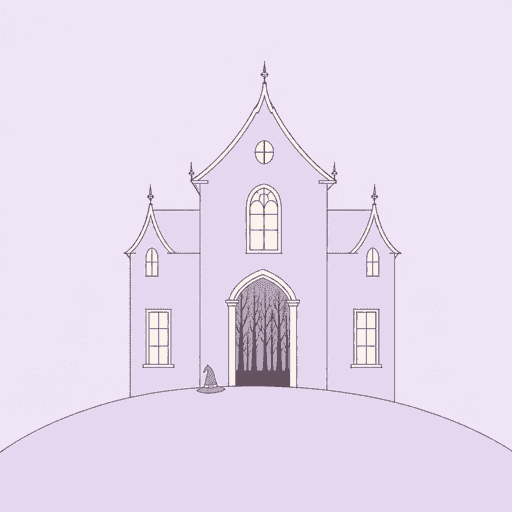
In these chapters, the suspense escalates and the narrative shifts from psychological hardships to a struggle for survival as the boundary between the Waking World and the dream realm collapses. The purple mansion serves as the physical and symbolic threshold for this transition. Charlie attempts to combat his anxieties by erecting barriers, hiding inside empty cardboard boxes to keep the witch at bay. These defenses fail completely when he discovers that one wall of Charlotte’s tower studio has dissolved into a dark forest, and the Meduso informs Charlie that his physical body has crossed over and that the surrounding environment is his personal terror-tory. This environmental shift forces Charlie to navigate a tangible version of his fears, establishing that his internal anxieties can no longer be avoided through physical barricades or mental compartmentalization.
Charlie’s descent into the Netherworld is catalyzed by his deteriorating relationships, illustrating the theme of Redefining Family After Loss. Unable to process the death of his mother, Charlie projects his trauma onto his new stepmother and systematically alienates his remaining family members in the process. His anxiety manifests as a suffocating need to control his younger brother’s movements, culminating in an aggressive car ride and a public confrontation where he tries to drag Jack away from Charlotte. This obsessive hovering pushes Jack to declare that he doesn’t “want a brother like [Charlie] anymore” (103). Charlie’s hostility functions as a defense mechanism against further loss, yet it actively creates the familial fracturing he hopes to prevent. By contrasting Charlie’s intense suspicion with Jack’s willingness to bond with Charlotte, the authors underscore how unprocessed grief distorts a child’s perception of safety. Even when Charlie’s friends point out that Charlotte acts like an affectionate guardian, Charlie remains entrenched in his delusion. He can’t establish a new definition of family until he confronts the root of his panic, which his displaced anger toward Charlotte continually obscures.
In these chapters, Charlie’s struggles to make sense of his reality advance costumes and disguises as a motif of the theme of Appearances Can Be Deceiving. He builds a case against Charlotte based entirely on superficial evidence like her physical traits. This confirmation bias peaks when he wrestles with the witch in the hallway and knocks off her hat, revealing “[b]right red curls [that] bounced around the witch’s horrible green face” (91). Because Charlotte has the same hair, Charlie mistakenly concludes the two figures must be the same person. The Netherworld challenges the boy’s preoccupation with looks through benign figures that look monstrous. Dabney and Meduso possess terrifying exteriors, with the gorgon sporting snakes for hair and the clown possessing “bloodshot eyes” and “a leering red smile” (138), yet they act as Charlie’s protectors and risk their own safety to guide him through the dreamscape. This adds nuance to the novel’s portrayal of morality by showing that not all nightmares are malevolent and urges the reader to weigh people’s character by their actions rather than appearances.
Alfie’s nightmare expands the novel’s exploration of Finding the Courage to Face One’s Fears by demonstrating how anxieties gain strength through avoidance. Inside the nightmare Colosseum, President Fear exposes Alfie’s Waking World shame, his failing grade in gym class, and forces the boy to flee from wild animals without his glasses. When Charlie attempts to intervene, Meduso restrains him, cautioning, “Every time you run away from a nightmare, it gives your fear strength” (175). This principle dictates the supernatural mechanics of the Netherworld: The monsters are merely symbolic manifestations of personal insecurities, and they feed on the dreamer’s panicked retreats. However, Charlie realizes he can subvert the nightmare by applying Waking World logic to dream-world problems. Recognizing that Alfie’s extensive historical research would dictate the construction of his Colosseum, Charlie deduces that the animals entered the arena via trapdoors rather than magic. This realization asserts that fear can be reduced through reason and direct engagement. Although Charlie helps Alfie escape from the arena in this section, the boy must return later in the story, as Meduso warned. This authorial decision argues that, while a strong support system can make it easier to bear problems, an individual’s fears can only be resolved if they face them themselves.

Get in-depth, chapter-by-chapter summaries and analysis from our literary experts.
- Grasp challenging concepts with clear, comprehensive explanations
- Revisit key plot points and ideas without rereading the book
- Share impressive insights in classes and book clubs