Nightmares!
A modern alternative to SparkNotes and CliffsNotes, SuperSummary offers high-quality Study Guides with detailed chapter summaries and analysis of major themes, characters, and more.
Summaries & Analyses
Quizzes
NEWReading Tools
Character Analysis
Content Warning: This section of the guide includes discussion of bullying, mental illness, illness, and death.
Charlie Laird
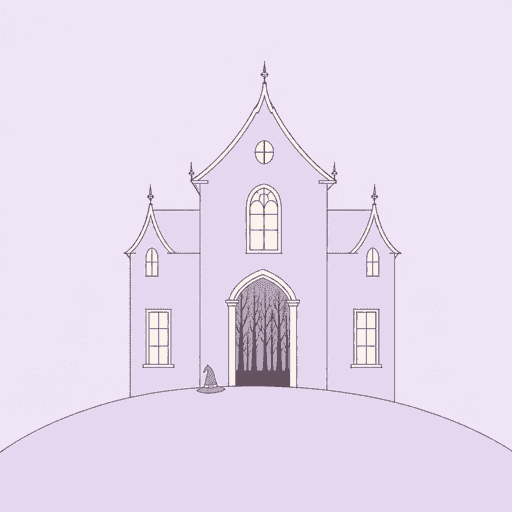
Charlie Laird is the 12-year-old protagonist of the novel, a round and dynamic character whose journey is defined by his struggle with unresolved grief. Following the death of his mother, Charlie is forced to move into a purple mansion with his father, his younger brother and his new stepmother, Charlotte. Unable to process his loss, Charlie projects his pain and fear onto Charlotte, whom he immediately distrusts and labels a “stepmonster.” His internal conflict manifests as terrifying nightmares that begin to cross over into his waking life. This supernatural element serves as a metaphor for how unaddressed trauma can destabilize a person’s reality, directly engaging with the theme of Redefining Family After Loss. Charlie’s initial response to his fear is to build physical barriers, barricading his bedroom doors with boxes every night in a futile attempt to control a threat that is ultimately internal. His journey from a boy isolated by grief to one who finds freedom by confronting his deepest fears is the novel’s core.
Charlie’s grief primarily manifests as fear and anger. He dreads erasure, both of his mother’s memory and of his own place within his changing family. This anxiety is personified by the witch in his nightmares, a figure whose threats to capture him mirror his real-world feeling of being trapped in an unwanted life. However, beneath this fear is a deep-seated protectiveness, which becomes his greatest strength. When the witch threatens his brother, Jack, Charlie’s focus shifts from self-preservation to self-sacrifice. He offers, “If I go with you now, will you promise to leave Jack alone?” (89), marking a critical turning point. It’s the first time he willingly confronts his nightmare, and he does so to protect someone he loves rather than to save himself. This act initiates his transformation, suggesting that courage is found in fighting for others. Complementing his fear is an anger he calls “the darkness” that causes him to be unkind to those around him. This anger is a defense mechanism, shielding him from the vulnerability of his sorrow. His father’s exasperated question, “What has turned you into such a monster?” (84), highlights the extent to which his grief has reshaped his identity, alienating him from the very family he’s afraid of losing.
Ultimately, Charlie undergoes a profound transformation by learning to confront the true source of his pain. His quest through the Netherworld forces him to understand that nightmares are merely “fears in disguise.” His greatest challenge is not defeating the witch or even President Fear but facing his worst nightmare, the memory of his mother and the necessity of saying goodbye. This symbolic act of acceptance is what finally grants him peace and closes the rift between the worlds, allowing both the main character and the setting to heal. By the end of the narrative, Charlie refers to the purple mansion as his home, signifying his acceptance of his new, blended family. His evolution from a fearful, angry boy into a courageous and empathetic young man illustrates the novel’s central message about Finding the Courage to Face One’s Fears. Charlie’s story illustrates that true strength lies not in building walls against pain, but in dismantling them to allow for healing and new connections.
Charlotte DeChant
Charlotte DeChant serves as a mentor figure for her stepson, Charlie, though her true role is initially obscured by his grief. When she’s introduced, her characterization is filtered entirely through Charlie’s suspicion, making her a primary example of the theme Appearances Can Be Deceiving. With her bright orange hair, black clothing, and a profession as an herbalist who concocts potions in the tower of a purple mansion, she fits Charlie’s archetype of a witch. Charlie’s internal “darkness” leads him to believe that her physical resemblance to the tormentor in his nightmares is proof of her malevolence. However, Charlotte remains patient and empathetic with her stepson, serving as a foil to Charlie’s volatility. She attempts to bridge the gap between them and demonstrates an understanding of his struggle that he isn’t ready to acknowledge yet.
As the narrative progresses, it’s revealed that Charlotte is not the villain of Charlie’s story but his secret guardian. She’s a hereditary portal protector, a role passed down from her ancestor Silas DeChant, and she uses her knowledge of herbs and the Netherworld to monitor the boundaries between worlds. In a link to the theme of Redefining Family After Loss, Charlotte reveals she was childhood friends with Veronica. She doesn’t seek to replace Charlie’s mother but to honor her memory by protecting her sons. Her role as a mentor is solidified when it’s discovered that she sent her own nightmare, the gorgon Meduso, to guide Charlie because she could no longer see the portal herself.
By the novel’s conclusion, Charlotte successfully navigates the transition from a suspected “witch” to a trusted maternal figure. Her resilience in the face of Charlie’s anger allows the family to move toward healing. The closing chapters show her collaborating with Charlie on a book about the Netherworld, signaling that they’ve bonded over their shared experiences and that she’s successfully integrated into his life. Charlotte represents the idea that a family redefined by loss can still be a place of safety, provided its members are willing to look past appearances and confront their own fears.
President Fear/Principal Stearns
President Fear is the primary antagonist, a round and static character whose villainy operates in both the Netherworld and the Waking World. His dual identity exemplifies the theme of Appearances Can Be Deceiving, showing that evil can disguise itself in mundane forms. In Cypress Creek, he is Principal Stearns, a towering, authoritarian figure who preys upon the students’ deepest insecurities. He targets Rocco’s academic anxieties and Alfie’s fear of being mocked, using his position of power to cultivate an environment of dread. His statement to Rocco, “If your grades don’t shape up soon, your parents are going to end up on my speed dial” (59), is a calculated threat designed to amplify a child’s ordinary stress into a genuine terror. This real-world torment creates the nightmares that President Fear then exploits in the Netherworld.
As the self-appointed leader of the Netherworld, Fear’s motivations extend beyond simple malice. He seeks to conquer the Waking World to ensure the eternal survival of nightmares, a goal driven by his own fear of obsolescence and death. His plan hinges on keeping the portal between the worlds open, which requires keeping Charlie in a perpetual state of terror: “Unless we keep him terrified, the doorway could close before we’re ready” (235). He treats fear as a resource to be managed, inventing the Terrorizer 3000 to monitor and manipulate human emotions. His methods are cruel and theatrical, as seen when he publicly humiliates Alfie in a Roman Colosseum, demonstrating his belief that fear is a tool for control as well as a source of entertainment. He represents a systematic, institutionalized form of fear that seeks to dominate and perpetuate itself, making him a far more insidious threat than a simple monster.
The Witch
The witch is the first major antagonist Charlie confronts and the primary inhabitant of his personal nightmare. As a flat character, she functions less as an individual and more as a personification of Charlie’s anxieties surrounding his new family. Her physical appearance, particularly her red curls, deliberately mirrors Charlotte’s, embodying Charlie’s subconscious fear that his stepmother is a malevolent force intent on replacing his mother. The witch’s goal in his nightmares is to trap him in a cage, a clear metaphor for how Charlie feels confined and isolated by his grief and his new home life. She derives her power directly from his emotional state. This connection establishes that she is a manifestation of his internal turmoil.
While she appears to be the story’s central villain at first, the narrative reveals that she’s merely an agent of President Fear. Her role is to manipulate Charlie and lure his physical body into the Netherworld, serving the president’s larger scheme to keep the portal open. This subordination diminishes her status as a mastermind and recasts her as a tool, a nightmare simply performing her function within a larger ecosystem of fear. Her final conversation with Charlie confirms this. She worries about being reassigned to a lesser job after her high-profile mission because her “heart just wasn’t in” tormenting Charlie (297), and she even contemplates retirement. This moment strips her of her menace, revealing her to be a creature bound by rules and routines. Ultimately, the witch represents the way personal, intimate fears can be exploited for more sinister, far-reaching purposes.
Alfie, Rocco, and Paige
Alfie Bluenthal, Rocco Marquez, and Paige Bretter are Charlie’s three best friends, who function as key supporting characters. They are round and dynamic, each undergoing their own journey of confronting fear. Together, they represent the power of friendship as a defense against terror. Each friend’s personal nightmare is a manifestation of a deep-seated insecurity, reinforcing the theme that nightmares are “fears in disguise” (243). Alfie, the “class genius,” is haunted by his failure in physical fitness exams, a fear that disguises his anxiety about being ridiculed and undervalued for his intellect. His triumph comes when he uses his intelligence to outsmart President Fear’s obstacle course, realizing his true strength lies in his mind. Rocco, the school’s star athlete, dreams of failing academic tests, which symbolizes his fear of not being smart enough to help his friends when physical strength is not enough. He overcomes this by devising a clever, non-academic solution to free the trapped children, proving that creativity is a valuable form of intelligence. Paige, the artistic and empathetic member of the group, is afraid of the Dark, a fear that represents her deeper terror of inheriting her mother’s mental illness. She conquers her nightmare by focusing on another’s distress, leading a younger child out of the darkness and demonstrating that compassion is a source of strength. The children’s collective loyalty to Charlie is instrumental to his success, and their individual arcs prove that fear is most effectively fought with the support of trusted friends who see beyond superficial weaknesses to the true strength within.
Jack Laird
Jack Laird, Charlie’s eight-year-old brother, is a flat but crucial character who motivates Charlie’s heroic journey. His ready acceptance of Charlotte and the new home acts as a foil to Charlie’s prolonged and painful resistance, highlighting that individuals process grief differently. Jack’s innocence and vulnerability are what ultimately compel Charlie to shift his focus from his own pain to his brother’s protection. The witch’s threat to kidnap and eat Jack is the inciting incident that forces Charlie to engage with the Netherworld actively rather than passively enduring his nightmares. Near the novel’s conclusion, Charlie’s realization that he himself is the “only […] person who could frighten Jack Laird” spurs the protagonist’s growth by forcing him to acknowledge the harm his grief and anger cause those closest to him (261). In the end, Jack’s fear of losing Charlie reopens the portal, facilitating the novel’s happy ending, demonstrating the restored bond between the two brothers, and cementing the novel’s focus on family.
Meduso
Meduso is a gorgon from the Netherworld who functions as a reluctant mentor and ally to Charlie. Initially introduced as a cynical, fastidious, and irritable figure, he’s sent by Charlotte to guide Charlie home. Meduso provides essential exposition about the rules of the Netherworld, explaining concepts like the portal and a personal “terror-tory.” Despite his grumpy demeanor, he’s secretly compassionate, a truth revealed by his mother, Medusa, who explains he “enjoys helping humans.” His character arc is one of the most significant among the supporting cast. Inspired by the children’s courage, he moves from a state of fear and self-preservation to one of self-sacrifice. His decision to retire from being a nightmare, knowing it may mean his end, and become Charlotte’s dream is a powerful act of bravery. Meduso’s transformation demonstrates that even nightmares can confront their fears and choose a different path.
Andrew Laird
Andrew Laird, Charlie’s father, is a flat character who represents the well-intentioned but often unseeing adult world. He struggles to connect with Charlie, misinterpreting his son’s deep-seated grief and fear as adolescent moodiness and rebellion. He pushes Charlie to move on and accept Charlotte, failing to understand the depth of the boy’s trauma. His inability to see the portal speaks to the barrier between the mundane reality of adults and the potent, magical world of a child’s inner emotional life. While he is a loving father, his frustration with Charlie’s behavior creates conflict by making Charlie feel isolated and misunderstood within his own family.

Unlock analysis of every major character
Get a detailed breakdown of each character’s role, motivations, and development.
- Explore in-depth profiles for every important character
- Trace character arcs, turning points, and relationships
- Connect characters to key themes and plot points