Nightmares!
A modern alternative to SparkNotes and CliffsNotes, SuperSummary offers high-quality Study Guides with detailed chapter summaries and analysis of major themes, characters, and more.
Summaries & Analyses
Quizzes
NEWReading Tools
Chapters 1-7Chapter Summaries & Analyses
Content Warning: This section of the guide includes discussion of bullying, mental illness, illness, and death.
Chapter 1 Summary: “The Stepmonster’s Lair”
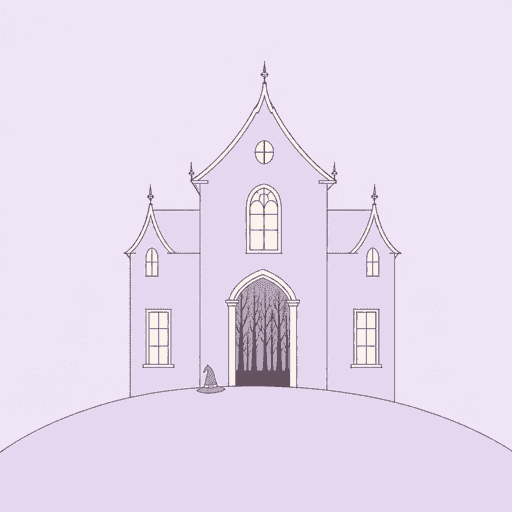
At five minutes past midnight, 12-year-old Charlie Laird stands at the window of a garish purple mansion on the highest hill in Cypress Creek. The building has a porch overrun with plants, and its roof is crowned by an octagonal tower. Charlie has lived in the mansion for three months, and three months of sleepless nights have left him pale and hollow-eyed. He can see his old family home from the window and envies the new family living there.
Each night, Charlie barricades the doors to his bedroom with unpacked boxes. He knows the boxes can’t stop his bad dreams, but the witch who visits him nightly feels dangerously real, and he takes her threats to drag him away seriously. He has also heard unexplained footsteps in the house on multiple occasions. When he investigated, his father and stepmother were asleep. His father blames the old house, and his brother suspects ghosts. Charlie dismisses the ghost theory, having spent three years searching for one without result.
Charlie has tried various tactics to stay awake until his father and stepmother are in bed, without success. His current solution is drinking cold leftover coffee, which he can barely stomach. Tonight, as he slips toward the kitchen, he notices a pale light leaking from the tower stairs and hears a high-pitched laugh. He realizes his stepmother is still awake.
Chapter 2 Summary: “The Magic Tower”
This chapter flashes back to the years before Charlie’s family moved into the mansion. Long before he lived there, Charlie was captivated by the tower, which looms over the otherwise tidy town of Cypress Creek. He once spotted a figure in one of its windows. Filled with a mix of fascination and fear, he wrote stories and drew pictures of the building.
Most townspeople simply considered the mansion an eyesore. Charlie’s mother, Veronica, was the one other person who seemed to take his fears seriously. When Charlie was eight, she admitted to having visited the house as a child and described the tower as “unusual,” but her visible unease suggested something worse. She warned him to stay away from the mansion and promised to tell him everything when he was older. However, she couldn’t keep this promise because she fell ill and died just before his ninth birthday.
After her death, Charlie’s obsession with the mansion grew. His research yielded only four facts: The mansion was built by a reclusive millionaire named Silas DeChant, his wife had painted it purple, the house predated the rest of the town, and it had long sat vacant. Town gossip eventually revealed that the elderly owner died just before her 111th birthday in a gin rummy accident. Her granddaughter, Charlotte DeChant, inherited the property and opened an herbal shop called Hazel’s Herbarium.
Charlie first encounters Charlotte when she arrives in a moving van packed entirely with plants. The tall, wiry woman has bright orange hair, and she offers him five dollars to help her unpack some plants. Then sweetens the deal by offering the boy a tour of the house. Charlie hesitates because Charlotte has a cackling laugh, already knows his name, and claims the tower holds “[t]hings that go bump in the night” (15), but his curiosity wins out.
Inside, Charlie notes the house is stuffed with purple furniture. He sees a portrait of Silas DeChant, whose face is haunted and anxious. Charlotte explains that Silas had been in “a very dark place” but found his way out and had the portrait painted as a reminder (17).
The tower room is larger than Charlie expected, its shelves lined with jars of herbs and its desk scattered with art supplies. A drawing of three snakes catches his eye when one of the reptiles seems almost to move, but Charlotte quickly hides the picture. She tells him she has a project in mind and might have a use for someone his age, which unsettles him.
When the doorbell rings, Charlotte goes down to find Charlie’s father, Andrew, and his younger brother, Jack. Charlotte invites them in. Charlie, knowing his father has secluded himself since Veronica’s death, expects a refusal. Instead, Andrew accepts. Eleven months later, Charlotte and Andrew marry. By then, Charlie has sworn never to set foot in the tower again.
Chapter 3 Summary: “The Midnight Meeting”
The narrative returns to Charlie’s present. He enters the dark kitchen to make coffee. A faint flame burns beneath one of Charlotte’s medieval-looking pots, which emits a terrible smell. The house is perpetually cluttered with mushrooms on sofas and herb jars and beakers everywhere, a stark contrast to Charlotte’s spotlessly organized shop. At first, Charlie’s classmates made fun of Charlotte, but she won over the whole town by curing a bully’s acne and removing the mayor’s goiter.
As Charlie brews a very strong batch of coffee, Charlotte’s cat, Aggie, startles him from behind, causing him to fall. Charlotte appears moments later, her smile looking rehearsed. Rather than confiscating the coffee, she produces a World’s Best Stepmom mug, which Charlie reads as a deliberate provocation. She invites him to sit, but Charlie refuses, privately wondering whether she’s spiked his mug with one of her mysterious concoctions.
When Charlotte pushes for them to have a real conversation, Charlie accuses her of stealing his family. Charlotte denies wanting to replace Veronica and mentions that she and Veronica met in this very house when both were 12. He demands to know what she did to his mother, but she retorts that he’d know his accusations were misplaced if his mother had shared her story. Charlotte seems to know the real reason he can’t sleep and tells him bluntly that he needs to pull himself together before things get worse.
Charlie dumps his coffee down the drain and declares she’s ruined even that for him. Charlotte tells him staying awake won’t do any good and runs upstairs to fetch something that might help. The instant her footsteps hit the tower stairs, Charlie sprints to his room, shoves some boxes against the door, and gets into bed.
Chapter 4 Summary: “The Witch”
Charlie falls into a nightmare. He finds himself in a cavernous dungeon, tied to his bed. At the center of the room, a witch adds chunks of meat to a cauldron hanging over a fire. She has a sickly green face, a sleek black hat, and silvery mirrored eyes. A panther-sized black cat accompanies her and leaps onto Charlie’s chest.
The cat declares that Charlie is too small and tastes bad, and the witch agrees but says they’ll eat him if necessary. After Charlie insults her, she offers him a choice: He can stay in the cage at the top of her belfry or the cat’s stomach. The cage is rusty, frigid, and brutally lonely, but Charlie has never attempted to escape it because he’s more terrified of what lurks in the surrounding forest than he is of the witch herself.
When Charlie insists he’ll simply wake up, the witch taunts him by suggesting nobody in his waking life wants him back. After the cat proposes eating him, Charlie tries to convince himself that none of this is real. The witch overhears and threatens to prove otherwise by visiting him in the physical world the next night. She mocks his barricades, revealing she already knows about the boxes. She then explains how this domain, the Netherworld, works: Normally, only a person’s spirit makes the crossing during sleep, but, if a person’s fear becomes intense enough, the body can follow. She tells him she’s never encountered anyone as frightened as he is.
Charlie angrily denies being afraid of her, and the witch agrees that she isn’t his worst nightmare. Someone far more terrifying is waiting for him outside. The witch claims to be on friendly terms with this other nightmare and offers to invite her in. Charlie begs her not to, saying he would rather be eaten. The cat moves to bite his foot, but her teeth pass through him as Charlie begins to wake. The witch lets him go, confident he’ll return.
Chapter 5 Summary: “Monsters”
Charlie wakes up screaming. Jack, who squeezed through a gap in the box barricade, leans over him. The eight-year-old is wearing a Captain America costume, the last Halloween costume their mother ever made for Charlie. Charlie resents Jack wearing the costume and feels like he’s the only one in the family who still truly mourns their mother.
After Jack goes downstairs, Charlie recalls his very first nightmare three months earlier. In it, he was in a dark version of the forest south of Cypress Creek, a place he used to enjoy visiting with his mother. In the nightmare version of the woods, he fled something hunting him through the shadows. His flight ended at the witch’s stone belfry, where she was tending a garden of poisonous mushrooms. Fearing the forest more than the woman in black, he approached her. She announced she had been waiting for him, named the place the Netherworld, and told him it would become his home. He awoke exhausted, and the lingering fear of the nightmare ignited an inner darkness that has been growing ever since.
Back in the present, Charlie comes downstairs and sees that Charlotte has made green kale pancakes for breakfast. He picks fights with Jack over the costume and with Charlotte over the food, reasoning that anger is preferable to fear. When his father asks if Charlie has been up all night playing video games, Charlotte says nothing about their midnight conversation and quietly covers for the boy.
Jack produces a black binder he found on the kitchen counter, which Charlotte immediately claims in a panic, insisting it’s not ready to be seen. Jack has already flipped through it, revealing illustrations of monsters and two young girls. Charlie suppresses his curiosity but resolves to look at the binder later.
When Charlie insults the pancakes, his father takes him outside under the pretense of emptying the garbage. Andrew confronts him about his behavior, and Charlie erupts, accusing Charlotte of using a love potion, of costing them their old house, and of making his father forget Veronica. Andrew insists that no one could make him forget Veronica and explains that the mansion has been in Charlotte’s family for nearly 200 years. He then tells Charlie that Jack needs a mother. Charlie retorts that he needed one at age eight, too. Andrew instructs his son to remain pleasant for Jack and Charlotte’s sake, even if Charlie himself is miserable.
Chapter 6 Summary: “Times of Trouble”
The sky is overcast as Charlie rides to school with Andrew and Jack. Jack tries to show him a drawing he pulled from Charlotte’s binder, but Charlie is distracted by the sight of their old house. When they reach school, Charlie demands that Jack take off the Captain America mask, a bickering match follows, and Charlie gets out of the car without saying goodbye to his father.
Outside the school, Charlie’s friend Rocco Marquez, the school’s star athlete, calls out to him. Wanting to avoid embarrassment, Charlie tells Jack to get lost. Jack’s hurt is visible, and the moment triggers Charlie’s guilt. He remembers promising his dying mother that he and Jack would always look out for each other, because in “times of trouble, two will always be stronger than one” (57).
The moment is cut short by Principal Stearns, a new and intimidating administrator who appeared after Christmas break to replace the previous, well-liked principal. He’s physically imposing and carries himself with a cold authority that intimidates even Rocco. After ordering the boys to go to class, Stearns singles out Rocco for his failing grades. Rocco later confides to Charlie that he can’t focus because he isn’t sleeping well.
In science class, Charlie battles to stay awake while Mrs. Webber leads a lesson on gravity. His lab partner and best friend since kindergarten, Paige Bretter, tries to help when the teacher asks Charlie who discovered gravity, but he misreads Paige’s gesture and blurts the name of his friend Alfie Bluenthal. The class erupts in laughter. Amidst his peers’ ridicule, Charlie thinks he hears a distant cackle, catches a whiff of rot, and feels briefly as though he is swaying in the witch’s cage.
Chapter 7 Summary: “Nowhere to Hide”
After class, Paige has to push Charlie to his feet. In the hallway, Rocco tells him he looks like a zombie, and Alfie launches into a lecture on sleep deprivation. Charlie snaps at Alfie, and Paige intervenes, sending the other two ahead so she can tell Charlie to be kinder.
On the way to the gym, they pass the school library, where Jack is reading aloud to a group of his fellow third graders from the back of Charlotte’s drawing. The passage is about a girl named Lottie who sees a shadow move in the tower room, and it’s followed by a verse about facing nightmares head-on. Charlie is grudgingly glad to see his brother receiving positive attention from his classmates, though he’s annoyed that reminders of Charlotte followed him to school.
The PE teacher holds class outdoors even though it’s raining. Rocco proposes that Charlie slip away to nap in a playground tunnel while Rocco causes a distraction on the field. Charlie is too exhausted to refuse. He falls asleep almost immediately and drops back into the Netherworld, where the witch is preparing to visit his world that night. She accuses him of being in everyone’s way and insists the Netherworld is where he belongs. She then claims that Charlie himself built the belfry and cage as a hiding place from his worst nightmare. Switching tactics, she threatens to take another child, a young one, if he won’t come willingly. The dream dissolves before Charlie can identify who she means.
He’s awoken by his friends and by Principal Stearns. Stearns mocks Alfie with a cruel reference to “Turtle,” a nickname that older students used to bully him. When Rocco objects, Stearns threatens to hold him back a year. The man’s is eyes seem to flash red for a moment. He warns all three students that the school is about to become considerably stricter.
After the principal leaves, Alfie says he heard Charlie muttering about a witch in his sleep. Embarrassed, Charlie deflects and then lashes out at Alfie for comparing his own anxieties about a fitness exam to a nightmare about being eaten. When Rocco asks him directly whether nightmares are the reason Charlie is so tired and irritable, Charlie shuts the conversation down. When Rocco teases him about Stearns calling his mother, Charlie bristles, insists Charlotte isn’t his mother, and mutters, “Charlotte DeChant is a witch” (79).
Chapters 1-7 Analysis
The opening chapters use Charlie’s physical and emotional displacement to introduce the theme of Redefining Family After Loss. Following the death of his mother, Charlie directs his unprocessed mourning toward his new stepmother, Charlotte, and their new residence. The purple mansion functions as a motif of this theme, and Charlie’s longing for his old “normal” house underscores his negative feelings toward the other changes in his home life. Charlie perceives the mansion as a hostile environment, drawing a sharp contrast between its imposing tower and the safety of his former residence down the street. He expresses his sense of alienation through his refusal to unpack his belongings. Instead, he uses his possessions defensively, stacking “thirty-eight heavy cardboard boxes” against his bedroom doors each night (3). This ritual of barricading himself inside his room offers a physical example of his psychological resistance to the new blended family structure. Unable to direct his anger at his deceased mother or his grieving father, Charlie projects his resentment onto Charlotte, dubbing her a “stepmonster” and interpreting her eccentricities, such as her botanical work and her laugh, as evidence of sinister intent. By casting his stepmother as an antagonist, Charlie justifies his self-imposed isolation and seeks to protect the memory of his original family unit from replacement.
Charlie’s desperate attempts to ward off his bad dreams illustrate the theme of Finding the Courage to Face One’s Fears. Believing his nightmares are an external threat, Charlie employs the superficial defenses of coffee to stay awake and cardboard barricades. However, the witch mocks these efforts, stating, “I wouldn’t be much of a witch if a few stupid boxes could stop me” (37). Her awareness of his private ritual confirms that his fear comes from within, rendering physical barriers useless. The authors emphasize the severe toll of Charlie’s attempts to avoid his fears by describing his skin as “the color of curdled milk” and the “dark bags [that] sagged beneath his red-rimmed eyes” (3). This depiction of physical and emotional exhaustion draws on the tradition of middle grade horror, a literary genre that externalizes abstract childhood anxieties into tangible monsters to provide a framework for young readers processing complex emotions. Drawing from co-author Jason Segel’s own childhood experiences with debilitating night terrors, the text treats Charlie’s condition as a serious psychological affliction that isolates him from his peers and compounds his vulnerability.
To cope with their vulnerabilities, characters rely on the motif of costumes and disguises, which complicates the boundary between appearance and reality. Eight-year-old Jack manages his pain and grief by wearing a Captain America outfit to school. This costume serves as a protective layer, allowing the young boy to adopt a brave, heroic persona in the face of family upheaval. Conversely, Charlie deliberately uses the anger he calls “the darkness” as a mask because he finds hostility preferable to the helplessness of fear. This defensiveness drives him to conclude that Charlotte is a monster in disguise. He curates a selective collection of clues, from her brewing pots to her green pancakes, to confirm his suspicion that she’s the witch from his dreams. His persistent misjudgment underscores the theme of Appearances Can Be Deceiving, as Charlie mistakes eccentric Waking World traits with Netherworld malevolence. Charlie’s reliance on superficial evidence blinds him to Charlotte’s genuine attempts to connect with and help him, demonstrating how untreated emotional pain distorts people’s worldviews and isolates them from potential allies.
The symbol of the Netherworld draws from the protagonist’s internal turmoil, further blurring the line between his waking life and his subconscious. During a dream sequence, the witch reveals that she didn’t trap Charlie: “You built this whole place, from the dungeon up. […] Because you know that as long as you stay in the cage, your worst nightmare can't find you” (73). The cage represents his psychological compartmentalization, a bleak environment where he hides from the deeper, unnamed terror of his mother’s death. This revelation shifts the challenge facing the main character from surviving external threats to confronting inner pain. Simultaneously, the text introduces Principal Stearns, an authority figure who uses his bureaucratic power to torment Charlie and his friends. Stearns’s looming presence suggests that danger in the Waking World often hides behind respectable, institutional facades, contrasting the overt monstrosity of the witch. Together, the personalized landscapes of the Netherworld and the deceptive authority of the Waking World demand that Charlie and his friends look beyond terrifying disguises to identify and conquer the true vulnerabilities that give their nightmares power.

Get in-depth, chapter-by-chapter summaries and analysis from our literary experts.
- Grasp challenging concepts with clear, comprehensive explanations
- Revisit key plot points and ideas without rereading the book
- Share impressive insights in classes and book clubs