Possession
Possession
A modern alternative to SparkNotes and CliffsNotes, SuperSummary offers high-quality Study Guides with detailed chapter summaries and analysis of major themes, characters, and more.
Summaries & Analyses
Quizzes
NEWReading Tools
Games
Summary and Study Guide
Overview
A. S. Byatt’s novel Possession: A Romance, published in 1990, is a work of historical fiction that combines the elements of literary mystery and romance. The novel won the Booker Prize, one of the most prestigious awards in English-language literature. Its narrative unfolds along two parallel timelines. In 1986, two young scholars, Roland Michell and Maud Bailey, discover a secret love affair between the eminent Victorian poet Randolph Henry Ash and the lesser-known Christabel LaMotte. As Roland and Maud follow a trail of hidden letters, poems, and diaries, their academic quest becomes a thrilling chase across England and into France, with rival scholars in hot pursuit. The search for the truth about the Victorian lovers forces the cynical, emotionally guarded modern-day academics to confront their own assumptions about history, biography, and love.
Possession is a prominent example of historiographic metafiction, a genre that self-consciously uses fabricated historical documents to reflect on the nature of storytelling and the past. Byatt, herself a distinguished literary scholar and critic, draws on her academic background to create both a convincing Victorian world and a witty satire of 1980s literary theory, contrasting the earnest passion of the Victorians with the detached irony of their postmodern counterparts. The novel explores themes such as Possession as Academic Exploitation, questioning the ethics of scholarly inquiry, and The Triumph of Romance Over Modern Cynicism, which pits the lasting power of love and narrative against modern skepticism. Through the character of Christabel LaMotte, the novel also examines Art as a Shield for Female Autonomy, engaging with the feminist project of reclaiming forgotten women writers. The novel was adapted into a 2002 film starring Gwyneth Paltrow and Aaron Eckhart.
This guide refers to the 1991 Vintage International edition.
Content Warning: The source text and this guide feature depictions of gender discrimination, emotional abuse, death by suicide, child death, sexual content, pregnancy loss, illness, and death.
Plot Summary
In September 1986, Roland Michell, a young literary scholar struggling with unemployment and a listless relationship with his partner, Val, discovers two draft letters hidden inside a dusty book in the London Library. Roland is a researcher for Professor James Blackadder, who is editing the complete works of the eminent Victorian poet Randolph Henry Ash. The letters, written in Ash’s hand, are passionate, unfinished drafts addressed to an unidentified woman. This discovery contradicts the established image of Ash as a poet of serene domesticity, happily married for 40 years. Roland impulsively steals the letters, driven by a feeling that they are key to a secret he must pursue. His research leads him to the diary of Crabb Robinson, a 19th-century man of letters, which records a breakfast party attended by Ash and a reclusive poetess, Christabel LaMotte. Suspecting LaMotte is the recipient of Ash’s letters, Roland contacts Dr. Maud Bailey, a feminist scholar at Lincoln University and the leading authority on LaMotte.
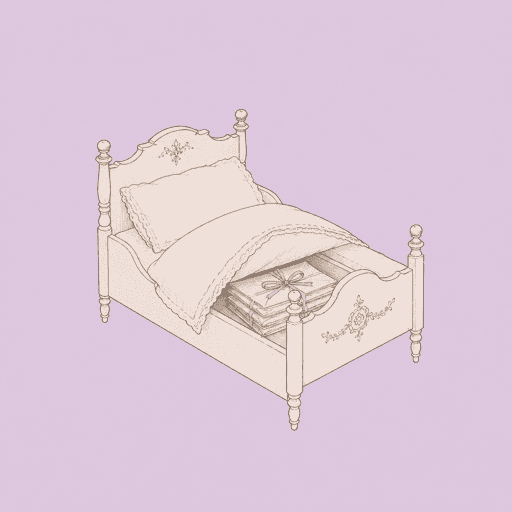
Maud, a descendant of LaMotte’s sister, is initially cool and dismissive of Ash, whom she sees as a misogynist poet. However, when Roland shows her photocopies of the letters, she becomes intrigued. Together, they examine the journal of Blanche Glover, LaMotte’s companion, which they find in the Women’s Resource Centre archive Maud curates. Blanche’s diary alludes to a secret correspondence and a mysterious “Prowler” who disturbs their quiet Richmond home. Roland and Maud suspect the “Prowler” is Ash. A clue in one of LaMotte’s poems, about a doll keeping secrets, leads them to Seal Court, the crumbling Lincolnshire estate of Maud’s estranged relatives, Sir George and Lady Bailey. In a locked turret room where Christabel spent her final years, they discover a doll’s bed. Hidden inside is a secret compartment containing the entire correspondence between Ash and LaMotte, bundled in oiled silk. Sir George confiscates the letters to turn them over to his lawyer, leaving Roland and Maud in suspense. The secret of the letters’ existence begins to leak out, attracting the attention of rival scholars: Roland’s ambitious colleague Fergus Wolff; the wealthy and rapacious American Ash expert Mortimer Cropper; and Roland’s own supervisor, the dour James Blackadder.
Roland and Maud, now a reluctant team, piece together the story told in the letters, which they read during a brief visit to Seal Court over the New Year. The correspondence reveals a passionate, intellectually vivid affair. A series of cryptic remarks leads them to suspect that Christabel secretly accompanied Ash on his 1859 geological tour of North Yorkshire, a period during which Ash was supposedly traveling alone. They decide to retrace his steps, and during their trip, their own relationship deepens into a quiet, tentative intimacy. In Yorkshire, they discover compelling textual evidence linking the two poets to the landscape. Ash’s letters to his wife, Ellen, describe a local sprite called a Hob, and Christabel writes a fairy tale about the same creature. Most convincingly, the opening of Christabel’s epic poem, The Fairy Melusina, describes a unique effect of light in a waterfall cavern at the Thomason Foss, which Roland observes firsthand, proving to them she must have been there. Meanwhile, Maud’s colleague, the American feminist Leonora Stern, receives a letter from a French scholar, Ariane Le Minier, revealing that Christabel spent the fall of 1859 and much of 1860 in Brittany.
Driven by what they now see as their “Quest,” Roland and Maud travel to France. Ariane gives them a copy of the journal of Christabel’s Breton cousin, Sabine de Kercoz. The journal reveals a shocking secret: Christabel arrived in Brittany pregnant and, after a period of strange, secretive denial, disappeared for several days and returned gaunt, cropped-haired, and no longer with child. The journal entries, along with some accompanying poems, suggest the child was stillborn or died shortly after birth, though its fate remains a mystery. As Roland and Maud absorb this, their rivals converge on them. Blackadder, now allied with a furious Leonora Stern, and Cropper, on his own hunt, track them to Brittany. Roland and Maud escape just as their pursuers arrive, deepening the atmosphere of conspiracy and chase. Back in England, the situation unravels. Sir George Bailey, learning of the letters’ monetary value from Cropper, becomes hostile. Cropper, desperate to acquire the papers, forms a pact with Hildebrand Ash, the dissolute heir to the Ash estate, to secretly exhume Randolph Ash’s grave. They believe the final truth lies in a box Ellen Ash buried with her husband. Beatrice Nest, the timid editor of Ellen’s journals, overhears their plot and, in a panic, contacts Maud.
Roland, Maud, Blackadder, Leonora, Beatrice, Val, and her new solicitor boyfriend Euan MacIntyre gather at the Rowan Tree Inn near the Hodershall churchyard to intercept the grave robbers. On a night of hurricane-force winds, they follow Cropper and Hildebrand to the grave. They catch them just as they unearth a small metal box, but the storm fells several massive trees, trapping everyone in the churchyard. Brokering a truce, they return to the inn and open the box. Inside are several mementos, including a sealed letter from Christabel addressed to Randolph. Maud reads the letter aloud. Written in 1889, just before Ash’s death, it was sent to Ellen Ash with a plea for it to be delivered to her husband. Ellen, however, never gave it to him. The letter reveals that Christabel’s child, a daughter named Maia, survived birth, was secretly adopted by Christabel’s sister, Sophie Bailey, and was raised as her own. Ash never knew he had a child. The letter includes Maia’s wedding photograph, and Maud recognizes the bride as her own great-great-great-grandmother. She is the direct descendant of both Randolph Ash and Christabel LaMotte.
The scholars, their quest at an end, are left to sort out the legal and personal aftermath. In the quiet of the storm-ravaged inn, Roland and Maud, their shared journey having forged a deep bond, finally acknowledge their love for each other. A postscript, set in 1868, offers a final, moving scene unknown to the modern researchers. Randolph Ash, on a country walk, coincidentally meets a young girl named May Bailey. Unaware that she is his daughter, Maia, he is struck by an uncanny sense of connection. He makes her a crown of flowers and, in exchange, gently cuts a lock of her golden hair. He places the lock in his watchcase, where it will remain, a secret token of a bond he never understood. The little girl, in turn, forgets the cryptic message the strange poet asks her to deliver to her “aunt,” Christabel, ensuring the secret of her parentage remains buried.

Get in-depth, chapter-by-chapter summaries and analysis from our literary experts.
- Grasp challenging concepts with clear, comprehensive explanations
- Revisit key plot points and ideas without rereading the book
- Share impressive insights in classes and book clubs