Seed
Seed
A modern alternative to SparkNotes and CliffsNotes, SuperSummary offers high-quality Study Guides with detailed chapter summaries and analysis of major themes, characters, and more.
Summaries & Analyses
Quizzes
NEWReading Tools
Chapters 1-5Chapter Summaries & Analyses
Content Warning: This section of the guide includes discussion of graphic violence, animal cruelty and death, child abuse, emotional abuse, illness, and cursing.
Chapter 1 Summary
Jack Winter drives his family home after celebrating his daughter Charlie’s sixth birthday at Pizza-Rama. His wife, Aimee, and their 10-year-old daughter, Abby, sleep in the car while six-year-old Charlie stays awake. As they drive through their small Louisiana town of Live Oak on a dark rural road, Jack develops a severe migraine and experiences a growing blind spot in his right eye. When his high beams flicker and fail, he sees a pair of reflective black eyes shining in the road. Fearing he might hit a person, he swerves, and the car hits an embankment, flips, and lands upside down.
Jack frees himself and pulls both daughters from the wreckage. Charlie, unusually calm, whispers that the wreck was cool, her eyes sparkling in a way that reminds Jack of the eyes he saw in the road. Police arrive and drive the family home. Before they leave the scene, Charlie tells Jack the figure in the road was not an animal but something that walked on two legs. She also quietly tells him that she saw it before the headlights went out, just as he did.
Back home, Aimee accuses Jack of falling asleep at the wheel and nearly killing them on Charlie’s birthday. They argue, and Jack sleeps on the couch. The next morning, Charlie complains of illness, but Aimee sends her to school anyway. Charlie also asks whether Jack is all right after noticing how frightened he looked following the accident.
The chapter flashes back to Jack’s childhood in Rosewood, Georgia, where he recalls discovering a hidden cemetery near his parents’ rundown trailer. Although he knows spending time there is strange, he becomes increasingly attached to the cemetery and visits it constantly. One day, he sees the same reflective black eyes staring at him from the trees. As he approaches them, he realizes he is standing before a grave marker on which he had carved his own name. Jack recognizes the eyes as the same ones that appeared before the crash years later.
Chapter 2 Summary
The afternoon following the crash, Aimee’s mother, Patricia, brings Charlie home from school with a fever. Patricia disapproves of Jack and criticizes the family’s cramped house, which is filled with Aimee’s antiques and Jack’s strange collection of taxidermy and artifacts, before offering to lend them a car temporarily.
When Jack returns from his job at a boat shop, Charlie’s fever has spiked sharply. He carries her to the bathroom for a cold bath, but she thrashes with unusual intensity, frightening everyone. After she calms down, Jack is unsettled by the struggle, which seems excessive for a six-year-old.
Later that evening, Jack and Aimee discuss Charlie’s illness, their financial situation, and Jack’s upcoming band performance. Their conversation highlights tensions surrounding Jack’s rough Southern upbringing and the Riley family’s disapproval of him. Jack reflects on leaving his troubled childhood home in Georgia as a teenager and suspects his parents may have supported themselves through criminal activity.
That night, Charlie wakes Jack to say someone is in her bedroom. He finds nothing in the closet. An hour later, the closet door slowly opens after both girls fall asleep. The next morning, Abby reports hearing scratching sounds against the outside wall all night.
At lunch, Jack’s best friend and bandmate, Reagan, informs him their band is booked for a Saturday gig. The conversation reveals that Reagan’s mother took Jack in after he arrived in Louisiana as a runaway teenager. Jack knows the timing is terrible, but Reagan explains that canceling would damage their relationship with the club owner. Jack reluctantly agrees, anticipating another argument with Aimee.
Chapter 3 Summary
Abby returns home from school to find a lump shifting strangely under Charlie’s bedcovers. Fearing her sister is having an asthma attack, she approaches the bed just as Charlie appears in the doorway behind her, unhurt. Charlie then answers a question Abby had asked moments earlier, despite appearing to have been out of earshot. Abby becomes increasingly frightened of her sister afterward.
At dinner, Charlie announces that someone lives in her closet and is making scratching noises. Jack reveals Reagan scheduled a gig for the upcoming weekend, triggering an argument with Aimee about his priorities. The tension breaks when Charlie asks Jack to play guitar for bedtime. After the girls are asleep, Aimee and Jack begin to reconcile, but screaming erupts from the girls’ room. They rush in to find Abby’s bed covered in vomit, while Charlie stands silently in the corner, staring blankly at what she has done.
The next morning, Jack and Aimee take Charlie to the doctor, who declares her perfectly healthy. In the parking lot, Aimee refuses to accept the diagnosis, insisting something is wrong with Charlie. To Jack, her voice suddenly sounds like his mother’s.
Chapter 4 Summary
This chapter flashes back to Jack’s 10th year. His parents, Gilda and Stephen, first suspected something was wrong with him the day they discovered a stray cat hanging from a tree in their yard.
For years, Stephen had encouraged Jack to drive away the nuisance cat. Instead, Jack had secretly befriended it. One afternoon, while sitting with the cat near the hidden cemetery, Jack again saw the black, bottomless eyes watching from the woods. His hand suddenly clenched in the cat’s fur, causing it to shriek and run away; when the cat hissed and fled, Jack felt a sudden surge of rage. That night, he set a snare using fishing line and a saucer of milk. The next morning, Gilda found the cat’s body hanging from the oak.
That night, Jack overhears his mother telling Stephen that something is wrong with their son. She says that she has seen him scratching at his bedroom wall like a cat and that his eyes looked wrong. When Stephen bursts into Jack’s room, Gilda stares at her son as though seeing something behind him that Stephen cannot. Jack retains a fragmented memory from that day of seeing his mother upside down, uncertain whether she was on the ceiling or he was standing on his head.
Chapter 5 Summary
On the morning of his scheduled gig, Aimee tells Jack that Charlie still looks unwell. Before leaving for New Orleans that evening, Jack tries to reassure Aimee and encourages her to relax while he is gone. That evening, Reagan picks Jack up and they leave for New Orleans, while faint scratching sounds resume in the house.
After the performance, Jack wanders Bourbon Street and is drawn into a voodoo shop, where he recalls a tarot reading from years earlier in which he drew three ominous cards, including the devil card depicting two chained figures, a man and a woman. It strikes him that if he is the male figure, someone must represent the female. A female reader emerges from a back room but looks spooked when she sees Jack and quickly retreats. Outside, a large man grins at Jack and says it’s good to see him. Feeling an unsettling sense of familiarity, Jack returns to the shop, but the man has vanished. The shop girl appears confused when Jack asks about him, suggesting that no one entered.
Meanwhile, Aimee traces scratching sounds moving through the walls of the house. Nubs behave fearfully and refuse to go outside. Aimee discovers the heavy kitchen table flipped upside down, and finds that a spilled bowl of popcorn she had just cleaned up is scattered across the floor again. When Jack arrives home, he notices that despite the overturned table, all four chairs remain perfectly in place. Aimee breaks down in tears.
Chapters 1-5 Analysis
The narrative structure of these opening chapters establishes a cyclical timeline, connecting the contemporary Louisiana setting with flashbacks to rural Georgia to explore the theme of The Fragility of Memory and Reality. The text juxtaposes Jack Winter’s immediate crisis, the car crash and his daughter Charlie’s subsequent illness, with his childhood discovery of a hidden cemetery and the violent hanging of a stray cat. This structural mirroring bridges decades of suppressed history, demonstrated when Aimee Winter’s fearful assertion that something is wrong with Charlie directly echoes the panicked words of Jack’s mother, Gilda, from years prior. The narrative collapses the distance between past and present, suggesting that Jack’s traumatic history remains an active, unresolved threat rather than a static memory. This technique aligns with Southern Gothic traditions, in which familial decay and buried violence continue to haunt later generations. The shifting timeline also reflects how Jack’s memories repeatedly intrude upon the present, making it difficult for him to separate past experiences from current events.
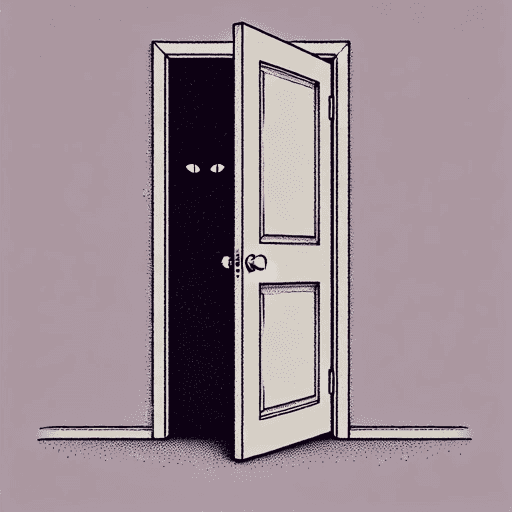
The recurring image of reflective eyes connects Jack’s childhood experiences with the disturbances affecting his family, reflecting the theme of The Cyclical Nature of Trauma. The inciting incident of the novel hinges on this imagery; Jack swerves his vehicle after glimpsing “a pair of animal eyes, reflecting bright silver” (3) on a pitch-black road, directly recalling the dark gaze he encountered as a boy near the hidden cemetery. Following the accident, this same disturbing quality appears in Charlie’s expression. When she emerges from the wreckage, Charlie whispers that the crash was “cool” (6), her eyes sparkling in a manner that immediately recalls the entity Jack saw in the road. The repeated imagery links Charlie’s behavior to Jack’s childhood memories and suggests that the force connected to his past may now be affecting his family as well. The eyes gradually become associated with emotional detachment and fear, particularly as Charlie’s behavior grows increasingly disturbing. Rather than presenting possession as a straightforward transfer of evil from parent to child, the novel connects these repeated images to the broader pattern of unresolved fear and violence that continues to affect the family across generations.
As the supernatural disturbances escalate, the text establishes a conflict between modern rationality and primal dread. Aimee embodies a contemporary, scientific worldview, responding to Charlie’s feral thrashing in a cold bath and massive vomiting incident by seeking a pediatrician’s diagnosis. The physician declares Charlie perfectly healthy, yet the mounting evidence of impossible phenomena—including a heavy kitchen table flipping entirely upside down while surrounding chairs remain undisturbed—exposes the inadequacy of medical explanations. In contrast, Jack interprets these events through a supernatural framework rooted in the trauma of his youth and his encounters with unexplained events. When Jack visits a Bourbon Street voodoo shop, he draws a tarot card depicting a chained devil and briefly encounters a mysterious trucker who vanishes without a trace. These eerie synchronicities validate his visceral fears, while Aimee’s reliance on the medical establishment leaves her isolated when confronted with events that appear impossible to explain. The growing divide between Jack’s suspicions and Aimee’s skepticism places additional strain on their marriage at the moment their family requires stability and cooperation most. The tension between empirical proof and personal experience creates a widening gulf in the marriage, leaving each parent trapped in a separate interpretive framework and increasingly unable to understand the other’s perspective.
The narrative subverts traditional expectations of youth to explore the theme of The Vulnerability of Childhood Innocence. Charlie’s youth complicates her family’s attempts to understand her increasingly unsettling behavior. Following the traumatic rollover of the family car, Charlie exhibits an unnatural serenity, whispering that the wreckage looks “cool” (6) while the rest of her family panics. This unsettling detachment intensifies when she claims a man named Mr. Scratch lives in her closet and appears to frighten her older sister, Abby, during the scene involving the shifting lump beneath the bedcovers. By contrasting Charlie’s fragile appearance with her sudden, inexplicable strength and emotional manipulation, the narrative creates uncertainty around whether she is experiencing supernatural influence, acting out childhood impulses, or becoming gradually affected by something her parents cannot fully understand. Her appearance as a vulnerable young child repeatedly clashes with the fear surrounding her actions, making it difficult for her parents to reconcile their protective instincts with the increasingly disturbing events unfolding inside the home.
Finally, the manipulation of physical space reinforces the inescapable nature of the Winters’ plight. The Southern Gothic setting, marked by the oppressive humidity and “dilapidated houses that skirted the everglades” (2), creates a naturally claustrophobic environment that mirrors the psychological confinement of the characters. This sense of isolation intensifies as unexplained disturbances begin disrupting the family’s home life. The scratching sounds inside the walls and the impossible scattering of a cleaned-up bowl of popcorn erode Aimee’s sanctuary, transforming the home into a site of psychological torment. When Aimee traces the scratching sounds moving deliberately through the walls of her house, the violation extends beyond mere noise and turns the familiar domestic space into something unstable and threatening. Like the hidden cemetery from Jack’s childhood, the Winter home gradually becomes associated with secrecy, fear, and the growing influence of the past over the present. The breakdown of domestic safety reinforces the idea that the danger affecting the family cannot simply be kept outside the home because it has already become embedded within the emotional and physical space of the home.

Get in-depth, chapter-by-chapter summaries and analysis from our literary experts.
- Grasp challenging concepts with clear, comprehensive explanations
- Revisit key plot points and ideas without rereading the book
- Share impressive insights in classes and book clubs