Seed
Seed
A modern alternative to SparkNotes and CliffsNotes, SuperSummary offers high-quality Study Guides with detailed chapter summaries and analysis of major themes, characters, and more.
Summaries & Analyses
Quizzes
NEWReading Tools
Important Quotes
Content Warning: This section of the guide includes discussion of graphic violence, death, animal cruelty and death, child abuse, emotional abuse, illness, and cursing.
“The last thing he saw was a pair of animal eyes, reflecting bright silver and wide in the darkness. The headlights went out.”
(Chapter 1, Page 3)
This quote initiates the novel’s central conflict and introduces the recurring motif of reflective, inhuman eyes. The abrupt failure of the headlights alongside the appearance of the eyes suggests the presence of a dangerous, supernatural force. The sensory detail connects the car accident to the entity that later threatens the Winter family.
“‘It wasn’t an animal,’ she murmured. ‘It walked on two legs, like us.’ […] ‘I saw it, Daddy,’ she told him, lowering her voice so her mom wouldn’t hear. ‘I saw it before the lights went out. I saw it just like you.’”
(Chapter 1, Page 8)
Charlie’s confession establishes her unsettling connection to the supernatural entity. By confirming she saw the same eyes as her father, the narrative links Jack’s childhood experiences to Charlie’s present situation. This moment also begins to blur the boundary between childhood innocence and the growing danger surrounding Charlie.
“The day Jack discovered that cemetery, he ran from it in search of his parents, but something kept him from revealing his discovery. As soon as he burst into the house, the urgency to tell them about what he’d found was replaced by a distinct need to keep it a secret—something only he knew about.”
(Chapter 1, Page 12)
This passage introduces the hidden cemetery as an important location connected to Jack’s childhood experiences with the entity. Jack’s sudden desire to keep the discovery secret suggests that the place already exerts an unusual influence over him. His need to claim the cemetery for himself also reflects the secrecy and isolation that continue to shape his relationship with his family later in the novel.
“He wanted to run just like the day he’d discovered the cemetery in the first place. But like the time before, his initial reaction was overridden by the allure of secrecy. The fear that bubbled at the pit of his stomach went calm, and before he knew what he was doing he was walking away from home rather than toward it.”
(Chapter 1, Page 13)
This moment shows the entity’s ability to influence Jack’s behavior and weaken his instinct to escape. Jack feels himself drawn toward the strange presence in the woods, even though he initially reacts with fear. The scene suggests that the danger connected to the cemetery exerts a powerful pull over him.
“But when the lump began to convulse as though the person beneath the sheets were suddenly unable to breathe, Abby stared at it with a startled expression. It was moving in a nearly mechanical way—oddly jerky, like an old wind-up toy.”
(Chapter 3, Page 29)
This scene transforms an ordinary bedroom into a place of fear and uncertainty for Abby. The comparison to a “wind-up toy” makes the movement beneath the sheets feel unnatural and disturbing rather than human. The moment also increases Abby’s confusion and anxiety as she struggles to understand what is happening around her.
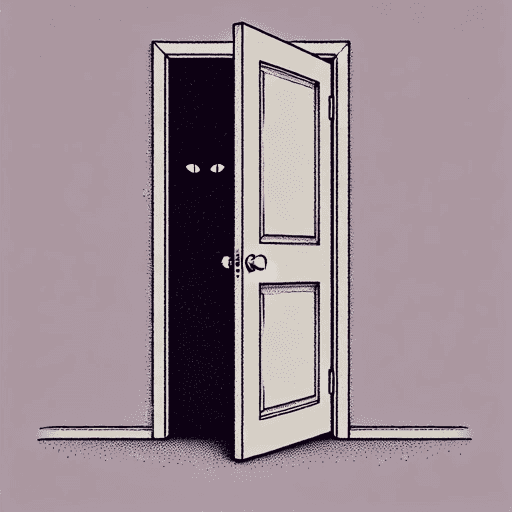
“‘There’s someone living in the closet,’ she announced matter-of-factly. ‘I’m pretty sure because today I saw him, and when I went to check, the door closed by itself.’”
(Chapter 3, Page 30)
Charlie’s calm, “matter-of-[fact]” tone contrasts sharply with the terrifying content of her statement, making her statement more unsettling because it comes from a young child speaking so casually. By placing the figure inside the closet, the quote brings the supernatural threat directly into the family home. The moment also marks an early sign that Charlie’s encounters with the entity are becoming more direct and personal.
“The most pronounced one was emblazoned across his back—a tattoo he had gotten long before they had met. […] It crawled across his shoulder blades and down his spine: a wicked-looking beast with black, leathery skin and glowing eyes. A razor-sharp grin was spread across its horrible face, as if laughing at a joke that only it and Jack knew.”
(Chapter 3, Page 35)
The tattoo reflects Jack’s long connection to the entity that haunted his childhood. Its detailed resemblance to the creature later described in Jack’s memories suggests that the experience left a lasting mark on him both emotionally and physically. The image of the creature’s grin also hints at the lingering hold the entity continues to have over Jack’s life.
“‘And his eyes, Steve. And when he saw me come in…’ Her words hitched in her throat. ‘His eyes…they were all wrong.’”
(Chapter 4, Page 46)
This flashback connects Gilda’s fear of young Jack to Aimee’s growing fear of Charlie later in the novel. Gilda’s broken speech and emotional reaction show how deeply disturbed she is by the change she sees in her son. The focus on Jack’s eyes also connects to the recurring image of altered or unsettling eyes that appears throughout the novel.
“Flipped over onto its top, the kitchen table rested on the floor with its legs pointing toward the ceiling. […] The table was upside down, but none of the chairs had been disturbed. They were all standing in their designated spots.”
(Chapter 5, Page 61)
This scene provides one of the clearest signs of supernatural activity inside the Winter home. The untouched chairs surrounding the overturned table make the event feel unnatural and difficult to explain. For Aimee, the incident deepens her fear and weakens her ability to dismiss the strange events happening around her.
“He had seen that very figure perched at the foot of his bed when he was a kid—black skin, scaly like a lizard’s, small black horns poking out of its head. […] The monster was real. The proof was etched into his skin, emblazoned across his back.”
(Chapter 6, Page 66)
This flashback confirms that the entity has been part of Jack’s life since childhood. The detailed description of the creature reinforces that Jack’s memories are connected to a recurring supernatural presence rather than an isolated childhood fear. The reference to the tattoo on Jack’s back also links his past experiences to the danger now affecting his family.
“‘Fine,’ Charlie scowled, then abruptly slid her arm across the counter, knocking her strawberry shake to the floor. […] ‘Abby did it,’ Charlie sobbed.”
(Chapter 6, Page 75)
This sequence demonstrates how Charlie begins using her innocence to manipulate the people around her. The entity uses Charlie’s form to carry out a manipulative act, immediately masking the cruelty with a believable display of a child’s tantrum. Abby witnesses Charlie knocking over the shake, but Aimee accepts Charlie’s accusation and blames Abby instead.
“Charlie slid from her seat and padded down the hall, her fingers dragging along the wall. The scratching trailed her like a loyal companion.”
(Chapter 7, Page 82)
This quote connects the scratching sounds in the house more closely to Charlie’s presence. Describing the sound as a “loyal companion” creates a disturbing image of intimacy between the child and the entity. The moment also suggests that the supernatural presence is becoming more deeply tied to the family’s daily life.
“‘Because,’ she finally said, her voice taking on an unfamiliar heaviness, ‘he can’t tell you. It’s our secret. We have a lot of secrets, and you can’t know any of them.’”
(Chapter 7, Page 85)
The contrast between Charlie’s physical appearance and the “unfamiliar heaviness” of her voice signals that the entity is speaking through her. The reference to shared “secrets” creates distance between Aimee and the rest of the family, increasing her fear and confusion. The line also connects Charlie’s experiences to Jack’s hidden past.
“Is she possessed by the devil? Want to call an exorcist? I have an idea: you hold her down while I scream Bible verses all night. You think that’ll fix it? Probably a better idea than a psychologist.”
(Chapter 8, Page 95)
Aimee’s dialogue shows her frustration and disbelief as she rejects a supernatural explanation for Charlie’s behavior. She continues searching for a rational explanation even as the events surrounding Charlie become increasingly disturbing. The exchange also highlights the growing divide between Aimee’s understanding of the situation and Jack’s fears about Charlie.
“‘The darkness,’ Abby whispered. ‘The way she smiles.’ […] ‘Dad?’ Abby’s eyes shimmered. ‘I’m not crazy, right?’”
(Chapter 8, Page 107)
In this exchange, Abby struggles to explain the fear she feels around Charlie. Her focus on Charlie’s unnerving smile connects to the growing changes in Charlie’s behavior. Abby’s desperate plea for validation from her father shows how isolated and frightened she has become within her own family.
“‘I’ve never seen any miracles,’ Reagan said, ‘but I sure as hell have seen my share of darkness. Does God exist? I don’t know. But I kind of hope he does. Because if he doesn’t? We’re probably fucked.’”
(Chapter 9, Page 112)
Reagan’s statement reflects the fear and uncertainty surrounding the supernatural events in the novel. His comments suggest that the darkness affecting Jack’s family feels powerful and difficult to understand. The quote also shows how even outside observers begin to recognize the seriousness of the threat surrounding the Winters.
“‘Don’t be scared, Mommy,’ she said. ‘At least you still have Abigail.’”
(Chapter 9, Page 122)
The line frightens Aimee because Charlie speaks about Abby’s survival as though harm to the rest of the family is expected. The contrast between Charlie’s calm tone and the meaning behind her words makes the moment especially disturbing.
“Without warning, her chair jerked backward, […] impossibly balancing on one leg. […] Despite the chair’s unnatural angle, Charlie was glued in place, grinning, her eyes as big as twin moons.”
(Chapter 10, Page 130)
This event provides one of the clearest signs of supernatural activity connected to Charlie. The image of the chair balancing unnaturally while Charlie remains calm deepens the fear surrounding her behavior. The scene also makes it harder for the family to dismiss the strange events around her as ordinary childhood problems.
“‘He’s here to play,’ she told him. ‘He said you never finished the game.’”
(Chapter 11, Page 147)
Charlie’s dialogue directly connects the entity haunting her to Jack’s childhood experiences. Referring to the entity’s actions as a “game” gives the threat a disturbing sense of familiarity and control.
“She saw something lingering behind the gray of Jack’s eyes. It swirled beneath that stormy hue, like ink coiling through water, like fog crawling across the marsh.”
(Chapter 11, Page 147)
This flashback shows Gilda sensing a frightening change in young Jack. The imagery of “ink coiling through water” and “fog crawling across the marsh” externalizes an internal corruption and creates the impression of something dark and unnatural beneath his outward appearance. The moment also parallels Aimee’s later fear that Charlie is changing in similar ways.
“Jack watched Charlie’s mouth curl up into a sneer, but he didn’t move. […] Despite his desire to jump up, he simply sat there and watched the hunt with a sick sense of fascination, glued to the top step by an unseen hand.”
(Chapter 12, Pages 157-158)
This moment shows Jack becoming unable to stop Charlie despite recognizing the danger in her behavior. The description of Jack feeling “glued” to the stairs suggests that a supernatural force is holding him in place. His inability to intervene increases the tension of the scene and highlights how powerless he feels against the entity’s influence.
“‘Poor Daddy,’ she told him, her expression as chaste as one of God’s angels. ‘So sad,’ she whispered. ‘Sad about a dead fucking dog.’”
(Chapter 12, Page 160)
Charlie’s gentle expression sharply contrasts with the cruelty of her words. The moment becomes especially disturbing because she speaks with calmness and mock sympathy while discussing Nubs’s death. The quote also reflects the growing emotional detachment in Charlie’s behavior.
“The picture had changed. Charlie stood in the front yard in her white summer dress, smiling with razor-sharp teeth, Nubs dead at her feet.”
(Chapter 13, Page 179)
This moment deepens Aimee’s fear by showing a family photograph changing in a supernatural way. The altered image makes it harder for her to dismiss the strange events surrounding Charlie as imagination or coincidence. The disturbing version of Charlie in the photograph also reflects Aimee’s growing belief that something dangerous is affecting her daughter.
“When he looked up, he expected to see a handful of headstones, the rusted iron gate that had always been there, protecting the secret cemetery from trespassers. But it was gone.”
(Chapter 14, Page 185)
The disappearance of the cemetery unsettles Jack because it removes the place he connected to his childhood experiences with the entity. The missing headstones and gate also deepen his uncertainty about how much of his past he truly understands. The moment suggests that the entity’s influence extends beyond a single physical location.
“‘What’s your name, kid?’ he’d ask, and when he didn’t get a reply, he’d exhale a gruff laugh and nod. ‘That’s OK,’ he’d say. ‘How about I just call ya chief?’”
(Chapter 16, Page 221)
These final lines mirror the moment when the same trucker picked up Jack as a child years earlier. The repeated use of the nickname “chief” strongly suggests that Charlie is entering the same cycle of violence and supernatural influence that shaped Jack’s childhood. The ending leaves the novel on an unsettling note by implying that the cycle may continue into another generation.

Unlock every key quote and its meaning
Get 25 quotes with page numbers and clear analysis to help you reference, write, and discuss with confidence.
- Cite quotes accurately with exact page numbers
- Understand what each quote really means
- Strengthen your analysis in essays or discussions