The Brain: The Story of You
A modern alternative to SparkNotes and CliffsNotes, SuperSummary offers high-quality Study Guides with detailed chapter summaries and analysis of major themes, characters, and more.
Summaries & Analyses
Quizzes
NEWReading Tools
Themes
Content Warning: This section of the guide contains discussions of mental illness, child abuse, and violence.
Reality as a Neurological Construct
In The Brain, Eagleman dismantles the pervasive, intuitive belief that human senses provide a direct, objective window onto the world. Instead, he argues that this experience of reality is a deeply personal and highly edited illusion, a narrative constructed entirely within “the dark, silent chamber of your skull” (41) to be an energy-efficient, low-resolution approximation, shaped by the brain’s predictive models and constrained by its biological hardware. This theme is key to his intention to put “all our assumptions under the spotlight” (2). Through a series of research and case-study examples, from sensory deprivation to visual tricks, Eagleman demonstrates that human perception has less to do with what is actually “out there” and more to do with the story our brain tells itself.
Eagleman uses the fallibility of the senses to provide key evidence that reality is a construct, challenging the natural faith humans have in their perceptions. He uses visual illusions, such as rotating snakes that appear to move on a static page, to show that our brains generate perceptions that conflict with physical fact, showing how the same principle applies to color, which does not exist in the outside world but is an internal interpretation of electromagnetic wavelengths. Our sensory organs are limited to processing a “tiny fraction of the electromagnetic spectrum” (63), meaning the vivid world we perceive is merely one “slice of reality” that our biology allows us to access. Eagleman uses the case of Mike May, a man whose sight was restored after 40 years of blindness, to exemplify this idea. Despite having perfectly functioning eyes, May could not make sense of the incoming visual data; his brain, lacking decades of training, could not interpret the electrochemical signals. This medical case revealed that seeing is an active process of neural interpretation that must be learned.
Eagleman presents the brain’s reliance on an “internal model” as further evidence for this constructed reality: Rather than constantly building a picture of the world from scratch, the brain generates its own version of reality and uses sensory information merely to update and correct it. This model is so powerful that it can run even without external input, such as during sleep. Eagleman cites the case of “Cold Blue Luke,” an Alcatraz inmate who experienced detailed visual “trips” while in the complete sensory deprivation of solitary confinement. His brain, unanchored from external data, simply continued to generate its own “show.” The book compares this to the hollow mask illusion, in which the brain overrides the actual image of a concave face with the lifetime of experience that facial features protrude. In discussing how the brain presents us with what it expects to see, not what is actually there, Eagleman demonstrates his interest in the dominance of the mind’s internal model over raw data.
Eagleman stresses that this neurological construction means that each individual’s reality is unique, not a shared factual environment. He compares this individual experience to a personalized TV broadcast constructed by the mind, and expressive of the individual. Conditions like synesthesia—where, for instance, a person automatically experiences letters as having inherent colors—show that microscopic differences in brain wiring lead to verifiably different subjective worlds. In demonstrating how much of humans’ assumed factual experience is created by the brain, Eagleman emphasizes the all-encompassing—and often surprising—ramifications of neuroscience.
The Unconscious Drivers of Human Behavior
One of the central revelations of The Brain is that our conscious mind—the part of us that feels like the protagonist of our life story—is far from being in charge. Eagleman argues that consciousness is merely the “tip of the iceberg,” (94) while the vast, submerged portion consists of unconscious neural machinery that drives most of our actions, beliefs, and decisions. This efficient, automated system operates on autopilot, executing complex tasks and shaping our choices without our awareness. This framework challenges the notion of free will; calling us “passengers” in our own lives, Eagleman suggests we are steered by forces to which we have no direct access and for which our conscious mind merely takes credit after the fact, creating an illusion of control.
The power of the unconscious is demonstrated by Eagleman through discussion of the automation of tasks and skills. He shows how, when we first learn a task, like driving a car, it requires immense conscious effort. However, with practice, the skill becomes hardwired into the brain’s circuitry, sinking below the level of conscious access. Eagleman illustrates this with Austin Naber, a 10-year-old cup-stacking champion whose brain activity is serene and low-energy during his lightning-fast routine, while a novice’s brain burns massive energy. In Naber’s brain, this skill has transitioned from flexible “software” to efficient “hardware.” Extrapolating from this, Eagleman shows how athletes can perform feats faster than conscious thought allows, like hitting a 100-mile-per-hour fastball, and why we can arrive home with no memory of the drive. The conscious “you” is freed up to perform other cognitive tasks, but it is no longer the one performing the action.
This theme goes beyond the discussion of motor skills to explore how the unconscious shapes our most important life choices and moral judgments. Eagleman details priming experiments that reveal how subtle, unrecognized cues steer our behavior. For instance, holding a warm drink can make a person describe their family relationships more favorably, while sitting in a hard chair can make them a tougher negotiator. He shows how these effects occur because our brain’s networks for physical and social concepts overlap, creating influences we are unaware of. Similarly, our major life decisions—from whom we marry to what career we choose—can be influenced by “implicit egotism,” our unconscious attraction to things that remind us of ourselves. Through these instances, The Brain builds the argument that though humans can provide a reason for their instinctive choices, we are often just constructing a plausible narrative, oblivious to the real, hidden drivers of our behavior.
Characteristically for this book, Eagleman employs analogy to aid the reader’s understanding of this challenging theme. He compares the role of consciousness with that of a CEO for a vast corporation, stepping in to set long-term goals and arbitrate when automated systems come into conflict—for example, when the impulse to eat a donut clashes with the long-term goal of being healthy. In extreme cases, complex behaviors can run entirely without conscious oversight, as seen in the case of Ken Parks, who killed his in-laws while sleepwalking. This unsettling example highlights the sheer capability of the unconscious brain and forces a humbling reevaluation of who, or what, is truly in control of the ship.
Neuroplasticity as Evolutionary Advantage
The Brain posits that the human brain’s most important feature is its deep plasticity—i.e., its capacity to constantly reconfigure its own circuitry in response to the world. Eagleman argues that humans are “livewired” for constant adaptation, rather than “hardwired” for a specific ecological niche. This quality of being born “remarkably unfinished” is presented as humanity’s primary evolutionary advantage, as it allows us to adapt to any environment, absorb any culture, and continually learn throughout our lives. This theme leads Eagleman into his hypothetical and philosophical discussion of the future in the later chapters, where he imagines humans deliberately “hacking” their own “hardware,” augmenting their senses and bodies by feeding new data streams directly into the brain.
The brain’s adaptability begins at birth. Unlike animals such as dolphins or zebras that are functional within hours, human infants are helpless for years. This protracted development, however, is a feature, not a bug. It allows a child’s brain to be shaped by its specific environment, a process Eagleman illustrates with the concept of neural “pruning.” A baby’s brain starts with a superabundance of connections, which are then pared back based on experience, strengthening the pathways that are used and eliminating those that are not. The tragic case of children raised in deprived Romanian orphanages provides a stark illustration of this dependency; without proper nurturing and stimulation, their brains failed to develop normally. Conversely, their partial recovery after being moved to foster care demonstrates the brain’s remarkable capacity for change when the environment improves.
Following this discussion of childhood into later life, Eagleman draws on scientific evidence to demonstrate how the adult brain continues to physically reshape itself in response to experience, a fact. In the well-known study of London cab drivers, brain scans revealed that the posterior hippocampus, a region essential for spatial memory, grew physically larger as they spent years memorizing the city’s 25,000 streets. Similarly, Albert Einstein’s brain showed an enlarged cortical fold known as the Omega sign in the area governing his left fingers, a direct result of his lifelong passion for playing the violin. These examples prove that “everything you’ve experienced has altered the physical structure of your brain” (20), making your identity a dynamic, ever-changing work in progress rather than a fixed entity.
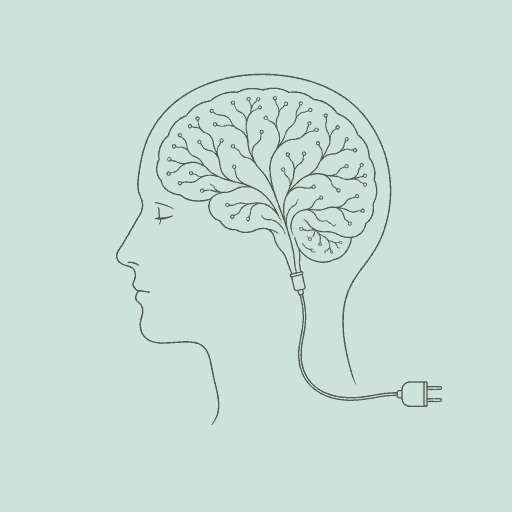
Looking forward, Eagleman contends that this inherent flexibility is the key to transcending our biological limitations. This theme leans into Eagleman’s use of technological imagery and phraseology for the brain, presenting it as a biological computational device potentially compatible with man-made technologies. Emphasizing the brain’s plastic capacity for “plug-and-play” adaptiveness, Eagleman argues that the brain doesn’t care where its data comes from, only that this data has structure. This is the principle behind sensory substitution technologies like the VEST, a device from Eagleman’s own lab that allows deaf individuals to learn to “hear” through patterns of vibration on their torso. This concept extends beyond sensory repair to sensory augmentation, suggesting we could feed the brain novel data streams from the internet or other sources, creating new, direct perceptual experiences. By leveraging our brain’s plasticity, we are poised to expand the definition of what it means to be human. Through these hypotheses, this theme supports the text’s overwhelmingly positive, upbeat tone and optimism for the future.

Unlock every key theme and why it matters
Get in-depth breakdowns of the book’s main ideas and how they connect and evolve.
- Explore how themes develop throughout the text
- Connect themes to characters, events, and symbols
- Support essays and discussions with thematic evidence
Related Titles
By David Eagleman