The Dog Stars
The Dog Stars
A modern alternative to SparkNotes and CliffsNotes, SuperSummary offers high-quality Study Guides with detailed chapter summaries and analysis of major themes, characters, and more.
Summaries & Analyses
Author Insights
Quizzes
NEWReading Tools
Peter Heller on The Dog Stars
In his own words: quotes and insights from the author.Why he wrote it
Decades of waiting, one morning in a coffee shopBefore fiction, Heller spent years reporting on the natural world in conditions that were genuinely lethal: running dangerous rivers for Outside magazine, embedding with anti-whaling ships in Antarctic waters, watching wild country degrade from the inside. That body of work left him professionally accomplished and personally unfulfilled in one specific way.
I don’t want to end my life and have never tried.
He was in his early fifties when he finally sat down to write a novel. The fear was not of failure but of having never made the attempt.
Years of breakfast conversations with paleobotanist Kirk Johnson, who studies extinction events at geological scale, had built up a charge that nonfiction couldn’t discharge. The Sixth Great Mass Extinction was a recurring subject at those meals, and it pressed on Heller in a way that demanded a different kind of writing.
I am, if I am moved by anything, profoundly moved by nature. And moved by her struggles right now. These themes had to be central to this book.
 markhstevens.wordpress.com, “Q & A with Peter Heller – “The Dog Stars” | Don’t Need A Diagram”
All four of his adventure books were built from events that had already happened. He knew the ending before the first sentence. Fiction offered him something those books structurally could not: genuine ignorance of what would come next. He reached for the analogy his career had given him.
I wanted that feeling you get when you kayak a river that hasn’t been well described, and you come to a tight corner in a canyon and you don’t know what will be there — could be a pool, a waterfall, thirty Yanomami Indians with spears. So I began with a first line and wrote into the story. I was surprised, shocked, moved, the whole way through. It was the most thrilling thing I’ve ever done.
When he describes sitting down in that coffee shop for the first time, the emotional register shifts from urgency to relief. The decades of environmental reporting, the alarm, the accumulated feeling about where the earth was headed: all of it had somewhere to go.
I sat down instead with all my feelings about where the earth was headed and how human beings are participating in this arc, and with a huge desire to write fiction, which is what I’ve wanted to do since I was six. It was like coming home. My spirit just sang.
markhstevens.wordpress.com, “Q & A with Peter Heller – “The Dog Stars” | Don’t Need A Diagram”How he wrote it
A voice arrived and he followed itHeller came up as a poet, studying under Jorie Graham at the Iowa Writers’ Workshop, and his method for every novel begins not with a premise or a plan but with a sound. Structure, for him, is something the language generates rather than something imposed on it from outside.
I never have an idea for a novel. I came up as a poet and I’m always more interested in the music of the language than a plot. So I start with a first line whose cadence and sound I love and follow it into the second line and the third. The story rides on the back of the language.
About three pages into writing, he realized the genre he had accidentally entered. The recognition arrived as a problem: he was a first-time novelist, and Cormac McCarthy’s The Road already existed. What stopped him from abandoning the project was a quality in his narrator that McCarthy’s unnamed father doesn’t share.
I didn’t! I just listened to Hig’s voice and wrote it as fast as I could. About three pages in, I realized, ‘Holy crap, I’m writing a post-apocalyptic novel. I don’t want to write a post-apocalyptic novel!’ For one, I didn’t, as a first time novelist, want to be compared to Cormac McCarthy and The Road. But I could see that my character Hig had a certain joy of life and a sense of humor and that this was a different project, so I persisted.
He kept his daily discipline to a thousand words, written every morning in a coffee shop, stopping mid-scene each time so the pull to return the next morning was irresistible. He finished the novel in seven months.
The lyrical breaks and fractured syntax in Hig’s voice have a biographical source. Heller’s father read e.e. cummings aloud to him from the age of six. That early immersion in poetry’s sound preceded any formal study and shaped what he heard when he listened for a narrator’s cadence.
My dad started reading poetry to me when I was 6, before I’d go to sleep. He would read e.e. cummings’ ‘Buffalo Bill’s’... and that music, as I became enthralled with poetry as a kid, that’s what I always wanted to do: I always wanted to write something with the power of song, of music. I would say that all the poets I’ve read have definitely informed the writing.
The Tang dynasty poem that closes the novel, Li Shang-Yin’s ‘When Will I Be Home?’, did not arrive by research. Heller had first encountered it at a memorial service in China for a man who died in a river logjam on Heller’s very first journalism assignment, a man whose head Heller had been holding above rising water. More than twenty years passed between that service and the moment the poem returned to him while writing.
It just came zinging in... That’s the thing about fiction that is so incredibly thrilling — if you’re not writing from an outline or plot, you’re just sort of vulnerable to wherever the language and characters take you. There’s all kinds of stuff that you don’t know that you know or remember.
The personal thread
Hig is who he would be, minus the cookingHeller and his narrator share nearly every biographical detail: a pilot’s license, a fly-fishing habit, a home beside a lake in Denver, a grief-soaked attention to the natural world. He draws the line at two specifics.
Hig is very close to my heart. He loves what I love, shies from the things I shy from, cries over the things I would cry over and laughs hard at the things I think are funny. He also loves many of the same poems. But he cooks. He excels at it. That’s one thing I always swear I will learn to do.
markhstevens.wordpress.com, “Q & A with Peter Heller – “The Dog Stars” | Don’t Need A Diagram”The parallel between the book’s fictional catastrophe and lived reality became harder to hold at a comfortable distance after 2020. In a later conversation, Heller acknowledged what it felt like when the gap between the novel’s premise and the news collapsed.
Heller noted that he had written The Dog Stars about a worldwide pandemic — and then one happened. [paraphrased from audio]
What he wants us to sit with
Stars renamed, risk taken, humanity held on toHig’s practice of naming constellations each night, inventing new ones because he has forgotten the real names, is the novel’s quietest argument for what keeps a person alive. Heller designed it as the book’s most direct answer to its own central question.
He makes one up for his wife, and for ‘the little angel,’ he calls it, which is his child, and he makes one up for Jasper, his dog. It’s his way of reinventing the world and also staying connected to the things he loves. That’s his challenge every day... to find a reason to live, to find joy, to find some richness. And I think that’s what makes him so interesting; it’s not just about finding the calories to stay alive.
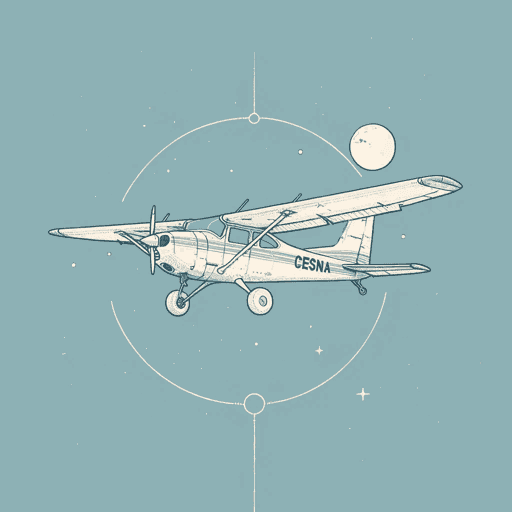
Hig at one point flies his Cessna past the fuel point of no return, drawn by a ghost transmission from an unknown radio voice. That act is the novel’s hinge. Heller states the stakes in the plainest terms he uses anywhere in the book’s surrounding conversation.
The Dog Stars is about what we are willing to risk to stay connected and to love. It is about a man struggling to hold on to his humanity in a post-apocalyptic world.
Pressed by interviewer Mark Stevens on whether humanity could actually reverse course from the environmental collapse the novel imagines, Heller answered with something that sits between hope and a grim punchline. The two-part answer is worth holding together.
Of course we can... Humans are very good at doing the same thing and expecting different results. It’s the optimist in us! So we may need a little help. A flu pandemic could be just the thing…
markhstevens.wordpress.com, “Q & A with Peter Heller – “The Dog Stars” | Don’t Need A Diagram”