The Dog Stars
A modern alternative to SparkNotes and CliffsNotes, SuperSummary offers high-quality Study Guides with detailed chapter summaries and analysis of major themes, characters, and more.
Summaries & Analyses
Author Insights
Quizzes
NEWReading Tools
Games
Symbols & Motifs
Renaming Stars
At many points in the novel, Hig’s thoughts grow poetic when he observes the stars, and whenever he forgets the names of the constellations, he renames them. This whimsical habit signifies his need to build a new relationship with the world he now inhabits, and the very act of naming things grants him a sense of empowerment that helps to create a welcoming corner in an otherwise daunting and dehumanizing world. Significantly, he imbues the natural world with thoughts and mementos of his own past, personalizing the otherwise neutral landscape and populating the wilderness with his own ghosts. As he admits, “I made up constellations. […] I made one for Melissa, her whole self standing there kind of smiling and tall and looking down on me in the winter nights” (11). Just as past civilizations crafted whole mythologies out of constellations and the enigmatic movements of the stars, Hig now indulges in the same pastime and sees his own personal mythology writ large across the heavens, gaining a bittersweet mixture of comfort and sorrow every time he glimpses the self-made constellation of his late wife.
As the novel progresses, Hig’s observations of the stars create tender moments of beauty, and Heller also uses this tactic to slow the narrative pace and provide temporary relief from the devastation that plagues Hig and his companions. Heller also brings this motif full circle in the novel’s final pages, for although Hig and Cima do not find closure, their naming of constellations suggests that while the old world has been replaced by the harsh new rules of survival, human agency and imagination still hold sway.
The Beast
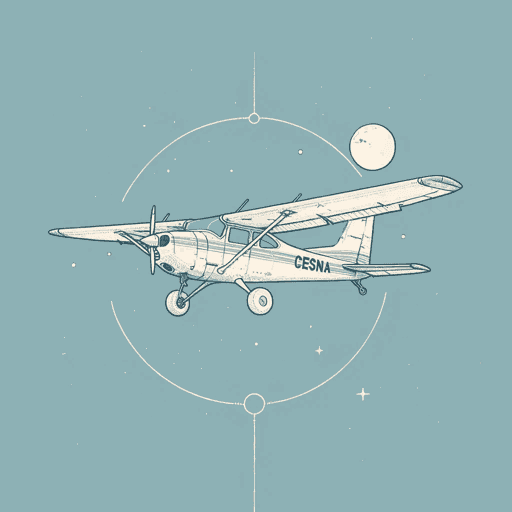
The Beast is Hig’s 1956 Cessna 182 plane, which Hig flies on daily patrols around the perimeter and eventually uses to seek out new supplies and companions on his epic journey toward Grand Junction. In many ways, the plane itself serves as a narrative device: an excuse for Hig to change his surroundings and find new opportunities. His flights break up his endless sorrow and the sameness of his patrols around Erie, and the very nickname of the plane connotes a sense of steadfast strength that can overcome any odds. For Hig, the Beast is both a means of freedom and a tool for survival, and it therefore serves as a symbol for Hig’s mind. At a base, conscious level, the Beast helps him to survive, allowing him to conduct perimeter checks from the air and ensure that his and Bangley’s most foundational needs—food, shelter, and safety—are preserved. However, the Beast also affords Hig time and space to dream, and each of his flights is punctuated with lengthy reminiscences and philosophical musings that illustrate the complex depths of his personality.
Indirectly, the Beast also affords Hig the opportunity to return to a more animalistic state, as implied by the name of the plane itself. In one passage, Hig implicitly compares himself to a bird of prey as he observes a kestrel and marvels that, like him, the bird will “hover and hunt until past dusk. Hover and swoop, hover and swoop. In his little helmet, hovering tireless, treading air. Hunting mice and voles” (84).
In this context, Hig is the kestrel and the intruders that he searches for are the mice and voles. This imagery allows him to regain a sense of control, for he portrays himself as a hunter and predator rather than a victim of the harsh, post-collapse world.
Grand Junction
As one of the most complex, multifaceted symbols in the novel, the city of Grand Junction, Colorado, carries many different meanings that shift throughout the novel and differ from character to character. In the beginning, the city represents an elusive, unreachable source of mystery and hope, for Hig frequently thinks about the radio message he heard coming from the air traffic control tower three years ago. Although he has been unwilling to investigate the signal due to the city’s distance, he often wonders if there might be other people out there to bond and connect with. Only after the death of Jasper does he finally become willing to take the enormous risk of traveling beyond the point of no return in order to satisfy his curiosity.
For Cima and Pops, however, the city represents an entirely different panorama of concepts, for they both fled from Grand Junction in the early days of the flu epidemic, intent upon surviving. When they later return there with Hig and see the utter devastation that ensued after their departure, they are simultaneously vindicated and horrified, and Cima convulsively vomits, overcome by a visceral dismay that is far too intense for words. This darker vision of the city tarnishes Hig’s former hopes, and this new mood intensifies when the three narrowly survive the trap on the runway. Feeling deeply angry and betrayed to realize that the very source of his hope was a couple intent upon murdering anyone who would dare to land, Hig joins Pops in a vindictive attack on the facility, and Pops puts an end to the lives of the couple who had been ambushing and crashing unsuspecting planes for years. Although Grand Junction does provide the group with enough fuel to return to Erie, the city remains in the end a source of bitter disillusionment, for it could neither protect its former inhabitants nor offer succor to those like Hig who sought new companionship within its borders.

Unlock the meaning behind every key symbol & motif
See how recurring imagery, objects, and ideas shape the narrative.
- Explore how the author builds meaning through symbolism
- Understand what symbols & motifs represent in the text
- Connect recurring ideas to themes, characters, and events
Related Titles
By Peter Heller




