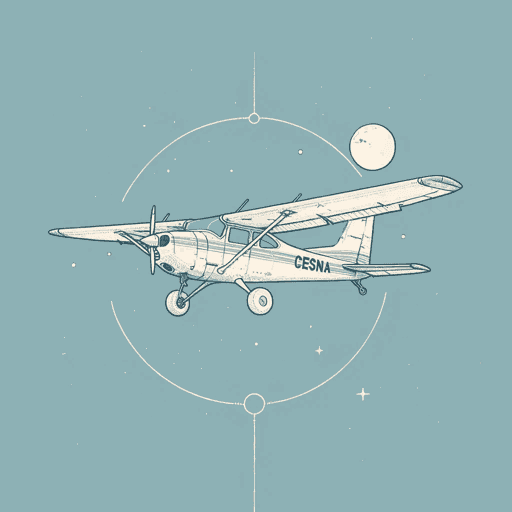
The Dog Stars
A modern alternative to SparkNotes and CliffsNotes, SuperSummary offers high-quality Study Guides with detailed chapter summaries and analysis of major themes, characters, and more.
Summaries & Analyses
Author Insights
Quizzes
NEWReading Tools
Games
Important Quotes
Content Warning: This section of the guide includes discussion of illness and death.
“If I ever woke up crying in the middle of a dream, and I’m not saying I did, it’s because the trout are gone every one. Brookies, rainbows, browns, cutthroats, cutbows, every one.”
(Book 1, Chapter 1, Page 3)
This quote sets the tone for the hardships to come, for Heller immediately establishes Hig as a narrator who is powerfully concerned with the damaged environment. As time goes on, the sense of longing that he expresses here will reappear often in his airborne musings on the current state of the world. In equal measure, Hig indulges in dark visions of this post-collapse world and reminisces about the sweeter times that he enjoyed in the past, and this grim but fond nostalgia pervades his entire worldview.
“Only us for at least a radius of eight miles, which is the distance of open prairie to the first juniper woods on the skirt of the mountain. I just say, Hey. Above the juniper is oak brush then black timber. Well, brown. Beetle killed and droughted. A lot of it standing dead now, just swaying like a thousand skeletons, sighing like a thousand ghosts, but not at all.”
(Book 1, Chapter 1, Page 4)
Here, Hig introduces the setting for the first half of the novel: Erie, Colorado, and more specifically, at an abandoned airport where Hig and Bangley have spent the past nine years. Hig calls this area “the perimeter,” a term that invokes Bangley’s military mindset and tactical approach to the world. The phrase also drives home the fact that the two men have created an arbitrary boundary beyond which they seldom venture, fearful as they are of intruders who might end their lives. Having survived so much in the aftermath of the epidemic, they are largely unwilling to take reckless chances, and even Hig’s contemplations of the familiar landscape are mired in gruesome thoughts of death, corpses, ghosts and skeletons, as his vision is forever tainted by his awareness of humanity’s demise.
“What can I say to Bangley? He has saved my bacon more times. Saving my bacon is his job. I have the plane, I am the eyes, he has the guns, he is the muscle. He knows I know he knows: he can’t fly, I don’t have the stomach for killing. Any other way probably just be one of us. Or none.”
(Book 1, Chapter 1, Page 6)
This quote presents an early characterization of the codependency that Hig and Bangley feel for one another, while at the same time continuing to establish Hig’s unique narrative voice. Hig and Bangley’s fond but antagonistic relationship is a core aspect of the novel, and Hig’s feelings about Bangley vacillate between annoyed friendship and wary contemplation of the man’s violent tendencies, but by the end of the novel, both characters will acknowledge that they have essentially become family. In the opening chapters, however, their relationship is largely based upon the mutual need for survival, and they have very little in common on an emotional level.
“I started sleeping on the ground because of the attacks. Survivors, it seemed like they picked it out on the map. On a big creek, check. So water, check. Must have fuel, check. Since it was an airport, check. Anyone who read anything knew, too, that it was a model for sustainable power, check. Every house with panels and the FBO run mostly on wind. Check. FBO means Fixed Base Operator. Could’ve just said the Folks Who Run the Airport. If they knew what was coming they wouldn’t have complicated everything so much.”
(Book 1, Chapter 1, Page 8)
Here, Hig explains why he chose the airport as a haven after the flu decimated humanity, and this passage reveals that for all of his absentminded quirks, Hig is at heart a practical thinker who remains just as concerned with logistics as he is with his deep love for The Transformative Beauty of Nature. At this very early point in the book, many questions about his past remain unanswered, but this scene serves to raise implicit questions and to establish the range of Hig’s narrative voice, which often vacillates between the poetic and the pragmatic within the space of a single sentence.
“I once had a book on the stars but now I don’t. My memory serves but not stellar ha. So I made up constellations. I made a Bear and a Goat but maybe not where they are supposed to be. I made some for the animals that once were, the ones I know about. I made one for Melissa, her whole self standing there kind of smiling and tall looking down on me in the winter nights.”
(Book 1, Chapter 1, Page 11)
This passage introduces the motif of renaming the stars, for because Hig no longer remembers the names and locations of constellations, he is forced to imagine new ones in order to make some sense of the nonsensical world that now dominates his life. By recreating this world in his own image, he gains an illusory sense of control. However, the sentence structure here suggests that at the deepest level, Hig is essentially a man who is just as broken as the world around him. There is a disorder to the diction, with punctuation purposefully dropped, and this erratic structure illustrates Hig’s internal chaos.
“Sometimes back then, fishing with Jasper up the Sulphur, I hit my limit. I mean it felt my heart might burst. Bursting is different than breaking. Like there is no way to contain how beautiful. Not it either, not just beauty. Something about how I fit. This little bend of smooth stones, the leaning cliffs. The smell of spruce. The small cutthroat making quiet rings in the black water of a pool. And no need to thank even. Just be. Just fish.”
(Book 1, Chapter 1, Page 12)
This quote highlights both Hig’s sense of loss and his love of nature. As he glories in simple pleasures, he acknowledges the pure beauty of what once was, and his old pastimes become a major source of emotional support. The scene also establishes Hig’s love for his dog Jasper, who represents the last shred of the world he once knew. Later in the novel, Jasper’s death galvanizes Hig, compelling him to leave the safe perimeter of Erie with no sense of when or even if he will ever return.
“And for a time while flying, seeing all this as a hawk would see it, I am myself somehow freed from the sticky details: I am not grief sick nor stiffer in the joints nor ever lonely, nor someone who lives with the nausea of having killed and seems destined to kill again. I am the one who is flying over all of it looking down. Nothing can touch me.”
(Book 1, Chapter 2, Page 48)
This quote presents one of the first moments when Hig expresses a sense of freedom and temporarily forgets the past nine years of post-apocalyptic living. Flying in the Beast is the only source of these moments of happiness—at least until he meets Cima and slowly begins to heal from the underlying anguish of having lost his wife, Melissa, in the epidemic. Notably, only a few pages before this passage, Hig claims that this is a new world with new rules, and he resolves to become a new man in order to survive. Before the epidemic, Hig never believed himself capable of murder, but as the novel progresses, his thoughts reveal that he has indeed been forced to commit atrocities in the name of personal survival, and despite his squeamishness relative to Bangley and Pops, it is clear that Hig has murdered before and will do so again if necessary.
“Bangley always wears a belted sidearm, I’m sure he wears it to sleep. I have never seen him asleep but I wonder how many nights he has watched us at the base of the berm snoozing. There is much about the man that creeps me out but this is the worst, the unrelenting sense of being surveilled.”
(Book 1, Chapter 3, Page 50)
Here, Hig offers his irritation and genuine uneasiness over Bangley’s survivalist tactics and general character. The wording implies that in some ways, Hig grows tired of Bangley’s quirks and distrusts the man’s underlying brutality. His contemplations serve to highlight the philosophical differences in the two men’s respective outlooks, but as Hig will eventually discover, Bangley’s propensity for surveillance is one of the few things that helps to keep Hig alive in his dangerous forays beyond the perimeter.
“I gently lifted the back of her head off the pillow and laid it back down on the stained sheet and brought the pillow around and said I love you. More than anything in God’s universe. And her eyes were on mine and she didn’t say a word and I covered her face and used it. On my own wife.”
(Book 1, Chapter 4, Page 62)
This quote dramatizes the moment when Hig suffocates his dying wife, Melissa, at her request, obeying her wish to end the suffering that she experiences from the flu. As Hig relives the moment in excruciating detail, it is clear that his decisions, although motivated by deep love, have continued to torture him. His frequent thoughts of this traumatic event reflect The Haunting Effect of Dreams and Memories, and his lingering guilt often pulls him away from the more immediate concerns of day-to-day survival. Hig’s experience also renders the pandemic more intimate and more horrific, putting a specific face to the collective anguish that the remnants of humanity have suffered. At its heart, Hig’s own anguish arises from the tragic irony inherent in the knowledge that he was forced to kill the one person he cared most about in a world where everyone was dying.
“Still we are divided, there are cracks in the union. Over principle. His: Guilty until—until nothing. Shoot first ask later. Guilty, then dead. Versus what? Mine: Let a visitor live a minute longer until they prove themselves to be human? Because they always do. What Bangley said in the beginning: Never ever negotiate. You are negotiating your own death. Me versus him. Follow Bangley’s belief to its end and you get a ringing solitude. Everybody out for themselves, even to dealing death, and you come to a complete aloneness. You and the universe. The cold stars.”
(Book 1, Chapter 6, Page 94)
Bangley’s intensely pragmatic attitude toward life in this post-collapse setting contrasts with Hig’s more optimistic life philosophy, which retains a far greater sense of humanism. Hig believes that to think and live like Bangley drives a person toward solitude and forces them into a subhuman existence. In this light, his sometimes naïve trust in others can lead him astray and into danger, as when he holds out hope of finding new human connections in Grand Junction and ultimately learns that the source of the radio signal was far more sinister than friendly.
“Breathe, I want you to breathe. They are stalking you Hig. They have all day. The way they see it. No rush. You are moving slow, they will close the distance. Little by little. Then they will charge you. They have done it before. They move like they have done this before.”
(Book 2, Chapter 1, Page 121)
Seeking reprieve from his own sadness, Hig goes on a fishing and hunting trip and unknowingly runs afoul of a group of intruders, but in this scene, he comes to rely upon Bangley’s sharp surveillance and tactical thinking—the very traits that he so recently criticized. On Hig’s way back to the airport, Bangley radios to inform Hig that he is being stalked by a group of survivors who mean him harm. Only Bangley’s vigilance can save Hig’s life, but in order to ensure his own survival in this crisis, Hig is forced to kill yet more people, thereby coming to resemble Bangley despite his own more delicate sensibilities.
“It was this new relationship to a person of any gender: that I was under no obligation to kill them. Or let Bangley kill them. I mean this was their house, not mine. I was a visitor.”
(Book 2, Chapter 2, Page 161)
This quote presents a major narrative shift and introduces a new central nerve of tension in the novel, as Hig decides to fly away from the perimeter for a few days and notices smoke rising from a stone house. Upon catching his first glimpse of Cima, he feels a great sense of joy that Bangley is not there to tell him to kill the woman. From this scene, it is evident that Hig longs for human relationships that are not based only on the mutual need for survival. However, he must first earn the trust of the people on the ground, who, like him, are so laser-focused on surviving that the possibility of friendship seems a near-impossibility.
“When you fished, that’s what you were seeking huh? Connection. Think of the cost to the fish. The fish did not want your connection and if a trout could have killed you with one gulp he would have. Pops is that fish. He can swallow you.”
(Book 2, Chapter 4, Page 182)
For much of the novel, Hig’s outlook on the transformative beauty of nature fails to consider the dog-eat-dog aspects of the natural world, but in this passage, he finally considers the more brutal aspects of the wilderness. Faced with Pops’s extreme tactical competence in the field, Hig acknowledges that he himself has transformed from predator to prey. Pops is a crack shot with a rifle, so much so that he is able to shatter the Beast’s windshield and force Hig to land.
“From this angle through the mist the little canyon looked like Eden. Green and bounded, waterfed, remote from death. How was I going to get down that? Was he going to lower me by my bound arms—up behind me and tear out both shoulders?”
(Book 2, Chapter 4, Page 187)
Here, Pops has captured Hig, and this initial act speaks to the need for self-preservation in a post-collapse world. Given the man’s instinctive brutality and tendency to view Hig as nothing more than a threat, Hig’s fanciful comparison of the box canyon to Eden gains particular complexity, for the drought-ridden setting is nowhere near as idyllic as Hig’s biblical reference would imply. Further, Eden is broadly perceived as a positive if not idyllic place, yet Hig finds himself in his version of it with his shoulders bound and a rifle at his back.
“The world opens suddenly, opens into a narrow box canyon with four sheep, and we grieve. Two shepherds, maybe not in their right mind and we grieve. The relief of company not Bangley, not the blood disease, we grieve. We grieve. That this was once the middle of nowhere and now it’s not even that. And I am not even that. Before I could locate myself: I am a widower. I am fighting for survival. I am the keeper of something, not sure what, not the flame, maybe just Jasper. Now I couldn’t. I didn’t know what I was. So grieve.”
(Book 2, Chapter 4, Page 191)
Hig’s loss of any real identity is more forcefully revealed to him when he comes across Pops and Cima, who are initially strangers. With the death of Jasper, his last connection to his past life has been severed, and Hig can feel only an immobilizing sadness. With his grief, however, also comes the beginning of healing as he finally processes his many sorrows. In the weeks that follow, he and Cima will come to a new, mutual understanding, and their bond will help them both to salvage a semblance of emotional normalcy.
“To be offered cold milk. To have your blue enameled plate filled again. By a woman. To have her walk from an outside fire bearing your dish. To sit in the shade of a big old tree, not a metal hangar, and eat. To hear the bleat of a sheep come through the loud rustle of the leaves. To have an older man sitting across from you in silence, eating also, enemy or friend not sure, it doesn’t matter. To be a guest. To break bread. The pleasure almost split me like a baking stuffed tomato.”
(Book 2, Chapter 4, Page 196)
The emotional sustenance that Pops and Cima provide to Hig—and his bewildered delight—both speak to the intensity of his isolation over the past nine years. The old-fashioned normalcy of sharing a meal is also a foreign concept to him by this point: a nicety that has long been lost along with the carnage of humanity left in the wake of the pandemic. In this moment, he glories in the luxury of simple human connection, and it is one of his happiest moments in the last nine years.
“I saw you studying the creek. You stood right where I would’ve stood so as not to spook the fish in the pool. But killing is something you can get used to. Isn’t it, Hig?”
(Book 2, Chapter 4, Page 199)
Here, Pops’s shrewd words reveal that he is someone who thinks, acts, and speaks like Bangley: with military tactics and cold precision. In many ways, Pops serves as a double of Bangley and serves the same pragmatic purpose of devising brutal solutions to external threats. At this point in the relationship, Hig’s respect for Pops grows, and Hig is deeply impressed with the old man’s survivalist strategies. Yet Pops shows Hig an equal amount of respect, given that Hig chooses the same place to stand that Pops would have chosen. With this mutual acknowledgment, Heller creates a terse but amiable bond between the two men, and Pops’s comment also illustrates his understanding of the costs involved in becoming a killer in order to survive.
“She talked to me like that. I mostly listening. He worked. Passed me without a word. I never offered to help. Something about his look prohibitive. I hiked up to the Beast and got my sleeping bag. The nights were clear and cool, full of stars, the stream of stars framed by the rim of the canyon like the banks of a dark river, dark but swimming with light. Through the leaves of the big cottonwoods. I slept in the hammock with the leaves above me a rustling roof. They moved the stars around and gave them voice.”
(Book 2, Chapter 4, Page 208)
Here, Hig’s temporary life in the box canyon takes on a sense of normalcy, and he and Cima share their histories and grow progressively closer. Once again, Hig displays his awareness of the transformative beauty of nature, viewing the ranch as being largely untouched by the devastation of the flu. At this point in the novel, the three have reached an amiable but guarded equilibrium as they prepare to leave the canyon, and Hig allows himself to soak in the natural beauty of the setting.
“Seems from here that was the sweetest time ever vouchsafed to two people. Ever. On earth. While we waited for him to finish his degree, for me to have a child, to do the real work of living […] We are fools, you know.”
(Book 2, Chapter 4, Page 209)
Here, Cima speaks of her late husband, Tomas, a musician who was studying for his Ph.D. Prior to the epidemic, Cima and her husband were waiting for their lives to begin, and she now feels as though that particular interlude, with its relative safety and simplicity, is as unreal as a dream. Her outlook echoes Hig’s own sense of unreality when he considers the past, and it is clear that both characters are dominated by the haunting effect of dreams and memories.
“That is what we are, what we do: nose a net, push push, a net that never exists. The knots in the mesh as strong as our own believing. Our own fears. Ha. Admit it: you don’t have the slightest idea what you are doing, you never did. With all the nets in the world, real or unreal. You swam around in a flashing confused school following the tail of the fish in front. Pretty much. Nibbling at whatever passed, in whatever current you swam into. Even the love of your life felt like luck, like she might vanish in the fanning crowd at any moment. Which she did.”
(Book 2, Chapter 4, Page 211)
Here, Hig compares his life before the devastation to a fish pushing at a net, and the metaphor condemns the lack of understanding shared by the entire human race. With his emphasis on having been part of a “flashing confused school” and unthinkingly “following the tail of the fish in front,” Hig essentially critiques the accidental nature of a human life, contemplating the fragility of even the most vital elements. In a world where “even the love of your life felt like luck,” he has very little sense of control and feels victimized by the chaos of pure chance.
“I wanted to ask her: What did you all know about the flu, about the coming pandemic. Did you? Did it really take everybody so by surprise? Why was it so fast? What was the blood disease that came right after and why did so many who survived contract it? Wanted to ask her all that since she first told me she was a doctor, that kind of doctor. But then she preempted with the story of her husband dying without her in the ward and I didn’t want to reopen old wounds etc. […] She had brought it up. But then she was crying. I would’ve cried too probably but to tell the truth I was cried out. Wrung out like a human rag.”
(Book 3, Chapter 1, Page 240)
In this quote, Heller begins to wonder about the practical logistics of how the flu began and spread, and to this end, Cima’s status as an epidemiologist allows her to shed light on the subject. Thus far, however, the novel has provided almost no information on this topic, and Hig’s contemplations take on a subtle tone of conspiracy. His frenetic questions suggest that he holds a deep anger over not knowing the specifics of the disaster, even after so many years. His words also hint that he and others believe that there must have been some people who knew the flu was advancing. However, Hig knows better than to ask Cima about his suspicions, and his emotional exhaustion compels him to leave the past in the past for once.
“That’s what the press reported. Mutation of a superbug, one of the ones they’d been watching for two decades. In the water supply etc. Combined with bird flu. We called it Africanized bird flu, after the killer bees. First cases in London and New Delhi. But that’s probably not where it originated. We heard rumors that it originated at Livermore […] The rumor was that it was a simple trans-shipment. A courier on a military flight with a sample taking it to our friends in England. Supposedly the plane crashed in Brampton. Nobody will ever know—she looked around the box canyon and let the absurdity of those words trail off in the wind with the smoke.”
(Book 3, Chapter 1, Page 246)
About 50 pages from the end of the novel, Heller finally provides more information about the origins of the devastating flu, but because no character knows the real truth about what happened, even this information is couched in rumors and suspicions, and it is clear that the unexpectedness of the outbreak mixed with a degree of chaos that dogged humanity’s staggering footsteps in the post-collapse world. This lack of knowledge adds to the sense of loss that pervades the novel’s mood.
“They maybe never imagined a world eighty years hence when their plane would be a Noah’s Ark for sheep. She rolled, broke inertia, almost balking at first, way too slow, and the thought flashed No Way! And then she bounded, gathered the runway, reeled it in, the trees at the end came, grew dark, larger, maybe halfway to them I felt her break ground, the airborne moment and I pushed the nose down hard, pressure, she wanted to lift off, climb, but I held her down, held her three feet off the track hard in the ground effect where she could gain the most speed.”
(Book 3, Chapter 2, Page 268)
All of Hig’s calculations prove wrong as he successfully takes off with both Cima and Pops in the cockpit. From this point, the unlikely group continues Hig’s initial quest together, forging a new future by daring to leave the dubious safety of their old haunts and seek out new opportunities, no matter the risks involved. The immediacy of the narration, which gives a blow-by-blow account of the takeoff, thus merges with the characters' deeper hopes and fears as they set off toward new horizons with the meager fuel that remains.
“And so when I left, he knew exactly the increase in threat, in danger. Could probably calibrate it to an exact lethal degree, the way he would calibrate wind age and elevation for one of his long shots from the tower, knew with chilling precision just how in danger he would be living here alone without me and Jasper, then just me, as a warning system. I mean the symbiosis, the extent to which I hadn’t even been aware. And that somehow made the surly and ultimately brief resistance to me leaving even more touching. The basket of grenades. Telling me I was family. Telling me in my own way to have a good one, to be safe, not for him, but for me.”
(Book 3, Chapter 3, Pages 296-297)
Here, Hig’s thoughts communicate one of the final iterations in Hig’s shifting opinion toward Bangley. Hig realizes how difficult it must have been for Bangley to let Hig fly to Grand Junction and remain behind alone with unknown dangers approaching the perimeter. Faced with his friend’s tolerance and bravery, Hig feels his bond with Bangley take on even deeper dimensions, and he finally begins to see the entire group as his found family.
“We sleep outside into October. Maybe we will all winter. The way Jasper and I used to do. Piling on the quilts. Sleep some frosty nights with wool hats on, with just our noses sticking out. Head to head or butt to butt. We name the winter constellations and when we run out of the ones we know—Orion, Taurus, Pleiades, the Chariot—we make them up. Mine are almost always animals, hers almost always food—the Sourdough Pancake with Syrup, the Soft Shell Crab au Gratin. I name one for a scrappy, fish loving dog.”
(Book 3, Chapter 3, Page 310)
In the closing pages of the novel, Heller alludes to the book’s title as the characters gain a sense of empowerment by naming and renaming constellations. If Hig loved Jasper and Melissa more than anything in the world, he now has Cima to become the great love of his current life, although the novel only implies that this is the case and does not confirm it directly. As a result, these final pages imbue the story with a tentative but hopeful air of ambiguity. The uncertainty of the future remains for anyone who must live in this post-collapse world, but the four survivors have found a solid community in each other’s company, for as long as the post-collapse world will allow them to live.

Unlock every key quote and its meaning
Get 25 quotes with page numbers and clear analysis to help you reference, write, and discuss with confidence.
- Cite quotes accurately with exact page numbers
- Understand what each quote really means
- Strengthen your analysis in essays or discussions
Related Titles
By Peter Heller




